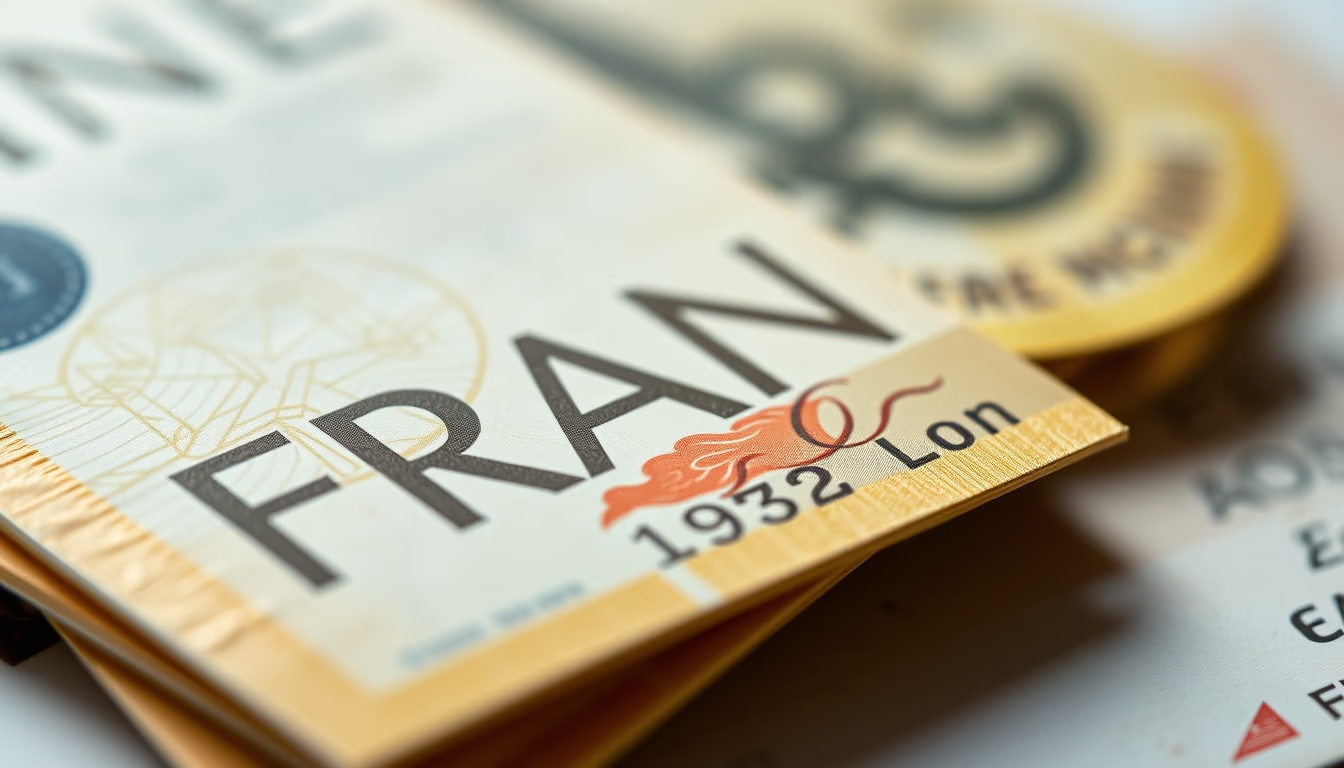
Pre-euro lira italian
1344×768 · AVIF · CC BY 4.0

The Italian lira was the official currency of Italy for over 140 years, until it was replaced by the euro in 2002. Its history reflects the country's political and economic unification.
About this subject
The Italian lira was introduced in 1861, following the unification of Italy, replacing various regional currencies. Initially, the lira was backed by silver and gold, adhering to the standards of the Latin Monetary Union, of which Italy was a member. Over the decades, the currency underwent several reforms, especially after World War II, when high inflation led to the issuance of high-value banknotes, such as the 100,000 and 500,000 lire.
Italian lira banknotes and coins were rich in national symbolism. Banknotes featured historical figures like Marco Polo, Giuseppe Verdi, and Michelangelo, as well as works of art and monuments. Coins included the iconic 'Lira Turrita', depicting Italy personified, and the Tuscan 'Fiorino'. Designs varied by era, reflecting political changes: the fascist regime inserted party symbols, while the Republic adopted democratic themes.
The lira experienced periods of severe devaluation, especially in the 1970s and 1980s, when inflation eroded its purchasing power. The highest denomination ever issued was the 500,000 lire note (about 258 euros today), which circulated between 1997 and 2002. Despite this, the lira was one of the world's most traded currencies until its replacement.
On January 1, 1999, the euro was introduced as book money, and the lira became a non-decimal subdivision until 2002, when euro banknotes and coins entered circulation. The official conversion rate was fixed at 1 euro = 1,936.27 lire. Today, the lira is a collector's item, especially older banknotes and commemorative coins, which recall the history of a unified Italy.
Frequently Asked Questions
When was the Italian lira introduced?
The Italian lira was introduced in 1861 after the unification of Italy, replacing the currencies of the former Italian states.
What was the highest denomination of the Italian lira?
The highest denomination was the 500,000 lire note, issued between 1997 and 2002. It was worth approximately 258 euros at conversion.
When did the euro replace the lira?
The euro replaced the lira in 2002, when euro banknotes and coins entered circulation. The conversion rate was 1 euro = 1,936.27 lire.
Direct URL
https://pub-c7d6a6ea828543ac903a74a341ccb2e1.r2.dev/imagens/pre-euro-lira-italian-fine-art-photography-fresh1.avifHow to credit
Include a visible link back to UtilizAí. Copy one of the snippets below:
<a href="https://xn--utiliza-eza.com/en/midia/imagens/pre-euro-lira-italian-fine-art-photography-fresh1">Pre-euro lira italian</a> by <a href="https://xn--utiliza-eza.com">UtilizAí</a>, licensed under <a href="https://creativecommons.org/licenses/by/4.0/">CC BY 4.0</a>.
[Pre-euro lira italian](https://xn--utiliza-eza.com/en/midia/imagens/pre-euro-lira-italian-fine-art-photography-fresh1) by [UtilizAí](https://xn--utiliza-eza.com), CC BY 4.0
License: CC-BY-4.0