Porcelain blue white vase
1344×768 · AVIF · CC BY 4.0
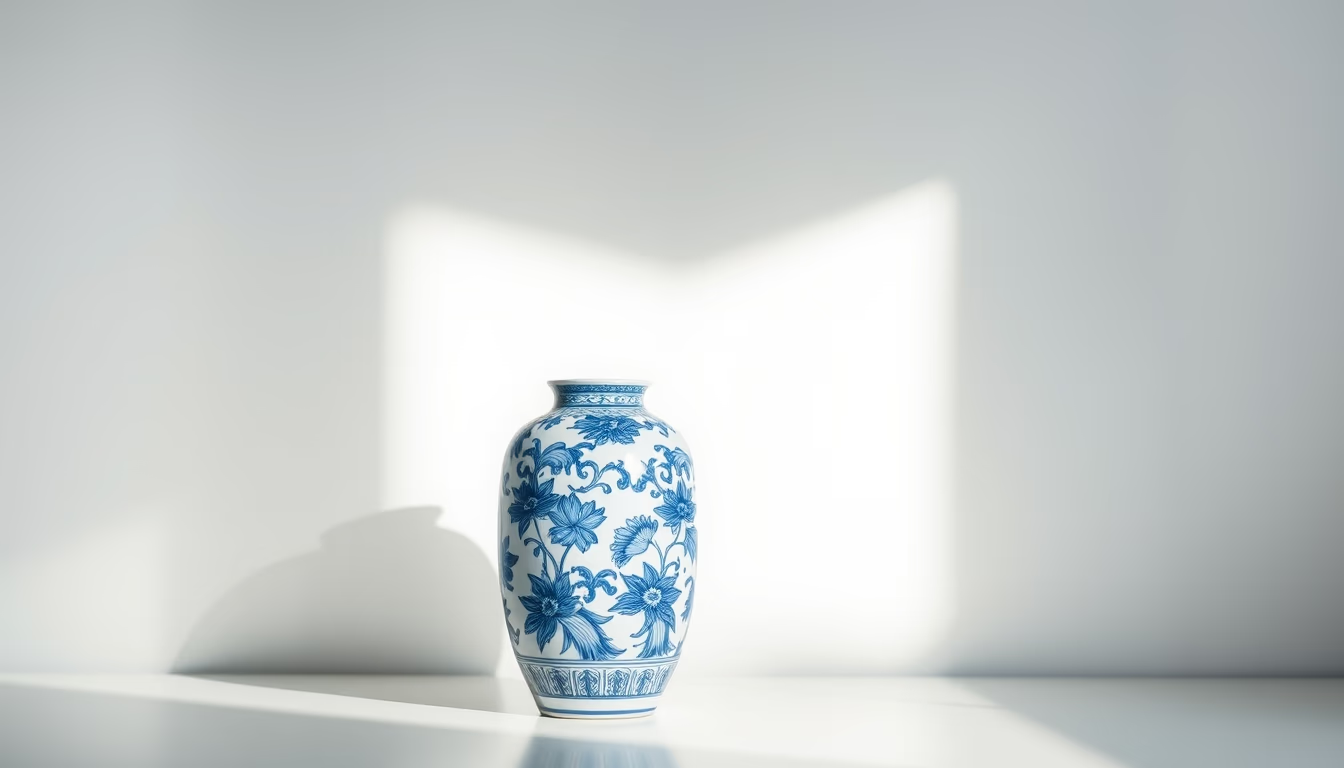
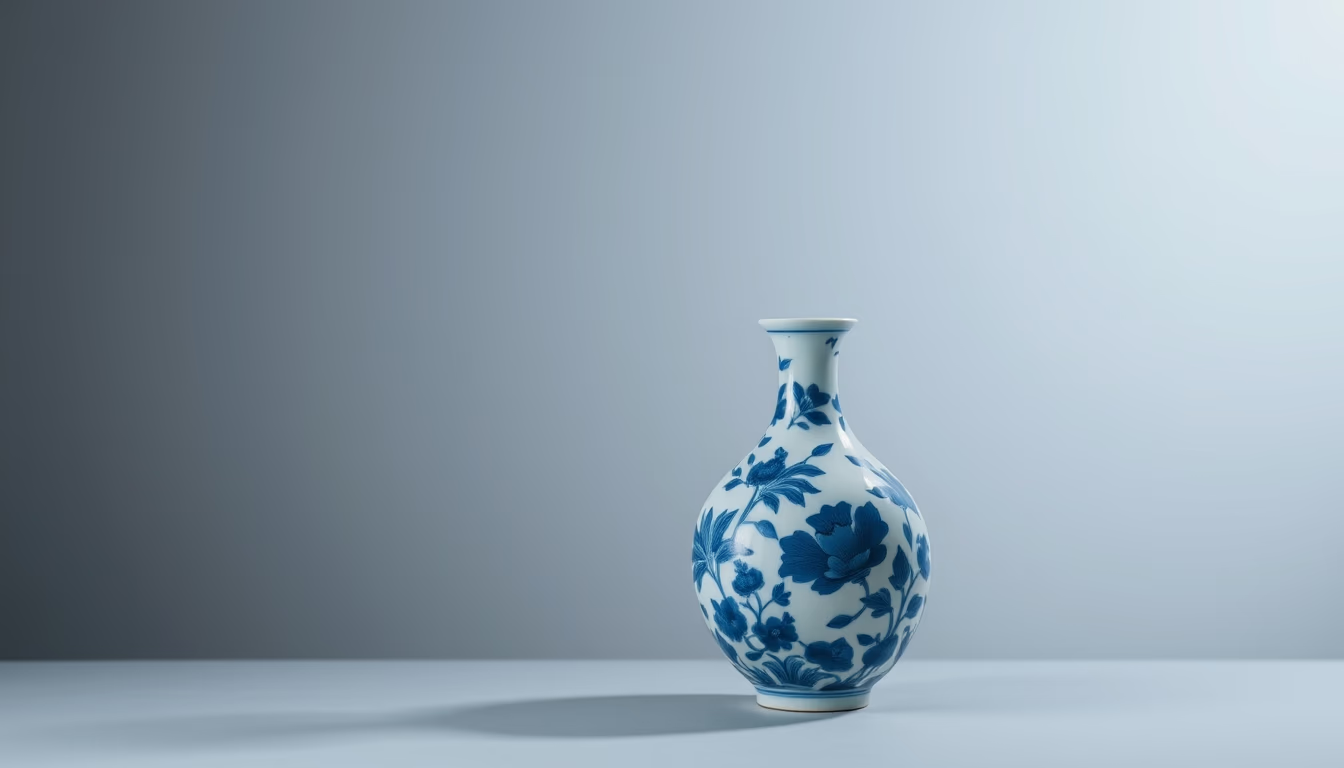
Blue and white porcelain vase, an iconic piece of global trade that connected East and West for centuries.
About this subject
Blue and white porcelain is one of the most emblematic products in the history of world trade. Originating in China, especially from the Jingdezhen kilns during the Yuan dynasty (1271, 1368), this glazed ceramic uses cobalt oxide to create intricate designs under a transparent coating. The technique was perfected over centuries, becoming a symbol of luxury and sophistication.
Trade in this porcelain flourished from the 14th century onward, as maritime and overland routes like the Silk Road carried these pieces to the Middle East, Europe, and Africa. Demand was so high that Chinese artisans began adapting Islamic and European motifs to suit foreign tastes. In the 16th century, the Dutch East India Company intensified the transport of blue and white porcelain, influencing Delftware in the Netherlands and later European porcelain.
Culturally, these vases were more than decorative objects. In China, blue symbolizes immortality and white purity, while patterns like dragons, phoenixes, and landscapes carry auspicious meanings. In the West, porcelain was used to display wealth and social status, often depicted in paintings and royal collections. The hand-painting technique requires precision: cobalt is applied before firing, and the piece is kiln-baked at high temperatures (above 1300°C), resulting in vivid colors and durability.
Today, blue and white porcelain continues to be produced, both in China and other countries, preserving traditional methods. Antique pieces are highly prized in the art market, with some vases fetching millions of dollars at auctions. The minimalist design and limited color palette have made it a contemporary decor icon, proving the timelessness and universal appeal of this trade good.
Frequently Asked Questions
How was blue and white porcelain transported during the Age of Exploration?
It was shipped in merchant vessels, such as Portuguese carracks and East India Company ships. Pieces were packed in tea barrels or straw to prevent breakage on long sea voyages.
What is the difference between Chinese porcelain and European porcelain?
Chinese porcelain is made from kaolin and fired at very high temperatures, resulting in translucent and resonant pieces. European porcelain, like Meissen, imitated the technique but often used glass frits and different firing processes.
What do dragon designs on blue and white porcelain signify?
The imperial dragon, usually with five claws, symbolizes the Chinese emperor and absolute power. Dragons with four claws represented nobles or officials. Such motifs indicated the owner's social status.
Direct URL
https://pub-c7d6a6ea828543ac903a74a341ccb2e1.r2.dev/imagens/porcelain-blue-white-vase-minimalist-composition-fresh8.avifHow to credit
Include a visible link back to UtilizAí. Copy one of the snippets below:
<a href="https://xn--utiliza-eza.com/en/midia/imagens/porcelain-blue-white-vase-minimalist-composition-fresh8">Porcelain blue white vase</a> by <a href="https://xn--utiliza-eza.com">UtilizAí</a>, licensed under <a href="https://creativecommons.org/licenses/by/4.0/">CC BY 4.0</a>.
[Porcelain blue white vase](https://xn--utiliza-eza.com/en/midia/imagens/porcelain-blue-white-vase-minimalist-composition-fresh8) by [UtilizAí](https://xn--utiliza-eza.com), CC BY 4.0
License: CC-BY-4.0