Porcelain blue white vase
1344×768 · AVIF · CC BY 4.0
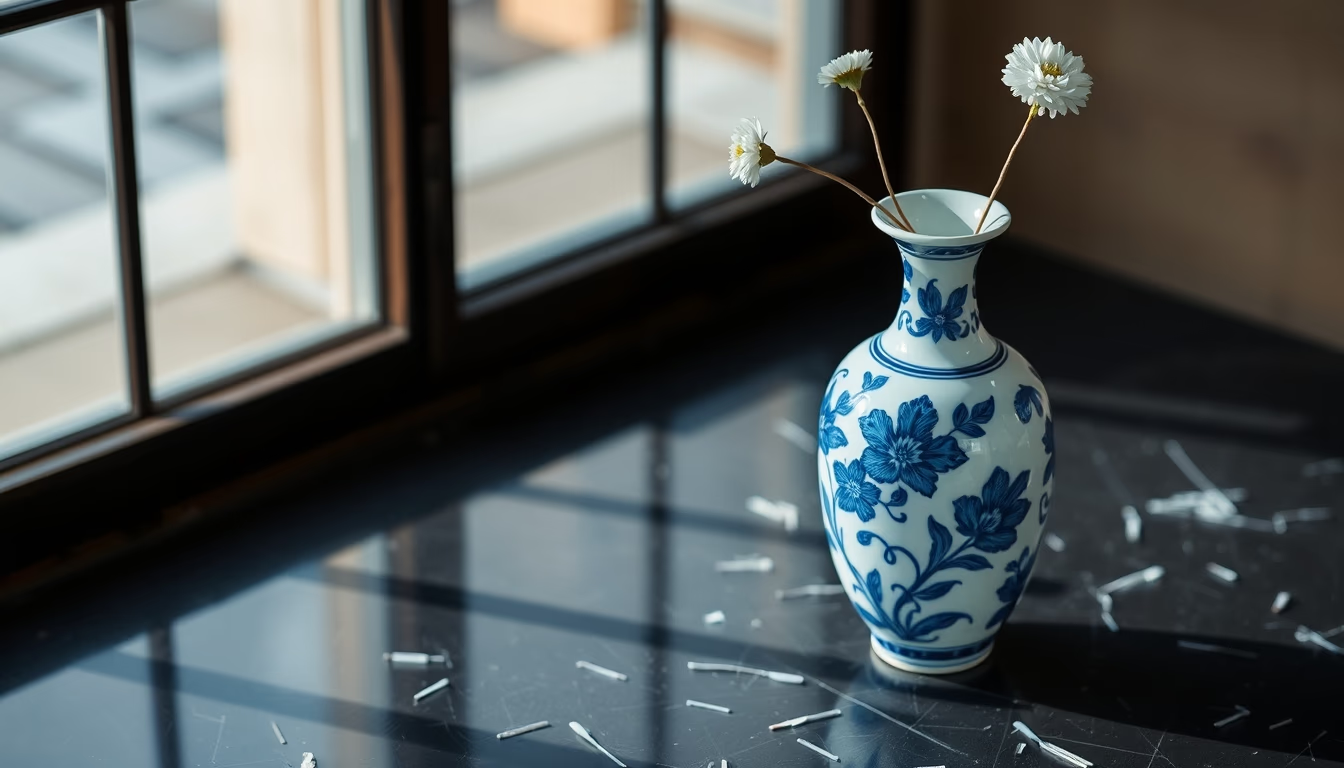
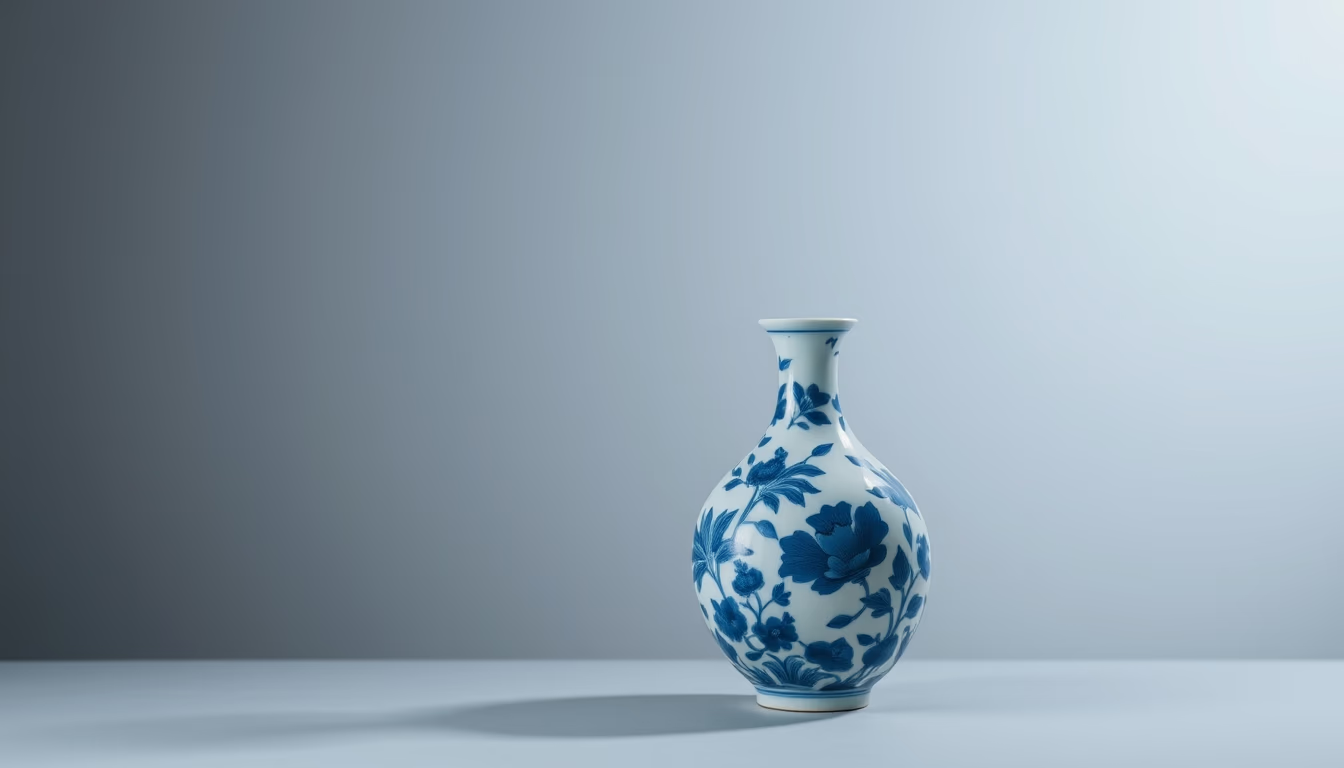
Blue and white porcelain vase, a symbol of global trade and Chinese artistry, featuring blue details on a white background.
About this subject
The blue and white porcelain vase represents one of the most iconic forms of Chinese decorative art, with production dating back to the Yuan dynasty (1271, 1368). The technique involves painting designs by hand using cobalt oxide under a transparent glaze, which after high-temperature firing yields the characteristic vivid blue. The city of Jingdezhen in Jiangxi province became the main production center, supplying pieces for the imperial court and export. During the Ming and Qing dynasties, blue and white porcelain gained enormous prestige in Europe, the Middle East, and Southeast Asia, becoming one of the first global products to connect distant cultures.
The porcelain route traveled overland via the Silk Road and by sea through the ports of Canton and Macau. European traders, especially Portuguese and Dutch, imported large quantities, adapting shapes and motifs to Western tastes. This led to so-called "custom porcelain" with noble family crests or biblical scenes. The term "china" for tableware in English derives directly from the association with China. The durability and beauty of these pieces made them highly desirable, influencing European ceramics such as Portuguese faience and Meissen porcelain.
Today, blue and white vases are highly prized by collectors and decorators, with antique examples fetching millions at auction. The technique continues to be practiced by Chinese artisans, keeping a millennia-old tradition alive. Contemporary pieces often reinterpret classic designs such as dragons, phoenixes, landscapes, and floral patterns, maintaining a dialogue between past and present. This vase, with its elegant silhouette and refined decoration, stands as a testament to the craftsmanship and cultural exchange that define the global history of porcelain.
Frequently Asked Questions
How is blue and white porcelain made?
Blue and white porcelain is made from kaolin clay, shaped and hand-painted with cobalt oxide. It is then covered with a transparent glaze and fired at high temperatures (about 1300°C), which fixes the blue and vitrifies the surface.
What is the historical origin of blue and white porcelain?
The technique originated in China during the Tang dynasty (618, 907), but was perfected in the Yuan dynasty (1271, 1368), when cobalt imported from Persia became widely used. Jingdezhen became the main production center.
Why is blue and white porcelain so valuable?
Value comes from a combination of rarity, antiquity, artistic quality, and provenance. Ming dynasty pieces, for instance, are extremely rare and coveted by collectors, sometimes fetching millions of dollars at auction.
Direct URL
https://pub-c7d6a6ea828543ac903a74a341ccb2e1.r2.dev/imagens/porcelain-blue-white-vase-high-fashion-editorial-fresh13.avifHow to credit
Include a visible link back to UtilizAí. Copy one of the snippets below:
<a href="https://xn--utiliza-eza.com/en/midia/imagens/porcelain-blue-white-vase-high-fashion-editorial-fresh13">Porcelain blue white vase</a> by <a href="https://xn--utiliza-eza.com">UtilizAí</a>, licensed under <a href="https://creativecommons.org/licenses/by/4.0/">CC BY 4.0</a>.
[Porcelain blue white vase](https://xn--utiliza-eza.com/en/midia/imagens/porcelain-blue-white-vase-high-fashion-editorial-fresh13) by [UtilizAí](https://xn--utiliza-eza.com), CC BY 4.0
License: CC-BY-4.0