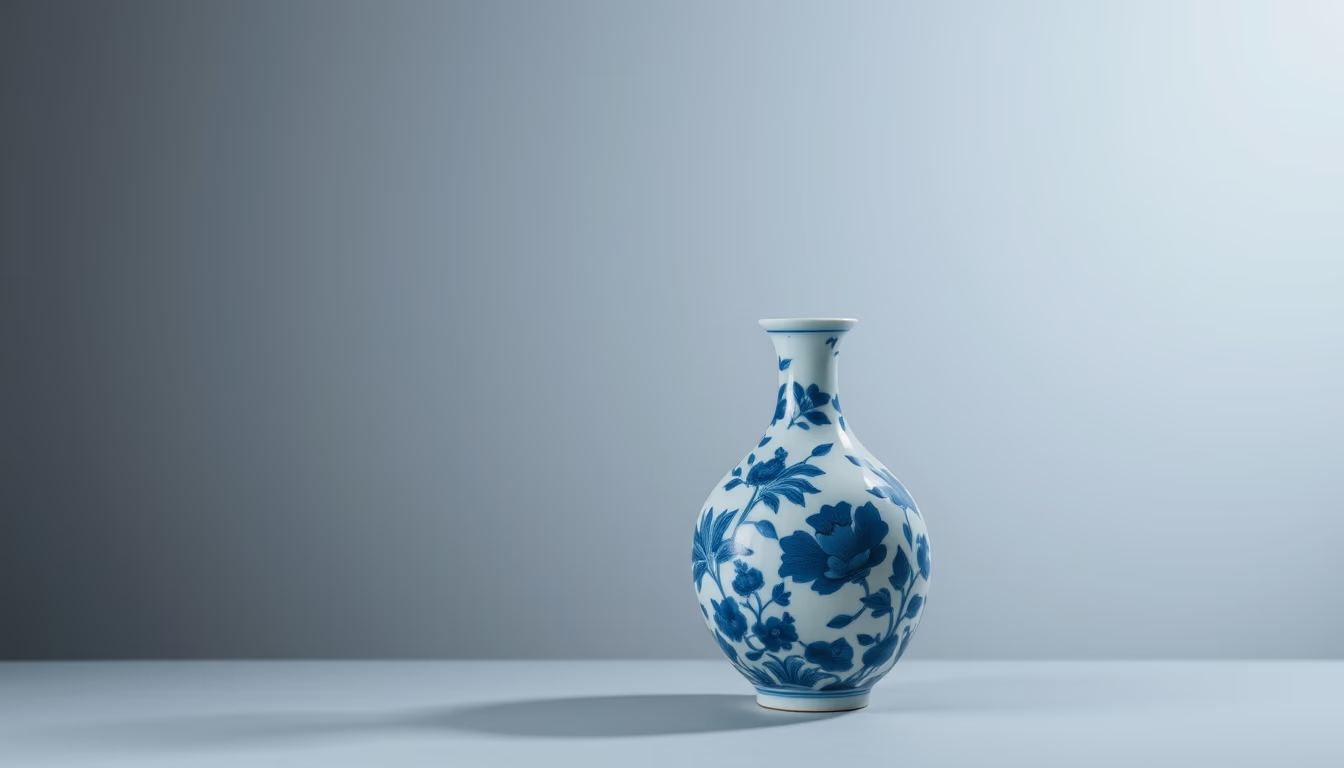
Porcelain blue white vase
1344×768 · AVIF · CC BY 4.0
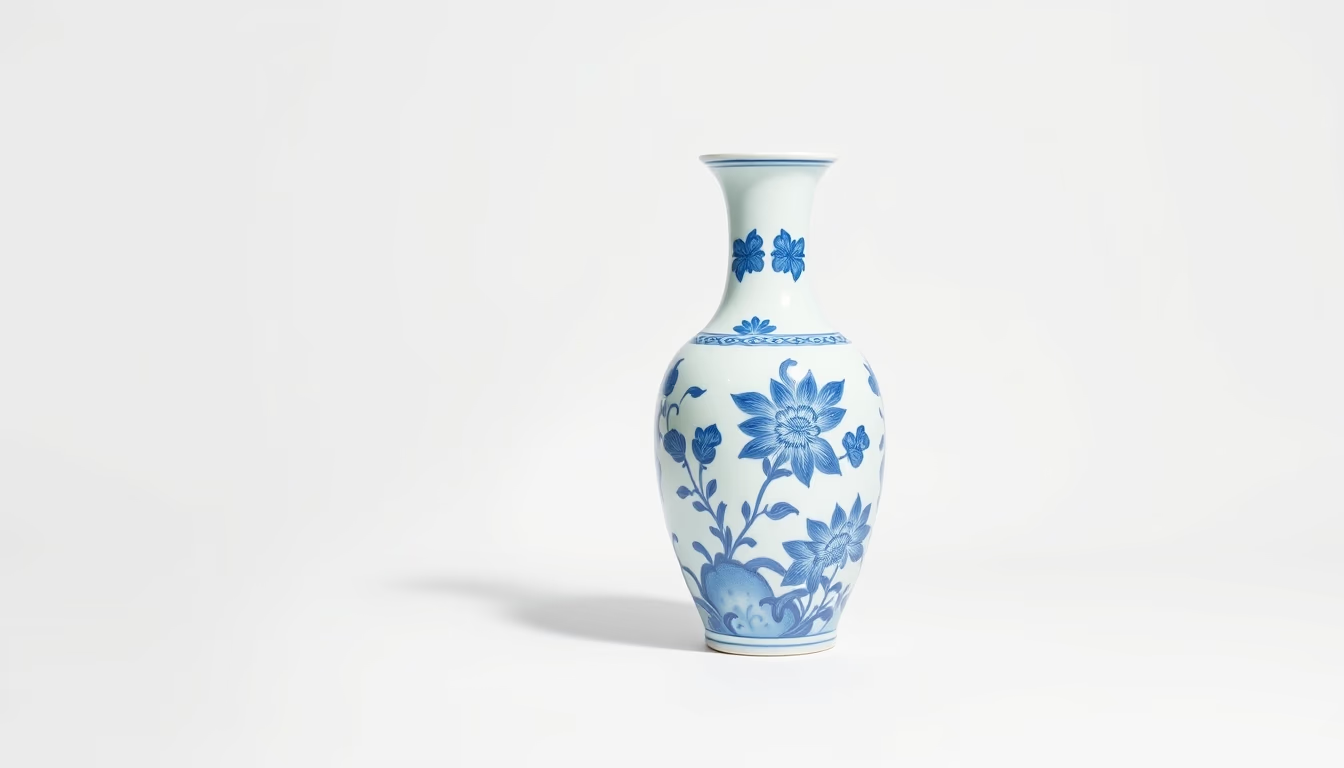
Blue and white porcelain vase, a symbol of Chinese ceramics that influenced global trade and decorative arts since the 14th century.
About this subject
The blue and white porcelain vase is one of the most recognizable icons of Chinese ceramics, originating from kilns in Jingdezhen, Jiangxi province. The technique reached its peak during the Ming dynasty (1368-1644), when imported cobalt oxide from Persia was hand-painted onto white porcelain and then covered with a transparent glaze, resulting in vivid colors after high-temperature firing.
Large-scale production began in the 14th century, and the vases quickly became luxury goods in international trade. Expeditions led by Zheng He brought pieces to Southeast Asia, Africa, and the Middle East, while the East India Company exported tons to Europe from the 17th century onward. The blue-and-white design was so admired that European workshops, such as those in Delft and Meissen, tried to imitate it, creating their own traditions of faience and porcelain.
Beyond aesthetic value, these vases carry cultural meanings: motifs like dragons, phoenixes, lotuses, and landscapes symbolize power, purity, and harmony. The classic globular body and narrow neck shape is called a "guard bottle" or meiping, originally used to store wine or flower branches. Today, high-quality antique pieces fetch millions of dollars at auction, and contemporary replicas keep the tradition alive.
The underglaze painting technique requires precision: the artisan applies cobalt directly onto the porous bisque, and the liquid glaze covers the design. During firing at 1280, 1350°C, the pigment fuses with the glaze, permanently fixing the color. This process explains the durability of the colors, which do not fade over time. Jingdezhen remains the main porcelain production center in China, manufacturing everything from traditional pieces to modern designs for the global market.
Frequently Asked Questions
How can I identify an authentic Ming dynasty blue and white porcelain vase?
Authentic Ming vases have dynasty marks on the base, fluid brushstrokes, blue tones ranging from grayish to violet due to manganese in cobalt, and slight glaze imperfections. Modern porcelain usually has more uniform colors and printed marks.
What was the importance of the Silk Road for spreading blue and white porcelain?
The overland and maritime Silk Road allowed Chinese porcelain to reach markets in Central Asia, the Middle East, and Europe. In exchange, China imported cobalt from Persia, essential for the blue pigment. This cultural and trade exchange turned porcelain into a global status symbol.
Why is blue and white porcelain so valuable in the antiques market?
Its rarity, over 600-year history, handmade quality, and association with Chinese imperial dynasties drive value. Intact pieces from the Ming or Qing periods, especially with imperial marks and refined designs, can fetch millions of dollars at auction.
Direct URL
https://pub-c7d6a6ea828543ac903a74a341ccb2e1.r2.dev/imagens/porcelain-blue-white-vase-commercial-product-photography-fresh11.avifHow to credit
Include a visible link back to UtilizAí. Copy one of the snippets below:
<a href="https://xn--utiliza-eza.com/en/midia/imagens/porcelain-blue-white-vase-commercial-product-photography-fresh11">Porcelain blue white vase</a> by <a href="https://xn--utiliza-eza.com">UtilizAí</a>, licensed under <a href="https://creativecommons.org/licenses/by/4.0/">CC BY 4.0</a>.
[Porcelain blue white vase](https://xn--utiliza-eza.com/en/midia/imagens/porcelain-blue-white-vase-commercial-product-photography-fresh11) by [UtilizAí](https://xn--utiliza-eza.com), CC BY 4.0
License: CC-BY-4.0