Plant cell wall closeup
1344×768 · AVIF · CC BY 4.0
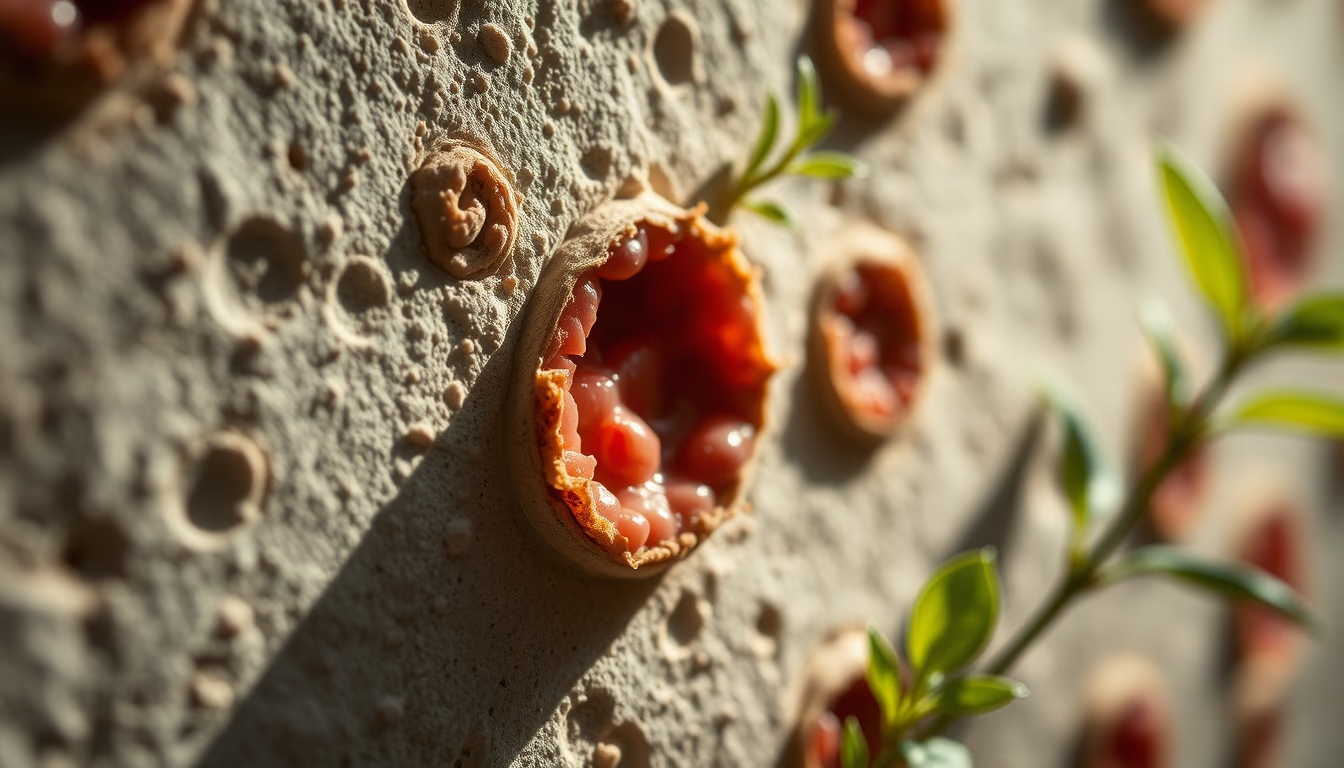
The plant cell wall is a rigid structure providing support and protection, composed of cellulose, hemicellulose, and pectin, whose organization determines plant shape and strength.
About this subject
The plant cell wall is a defining feature of plant cells, absent in animal cells. It surrounds the plasma membrane and performs crucial roles: mechanical support, protection against pathogens and environmental stresses, and determination of cell shape. During growth, the primary wall, flexible and thin, allows cell expansion. After growth, a secondary wall may be deposited, thicker and more rigid, often impregnated with lignin, which confers impermeability and extra strength.
The composition of the cell wall is complex. Cellulose forms crystalline microfibrils that provide tensile strength. Hemicellulose and pectin act as a matrix, linking microfibrils and conferring plasticity. Structural proteins and enzymes are also present. Lignin, a phenolic polymer, is mainly deposited in the secondary wall of xylem and sclerenchyma cells, making wood rigid and durable.
Cell wall formation is dynamic. During cell division, the cell plate gives rise to the primary wall. As the cell grows, the primary wall stretches and new layers are added. Secondary wall deposition occurs internally after growth ceases. This process is crucial for tissues like xylem, which conducts water, and sclerenchyma fibers, which provide support.
The cell wall is the largest renewable biomass source on Earth. Cellulose is used in paper production, cotton textiles, and biofuels. Pectin is used as a thickener in the food industry. Current research explores cell walls in nanotechnology, sustainable materials, and enzymatic breakdown for second-generation biofuels. Detailed study of its structure and composition is essential for advances in agriculture, biotechnology, and materials science.
Frequently Asked Questions
What differentiates the primary cell wall from the secondary cell wall?
The primary wall is thinner, flexible, and present in growing cells, allowing expansion. The secondary wall is deposited after growth, is thicker, rigid, and often contains lignin, providing extra strength.
What are the main functions of the plant cell wall?
Mechanical support, protection against pathogens, maintenance of cell shape, and regulation of turgor pressure, as well as involvement in water transport and storage.
How is cellulose from the cell wall used industrially?
Cellulose is used in paper production, cotton and linen textiles, biofuels such as cellulosic ethanol, and in manufacturing materials like cellophane and rayon.
Direct URL
https://pub-c7d6a6ea828543ac903a74a341ccb2e1.r2.dev/imagens/plant-cell-wall-closeup-magazine-editorial-p1.avifHow to credit
Include a visible link back to UtilizAí. Copy one of the snippets below:
<a href="https://xn--utiliza-eza.com/en/midia/imagens/plant-cell-wall-closeup-magazine-editorial-p1">Plant cell wall closeup</a> by <a href="https://xn--utiliza-eza.com">UtilizAí</a>, licensed under <a href="https://creativecommons.org/licenses/by/4.0/">CC BY 4.0</a>.
[Plant cell wall closeup](https://xn--utiliza-eza.com/en/midia/imagens/plant-cell-wall-closeup-magazine-editorial-p1) by [UtilizAí](https://xn--utiliza-eza.com), CC BY 4.0
License: CC-BY-4.0