Plant cell wall closeup
1344×768 · AVIF · CC BY 4.0
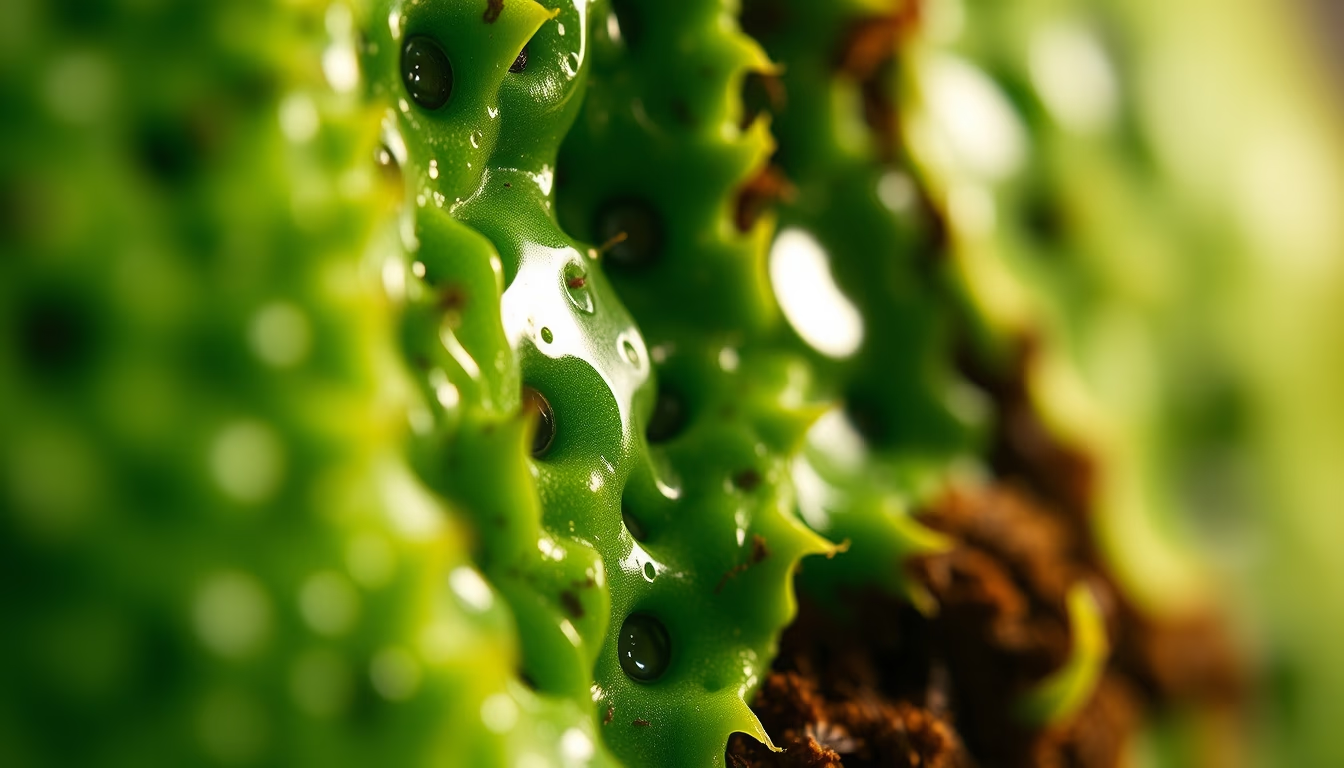
The plant cell wall is a rigid structure surrounding cells, composed mainly of cellulose, hemicellulose, and pectin, providing support and protection.
About this subject
The cell wall is a defining feature of plant cells, absent in animal cells. It is secreted by the protoplast and its composition varies among species and cell types. Cellulose, a linear polysaccharide, forms microfibrils arranged in layers, providing mechanical strength. Hemicellulose and pectin act as a matrix, cross-linking fibrils and regulating porosity. Besides structural support, the cell wall plays key roles in defense against pathogens, water absorption (via plasmodesmata and pits), and determining final cell shape.
There are two main types: the primary wall, thin and flexible, present in growing cells, and the secondary wall, thicker and lignified, deposited after maturation. Lignin, a complex polymer, waterproofs and strengthens the wall, being essential in tissues like xylem and sclerenchyma. Cellulose deposition occurs at specific angles, influencing cell growth direction. This process is mediated by cellulose synthase complexes in the plasma membrane.
Historically, the discovery of the cell wall dates to the 17th century, when Robert Hooke observed cork cells under a microscope. He coined the term "cell" from the cavities delimited by walls. Today, studying the cell wall is crucial for fields like bioenergy (ethanol production from biomass), textile industry (cotton), and agriculture (pest resistance).
Frequently Asked Questions
What is the main function of the plant cell wall?
The cell wall provides mechanical support, protection against environmental stress and pathogens, determines cell shape, and regulates water and solute transport through plasmodesmata and pits.
How is cellulose organized in the cell wall?
Cellulose molecules aggregate into microfibrils, which are arranged in layers. Deposition is controlled by cellulose synthase complexes in the plasma membrane, and the fibril angle influences the direction of cell growth.
What is the difference between primary and secondary walls?
The primary wall is thin, flexible, and secreted during cell growth, containing pectin and hemicellulose. The secondary wall is thicker, deposited after maturation, and often lignified, providing rigidity and impermeability.
Direct URL
https://pub-c7d6a6ea828543ac903a74a341ccb2e1.r2.dev/imagens/plant-cell-wall-closeup-lo-fi-disposable-camera-p8.avifHow to credit
Include a visible link back to UtilizAí. Copy one of the snippets below:
<a href="https://xn--utiliza-eza.com/en/midia/imagens/plant-cell-wall-closeup-lo-fi-disposable-camera-p8">Plant cell wall closeup</a> by <a href="https://xn--utiliza-eza.com">UtilizAí</a>, licensed under <a href="https://creativecommons.org/licenses/by/4.0/">CC BY 4.0</a>.
[Plant cell wall closeup](https://xn--utiliza-eza.com/en/midia/imagens/plant-cell-wall-closeup-lo-fi-disposable-camera-p8) by [UtilizAí](https://xn--utiliza-eza.com), CC BY 4.0
License: CC-BY-4.0