Plant cell wall closeup
1344×768 · AVIF · CC BY 4.0
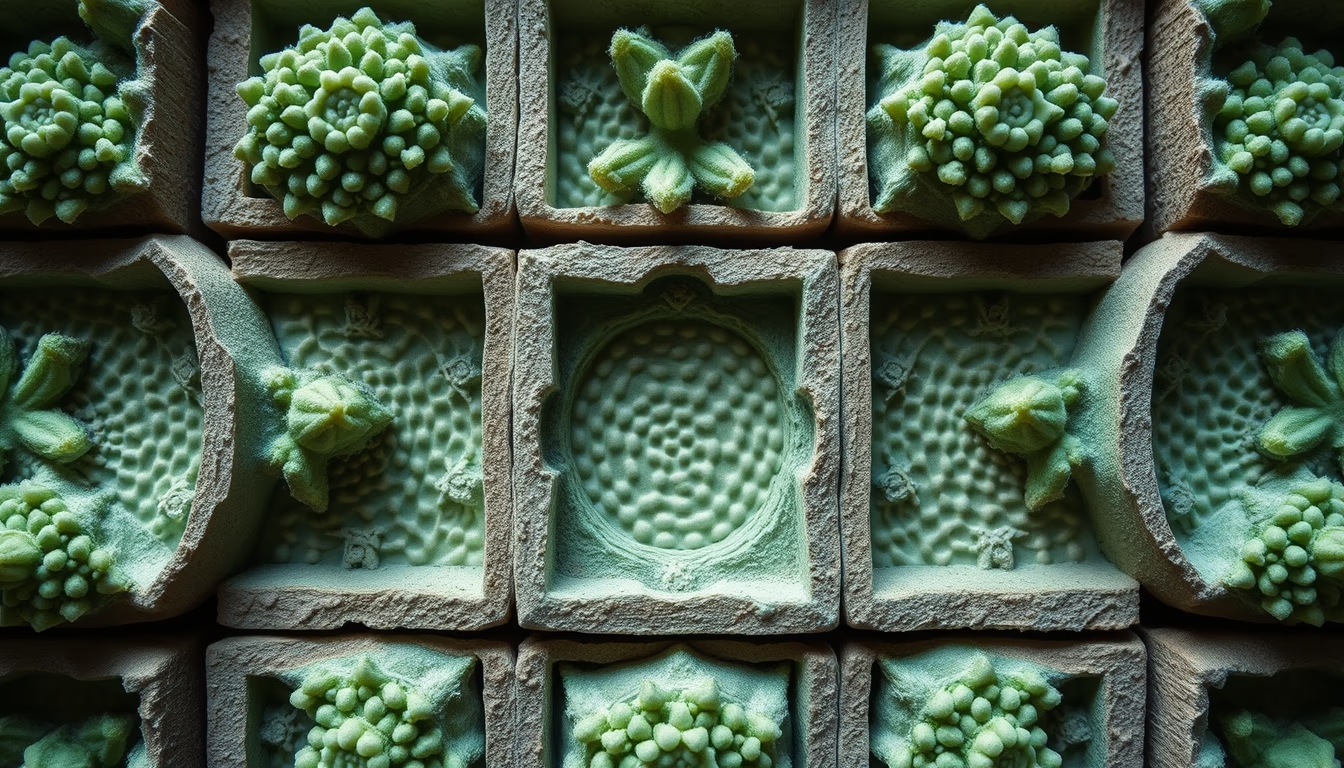
The plant cell wall is a rigid structure surrounding plant cells, providing support and protection.
About this subject
The plant cell wall is a defining feature of plant cells, absent in animal cells. Composed mainly of cellulose, hemicellulose, and pectin, this extracellular structure provides rigidity and shape to cells, while protecting against mechanical stress and pathogens. Cellulose forms microfibrils organized into a complex matrix, allowing the cell wall to be both strong and flexible. This balance is crucial for plant growth, as the wall must expand to accommodate increasing cell volume.
The primary cell wall is deposited during cell growth and is relatively thin and flexible. After growth ceases, some cells deposit a thicker, more rigid secondary wall rich in lignin, which adds extra strength. Lignin is a complex polymer that waterproofs the wall and is responsible for the hardness of wood. Beyond structural support, the cell wall facilitates intercellular communication through plasmodesmata, channels connecting adjacent cells.
Interestingly, the plant cell wall is a major component of terrestrial biomass, with cellulose being the most abundant organic polymer on Earth. Its importance extends beyond biology: it is a raw material for paper, textiles, and biofuels. Studying the cell wall also inspires biomimetics, such as developing composite materials that mimic its strength and lightness. The architecture of the cell wall, with its layers and fiber orientation, is comparable to a nature-engineered structure, hence the link to architectural photography.
Frequently Asked Questions
What is the plant cell wall?
The plant cell wall is a rigid layer outside the plasma membrane of plant cells, composed of cellulose, hemicellulose, and pectin, providing structural support and protection.
What is the difference between plant and animal cell walls?
Animal cells do not have a cell wall. Only plants, algae, fungi, and some bacteria have this structure. The plant cell wall is unique for its cellulose and lignin composition.
How does the cell wall contribute to plant growth?
The primary cell wall is flexible, allowing cell expansion during growth. Later, the secondary wall becomes rigid, providing permanent support to the plant.
Direct URL
https://pub-c7d6a6ea828543ac903a74a341ccb2e1.r2.dev/imagens/plant-cell-wall-closeup-architectural-photography-p6.avifHow to credit
Include a visible link back to UtilizAí. Copy one of the snippets below:
<a href="https://xn--utiliza-eza.com/en/midia/imagens/plant-cell-wall-closeup-architectural-photography-p6">Plant cell wall closeup</a> by <a href="https://xn--utiliza-eza.com">UtilizAí</a>, licensed under <a href="https://creativecommons.org/licenses/by/4.0/">CC BY 4.0</a>.
[Plant cell wall closeup](https://xn--utiliza-eza.com/en/midia/imagens/plant-cell-wall-closeup-architectural-photography-p6) by [UtilizAí](https://xn--utiliza-eza.com), CC BY 4.0
License: CC-BY-4.0