Piccolo small flute
1344×768 · AVIF · CC BY 4.0
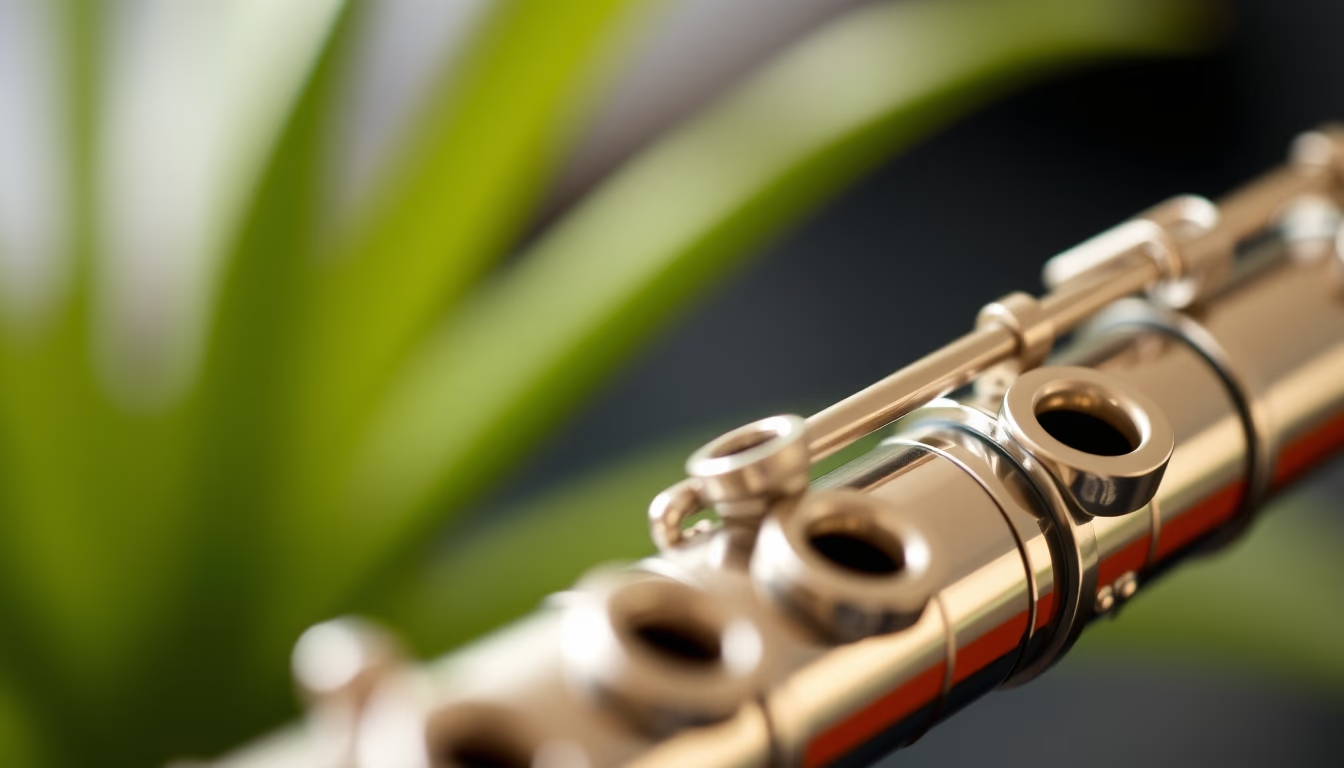
The piccolo is a woodwind instrument known for its high-pitched sound and prominent role in orchestras and bands.
About this subject
The piccolo, also known as the small flute, is a woodwind instrument belonging to the transverse flute family. At roughly half the size of a standard flute, it produces the highest pitch in the entire orchestra, reaching notes above C7. Its origins date back to the early 19th century, when instrument makers began developing smaller versions of the flute to extend the upper register. Since then, it has become an essential instrument in symphony orchestras, military bands, and contemporary music groups.
Originally made of wood (such as grenadilla or rosewood), modern piccolos can also be made of plastic, resin, or metal. Its fingering is identical to that of the standard flute, but the sound is brighter and more penetrating due to the shorter tube length. The instrument typically has a key system similar to the flute, with some adaptations to facilitate the highest notes. Standard tuning is in C, one octave above the flute.
In classical music, the piccolo gained prominence in the 19th century. Beethoven was among the first composers to include it in symphonic works, such as his Fifth Symphony. Later, composers like Tchaikovsky, Rimsky-Korsakov, and Sousa wrote memorable parts for the instrument. A classic example is the piccolo solo in Sousa's "The Stars and Stripes Forever," which has become one of the instrument's most iconic passages. Beyond the orchestra, the piccolo is widely used in marching bands and chamber music.
Interestingly, the piccolo is not just an orchestral instrument. It also appears in jazz, rock, and popular music, though less frequently. Its shrill sound can be heard in recordings by bands like The Beatles and in film scores. Despite its small size, playing the piccolo requires strong breath control and precision, especially in the highest registers where pitch becomes challenging. Specialized musicians dedicate years of study to master its nuances.
Frequently Asked Questions
What is the difference between the piccolo and the standard flute?
The piccolo is roughly half the size of a standard flute and sounds one octave higher. While fingering is similar, the piccolo's sound is more piercing and requires greater control of embouchure and breath.
In which music genres is the piccolo most commonly used?
The piccolo is most common in classical music, especially symphony orchestras and marching bands. It also appears in jazz, rock, and film scores, though less frequently.
Is the piccolo difficult to play?
Yes, playing the piccolo is challenging due to its high register and the need for precise intonation. Breath and embouchure control are critical, requiring dedicated practice.
Direct URL
https://pub-c7d6a6ea828543ac903a74a341ccb2e1.r2.dev/imagens/piccolo-small-flute-macro-closeup-p12.avifHow to credit
Include a visible link back to UtilizAí. Copy one of the snippets below:
<a href="https://xn--utiliza-eza.com/en/midia/imagens/piccolo-small-flute-macro-closeup-p12">Piccolo small flute</a> by <a href="https://xn--utiliza-eza.com">UtilizAí</a>, licensed under <a href="https://creativecommons.org/licenses/by/4.0/">CC BY 4.0</a>.
[Piccolo small flute](https://xn--utiliza-eza.com/en/midia/imagens/piccolo-small-flute-macro-closeup-p12) by [UtilizAí](https://xn--utiliza-eza.com), CC BY 4.0
License: CC-BY-4.0