Piccolo small flute
1344×768 · AVIF · CC BY 4.0
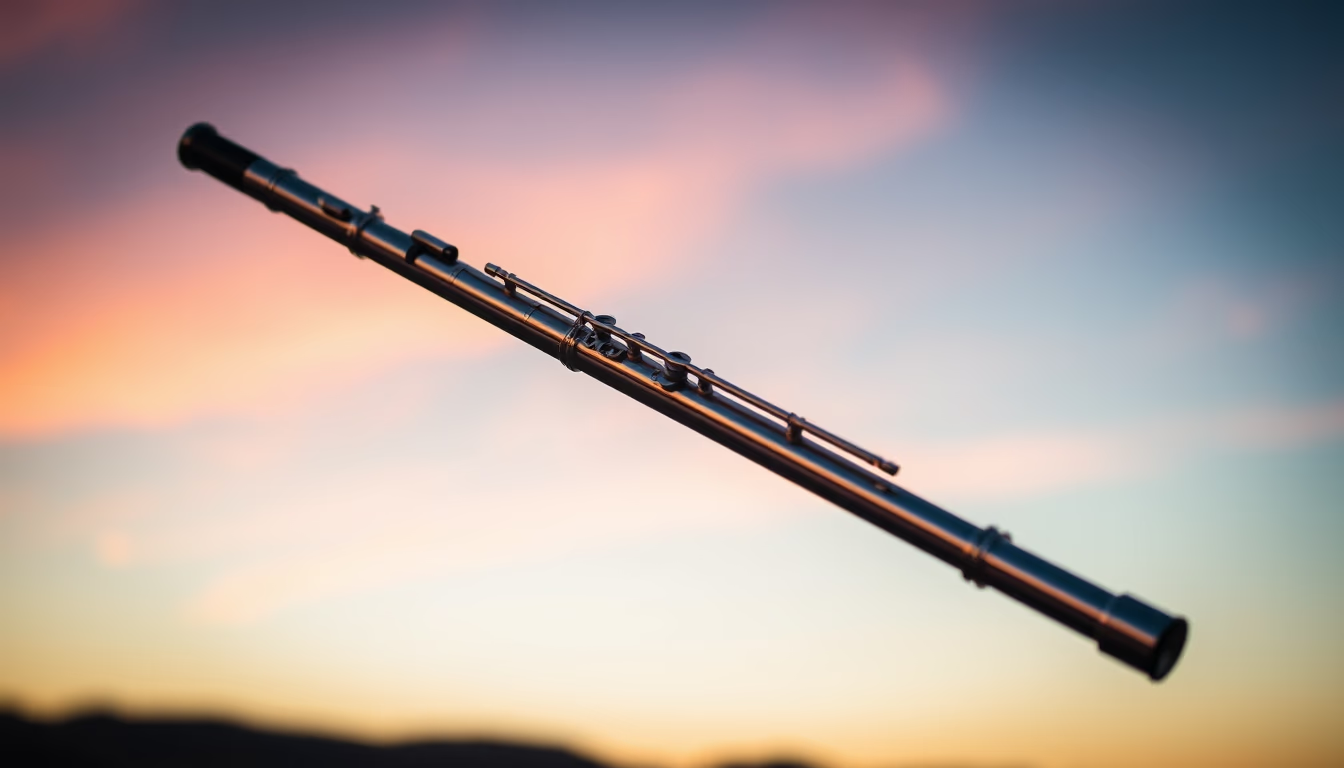
The piccolo, the smallest flute in the orchestra, produces high-pitched penetrating sounds used for dramatic effects and military marches.
About this subject
The piccolo is a woodwind instrument from the transverse flute family, measuring approximately 32 centimeters in length, about half that of a standard flute. Its tuning is an octave higher, giving it a bright, cutting timbre that stands out even in large orchestral ensembles. Traditionally made from wood (such as grenadilla) or metal, modern piccolos often combine both materials for tonal balance.
Historically, the piccolo emerged in the 18th century, derived from military flutes and the Italian flauto piccolo. It gained popularity in symphony orchestras from the 19th century onward, with composers like Beethoven, Tchaikovsky, and Sousa exploring its expressive potential. In Stravinsky's "The Rite of Spring," the piccolo plays a prominent role in the sacrificial dance section, creating tension. In marching bands, it is used for high melodies and calls.
Technically, the piccolo requires precise embouchure control and breath support due to its resistance. Unlike the flute, it has a conical bore that contributes to its shrill sound. Fingerings are similar to the flute, but the higher octave demands accuracy. Wooden piccolos are preferred by many professionals for a sweeter tone, while metal ones are common in bands for durability and projection.
Interestingly, the piccolo was used by Napoleon Bonaparte in his military campaigns to transmit orders over battle noise. In Brazil, the piccolo is key in frevo orchestras, helping create the fast rhythm typical of Pernambuco's carnival. In a long exposure, a photo can capture the movement of air through the instrument, revealing the physicality of sound production.
Frequently Asked Questions
What is the difference between a flute and a piccolo?
The piccolo is smaller, tuned an octave higher than the standard flute. It has a higher, more penetrating sound, and its construction is often wood or metal with a conical bore.
In which musical genres is the piccolo most used?
It is common in symphony orchestras, military bands, marching bands, and Brazilian frevo. It also appears in film scores and contemporary pieces.
How is the piccolo portrayed in long exposure photography?
In long exposure photos, the movement of blown air or finger vibrations can create visual effects that enhance the sound flow and dynamics of the instrument.
Direct URL
https://pub-c7d6a6ea828543ac903a74a341ccb2e1.r2.dev/imagens/piccolo-small-flute-long-exposure-p4.avifHow to credit
Include a visible link back to UtilizAí. Copy one of the snippets below:
<a href="https://xn--utiliza-eza.com/en/midia/imagens/piccolo-small-flute-long-exposure-p4">Piccolo small flute</a> by <a href="https://xn--utiliza-eza.com">UtilizAí</a>, licensed under <a href="https://creativecommons.org/licenses/by/4.0/">CC BY 4.0</a>.
[Piccolo small flute](https://xn--utiliza-eza.com/en/midia/imagens/piccolo-small-flute-long-exposure-p4) by [UtilizAí](https://xn--utiliza-eza.com), CC BY 4.0
License: CC-BY-4.0