Pharmaceutical research lab
1344×768 · AVIF · CC BY 4.0
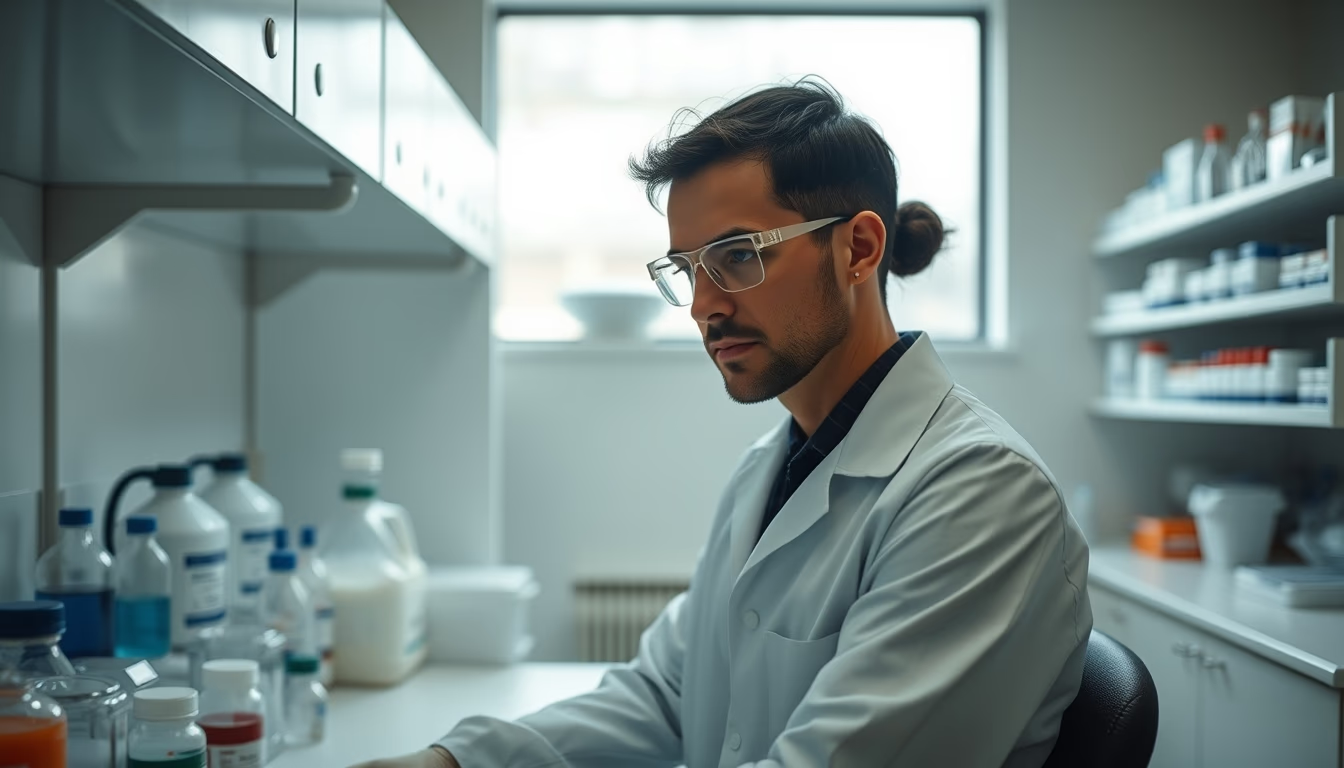
Pharmaceutical research labs are controlled environments where scientists develop drugs, conduct efficacy and safety tests, and pursue therapeutic innovations that save lives.
About this subject
A pharmaceutical research lab is a facility dedicated to the discovery and development of new medications. Equipped with high-precision instruments such as mass spectrometers, liquid chromatographs, and automated high-throughput screening systems, these labs enable scientists to analyze thousands of molecules for potential drug candidates. The process begins with identifying biological targets, often proteins involved in diseases, followed by compound synthesis, in vitro testing, and preclinical trials in animal models. In Brazil, institutions like Instituto Butantan and Fiocruz house cutting-edge labs that produce vaccines and essential drugs for the public health system. Global pharmaceutical research invests billions of dollars annually, with leading hubs in the United States, Europe, and Asia. A notable fact is that the first modern pharmaceutical research lab emerged in Germany in the late 19th century at Bayer, where aspirin was synthesized. Today, techniques such as artificial intelligence and combinatorial chemistry accelerate drug discovery, reducing development time from over a decade to just a few years in emergency cases, as seen during the COVID-19 pandemic. Safety is paramount: labs adhere to strict biosafety levels (1 to 4) to protect researchers and the environment.
Frequently Asked Questions
What are the main stages of drug development in a pharmaceutical lab?
Stages include target discovery, compound screening, preclinical testing (in vitro and in vivo), clinical trials in humans (phases 1 to 3), and regulatory approval. The entire process takes on average 10 to 15 years.
Why are pharmaceutical research labs important for public health?
They are crucial for developing vaccines, medications for chronic diseases and infections, and enabling rapid responses to health emergencies such as pandemics.
How is artificial intelligence transforming pharmaceutical research?
AI accelerates the identification of drug candidates, predicts molecular interactions, and optimizes clinical trials, reducing costs and development time.
Direct URL
https://pub-c7d6a6ea828543ac903a74a341ccb2e1.r2.dev/imagens/pharmaceutical-research-lab-minimalist-composition-p4.avifHow to credit
Include a visible link back to UtilizAí. Copy one of the snippets below:
<a href="https://xn--utiliza-eza.com/en/midia/imagens/pharmaceutical-research-lab-minimalist-composition-p4">Pharmaceutical research lab</a> by <a href="https://xn--utiliza-eza.com">UtilizAí</a>, licensed under <a href="https://creativecommons.org/licenses/by/4.0/">CC BY 4.0</a>.
[Pharmaceutical research lab](https://xn--utiliza-eza.com/en/midia/imagens/pharmaceutical-research-lab-minimalist-composition-p4) by [UtilizAí](https://xn--utiliza-eza.com), CC BY 4.0
License: CC-BY-4.0