Pharmaceutical research lab
1344×768 · AVIF · CC BY 4.0
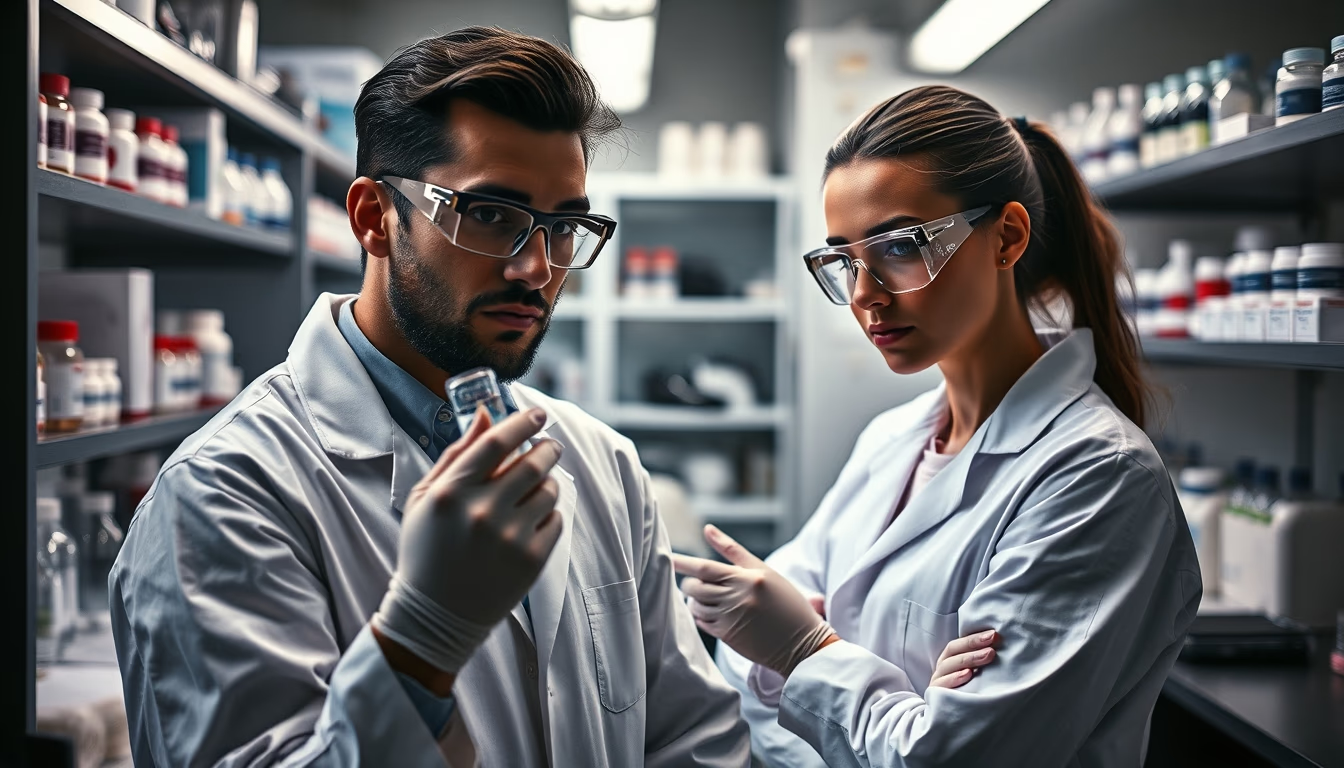
Pharmaceutical research labs are innovation hubs where new drugs are discovered, tested, and approved for human use, combining science, technology, and regulatory rigor.
About this subject
Pharmaceutical research labs are the heart of the drug industry. Multidisciplinary teams of chemists, biologists, pharmacologists, and physicians work together to turn a candidate molecule into a safe and effective medicine. The process begins with target discovery, followed by synthesis and screening of thousands of compounds. Only one in every 10,000 candidates reaches the market, after a journey that typically takes 10 to 15 years and costs billions of dollars.
These labs operate under strict Good Laboratory Practices (GLP) and are often certified by regulatory agencies such as ANVISA in Brazil or the FDA in the United States. State-of-the-art equipment, including mass spectrometers, high-performance liquid chromatographs, and cell culture systems, is routine. Safety is paramount: negative pressure rooms, fume hoods, and biological containment areas are common to protect both researchers and the environment.
Historically, the first modern pharmaceutical research lab was established by Bayer in the late 19th century, where aspirin was synthesized. In Brazil, the Butantan Institute lab stands out, producing serums and vaccines since 1901. Brazilian pharmaceutical research has grown, with a focus on biological products and generics. The COVID-19 pandemic accelerated innovation, with labs worldwide collaborating to develop vaccines in record time, demonstrating the responsiveness of science when investment and global coordination are present.
Interestingly, many labs now use artificial intelligence to predict molecule efficacy, reducing screening time. Robotics also automate repetitive experiments, allowing scientists to focus on data analysis. Despite advances, the failure rate remains high, especially in clinical phases, making each approval a remarkable achievement. Pharmaceutical research is a field where collaboration among academia, industry, and government is essential to tackle global challenges such as antimicrobial resistance and neglected diseases.
Frequently Asked Questions
How long does it take to develop a drug in a pharmaceutical research lab?
On average, it takes 10 to 15 years from molecule discovery to final approval. This includes preclinical research, three phases of clinical trials, and regulatory review.
What are the main pieces of equipment found in a pharmaceutical research lab?
Common equipment includes mass spectrometers, high-performance liquid chromatographs (HPLC), cell culture systems, confocal microscopes, and PCR machines. Automated workstations for compound screening are also typical.
Why is pharmaceutical research important for public health?
It is essential for developing new treatments and vaccines, combating emerging diseases, and improving quality of life. Without it, we would lack medicines for chronic, infectious, and rare diseases.
Direct URL
https://pub-c7d6a6ea828543ac903a74a341ccb2e1.r2.dev/imagens/pharmaceutical-research-lab-high-fashion-editorial-p10.avifHow to credit
Include a visible link back to UtilizAí. Copy one of the snippets below:
<a href="https://xn--utiliza-eza.com/en/midia/imagens/pharmaceutical-research-lab-high-fashion-editorial-p10">Pharmaceutical research lab</a> by <a href="https://xn--utiliza-eza.com">UtilizAí</a>, licensed under <a href="https://creativecommons.org/licenses/by/4.0/">CC BY 4.0</a>.
[Pharmaceutical research lab](https://xn--utiliza-eza.com/en/midia/imagens/pharmaceutical-research-lab-high-fashion-editorial-p10) by [UtilizAí](https://xn--utiliza-eza.com), CC BY 4.0
License: CC-BY-4.0