Pharmaceutical research lab
1344×768 · AVIF · CC BY 4.0
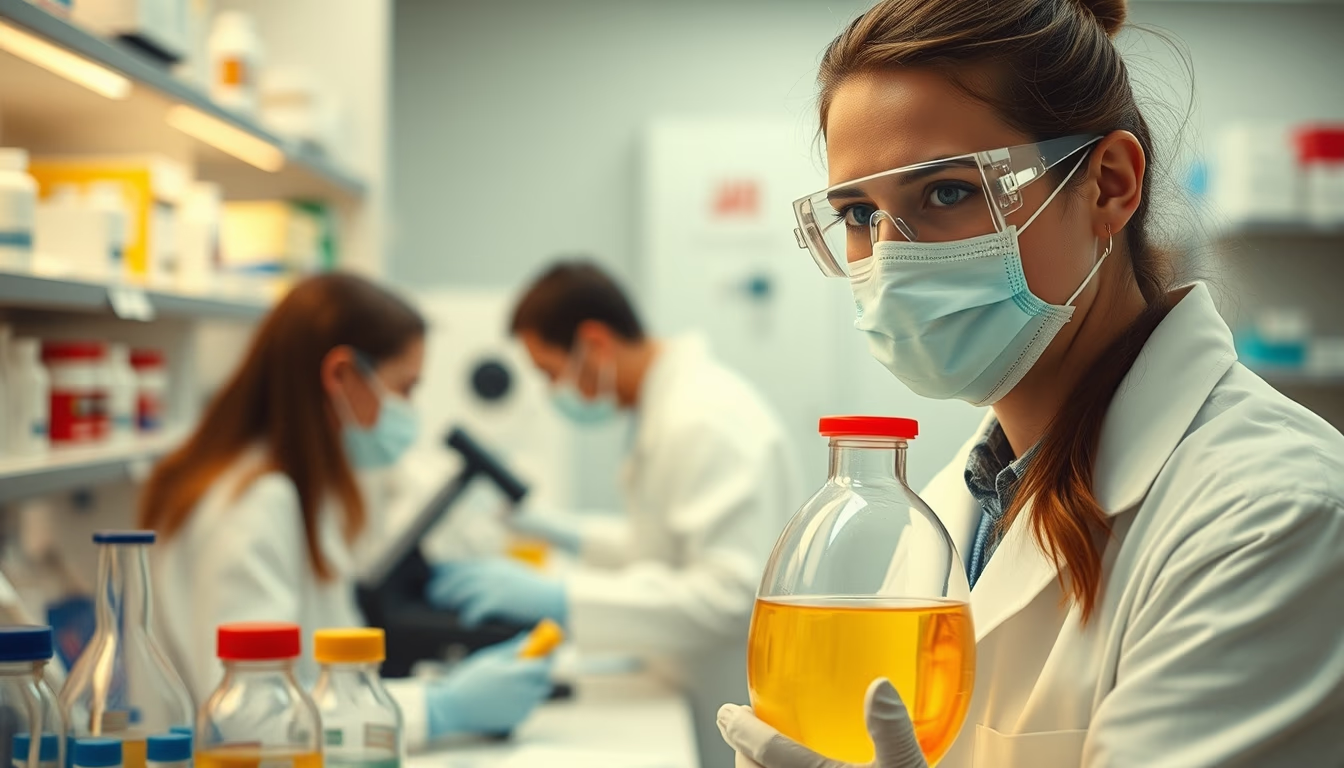
Pharmaceutical research labs are controlled environments where scientists develop and test new drugs, following rigorous safety and efficacy protocols.
About this subject
Pharmaceutical research labs are the heart of new drug development. Multidisciplinary teams of chemists, biologists, pharmacologists, and physicians work together to discover and validate substances that can treat diseases, alleviate symptoms, or prevent illnesses. The process begins with identifying biological targets, such as proteins or genes associated with a pathology, followed by the synthesis and screening of thousands of candidate compounds. This initial phase can take years and requires sophisticated equipment like mass spectrometers, chromatographs, and robotics systems for assay automation.
After a promising compound is identified, preclinical tests on cell cultures and laboratory animals assess its safety and efficacy. Only then does the drug candidate advance to clinical trials in humans, which take place in hospitals and clinics, but whose planning and data analysis are conducted in the research lab. Regulation is strict: agencies like ANVISA in Brazil and the FDA in the United States require detailed documentation of all laboratory procedures to ensure reproducibility of results.
Another key aspect is quality assurance and biosafety. Labs are designed with controlled airflows, chemical and biological safety cabinets, and containment areas for handling pathogenic agents or toxic substances. The use of lab coats, gloves, goggles, and masks is mandatory, and waste disposal follows stringent environmental rules. Many pharmaceutical research labs are also equipped to work with recombinant DNA technology and stem cells, paving the way for gene therapies and biologic drugs.
Historically, modern pharmaceutical research began in the 19th century with the synthesis of compounds like aspirin. Since then, advances such as penicillin, vaccines, and antiretrovirals have transformed medicine. Today, artificial intelligence and computational modeling accelerate drug discovery, reducing costs and development time. According to industry data, developing a single drug can cost billions of dollars and take over a decade, with high failure rates. Therefore, each pharmaceutical research lab represents a significant investment in science and innovation.
Frequently Asked Questions
What are the main steps of drug development in a pharmaceutical research lab?
The steps include target discovery and compound screening, preclinical in vitro and in vivo tests, clinical trials (phases I, II, III), and regulatory approval. The entire process takes an average of 10 to 15 years.
What safety standards are followed in pharmaceutical labs?
Labs follow good laboratory practices (GLP), biosafety levels (e.g., BSL-2 and BSL-3), mandatory use of PPE, access control, and regulated disposal of chemical and biological waste.
How is artificial intelligence being used in pharmaceutical research?
AI accelerates virtual compound screening, predicts molecular interactions, optimizes formulations, and analyzes large volumes of clinical and genomic data, reducing costs and increasing success rates.
Direct URL
https://pub-c7d6a6ea828543ac903a74a341ccb2e1.r2.dev/imagens/pharmaceutical-research-lab-film-grain-authentic-p12.avifHow to credit
Include a visible link back to UtilizAí. Copy one of the snippets below:
<a href="https://xn--utiliza-eza.com/en/midia/imagens/pharmaceutical-research-lab-film-grain-authentic-p12">Pharmaceutical research lab</a> by <a href="https://xn--utiliza-eza.com">UtilizAí</a>, licensed under <a href="https://creativecommons.org/licenses/by/4.0/">CC BY 4.0</a>.
[Pharmaceutical research lab](https://xn--utiliza-eza.com/en/midia/imagens/pharmaceutical-research-lab-film-grain-authentic-p12) by [UtilizAí](https://xn--utiliza-eza.com), CC BY 4.0
License: CC-BY-4.0