Petra treasury jordan
1344×768 · AVIF · CC BY 4.0
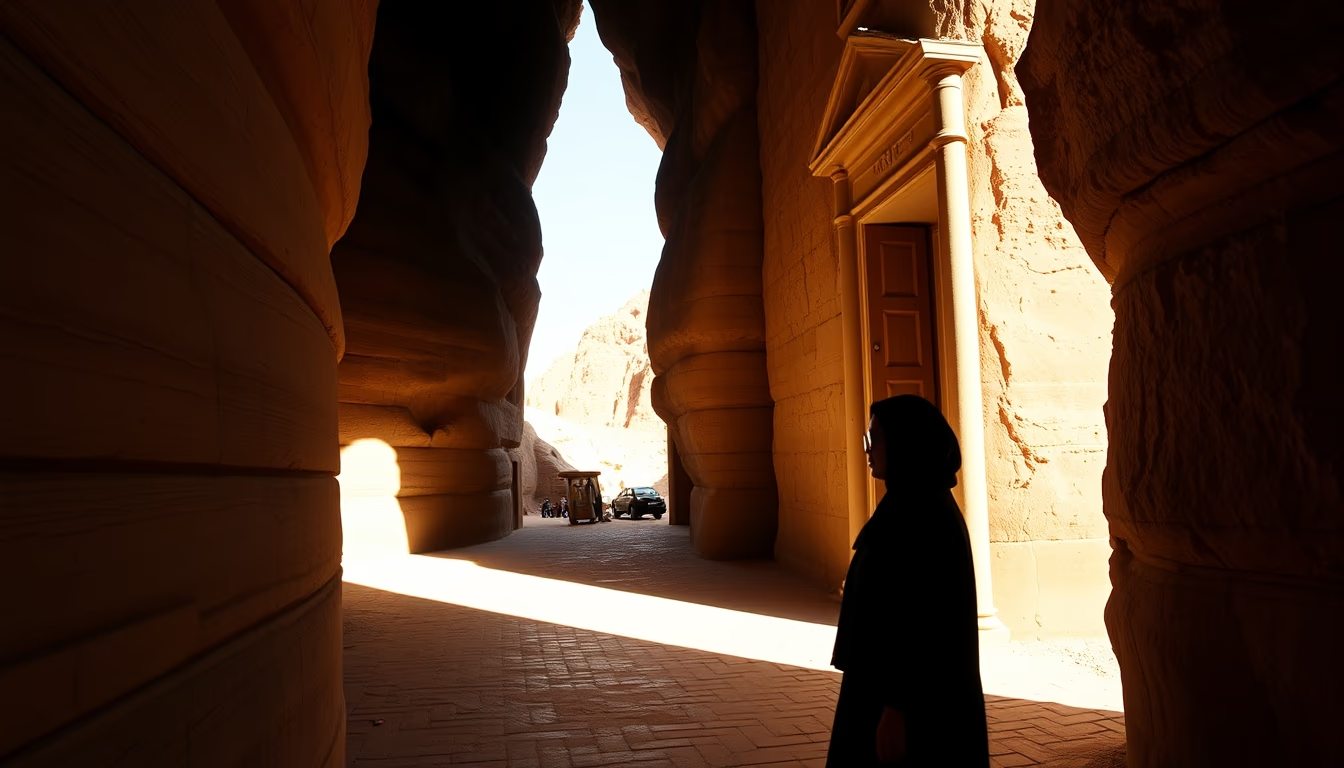
The Treasury of Petra (Al-Khazneh) is a monumental façade carved into the Jordanian desert rock, a symbol of the Nabatean civilization.
About this subject
The Treasury of Petra, known as Al-Khazneh, is one of the most iconic structures of the ancient world. Carved directly into the face of a rose-red sandstone cliff, the façade measures approximately 39 meters high and 25 meters wide. It was built during the reign of the Nabatean king Aretas IV (9 BC to 40 AD), likely as a royal mausoleum. The name "Treasury" comes from a Bedouin legend that pirates hid treasures in the stone urn at the top, which still bears bullet marks from attempts to retrieve them.
Al-Khazneh's architecture blends Greco-Roman, Egyptian, and Oriental influences, reflecting Petra's position as a crossroads of trade routes. The Corinthian columns, pediments, and sculptures of mythological figures such as the Dioscuri show Hellenistic features. Despite its name, there is no evidence it was a treasury; it was a monumental tomb or funerary temple. The precision of the rock carving is impressive, achieved with simple tools and techniques using ladders and levers.
Petra was declared a UNESCO World Heritage Site in 1985 and one of the New Seven Wonders of the World in 2007. Access to the Treasury is through a narrow 1.2 km gorge called the Siq, which gradually reveals the façade, creating a memorable scenic effect. The site attracts millions of visitors annually but faces conservation challenges due to erosion and mass tourism. Measures such as restoration and visitor control are underway to preserve the structure.
Interestingly, the Treasury served as a filming location for movies like "Indiana Jones and the Last Crusade" (1989), where it was portrayed as the hiding place of the Holy Grail. The international exposure increased its fame but also brought environmental impacts. Despite modern interventions, the structure remains a testament to Nabatean engineering and art, adapted to the desert terrain and extreme climate of the region.
Frequently Asked Questions
What is the Treasury of Petra?
The Treasury of Petra, or Al-Khazneh, is a monumental rock-cut façade in southern Jordan, built by the Nabateans as a royal mausoleum in the 1st century AD.
Why is it called the Treasury?
The name comes from Bedouin legends claiming a treasure was hidden in the stone urn at the top of the façade. Bullet marks on the urn are from attempts to break it open to retrieve the supposed treasure.
How can I visit the Treasury of Petra?
The entrance to Petra is in the town of Wadi Musa. To reach the Treasury, you must walk through the Siq, a 1.2 km gorge. It is recommended to hire a local guide and visit early to avoid crowds.
Direct URL
https://pub-c7d6a6ea828543ac903a74a341ccb2e1.r2.dev/imagens/petra-treasury-jordan-minimalist-composition-p8.avifHow to credit
Include a visible link back to UtilizAí. Copy one of the snippets below:
<a href="https://xn--utiliza-eza.com/en/midia/imagens/petra-treasury-jordan-minimalist-composition-p8">Petra treasury jordan</a> by <a href="https://xn--utiliza-eza.com">UtilizAí</a>, licensed under <a href="https://creativecommons.org/licenses/by/4.0/">CC BY 4.0</a>.
[Petra treasury jordan](https://xn--utiliza-eza.com/en/midia/imagens/petra-treasury-jordan-minimalist-composition-p8) by [UtilizAí](https://xn--utiliza-eza.com), CC BY 4.0
License: CC-BY-4.0