Petra treasury jordan
1344×768 · AVIF · CC BY 4.0
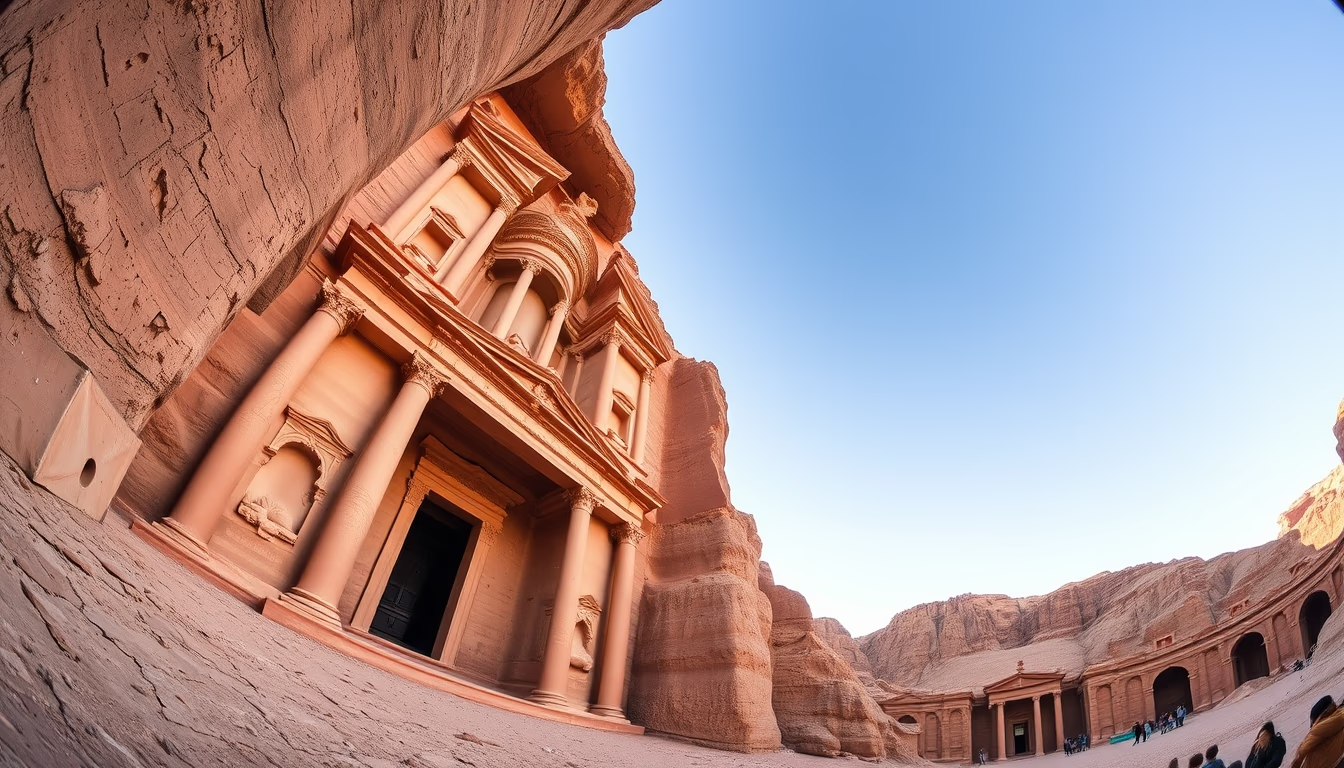
The Treasury of Petra, a rock-cut facade from the 1st century BC, is the most iconic symbol of the Nabatean city in Jordan.
About this subject
Al-Khazneh, known as the Treasury of Petra, is one of the most impressive facades carved directly into rose-red sandstone. Located in the archaeological site of Petra in southern Jordan, this structure was built during the reign of the Nabatean king Aretas IV, between 9 BC and 40 AD. It is believed to have been a royal mausoleum or a temple, reflecting the architectural sophistication of the Nabateans, who dominated the spice trade in the region.
The facade measures approximately 39 meters high and 25 meters wide, featuring Corinthian columns and a broken pediment, influenced by Hellenistic architecture. At the top, a stone funerary urn is surrounded by mythological figures. According to Bedouin legend, the urn contained treasures, giving rise to the name "Treasury." In reality, the urn is hollow and possibly held the ashes of a noble.
Petra was declared a UNESCO World Heritage Site in 1985 and elected one of the New Seven Wonders of the World in 2007. The Treasury is the first major structure visitors see after passing through the Siq, a 1.2-kilometer gorge. The facade appears in the film "Indiana Jones and the Last Crusade" (1989), boosting its global popularity.
Preservation of the Treasury faces challenges from wind, rain erosion, and heavy tourism. In 2020, archaeologists discovered an intact tomb beneath the monument containing 12 human skeletons and artifacts, providing new clues about its original use. Despite excavations, much of the interior remains inaccessible to the public, consisting of an empty square chamber measuring about 12 meters by 12 meters.
Frequently Asked Questions
Why is the Treasury of Petra called that?
The name comes from a Bedouin legend that a urn at the top of the facade contained treasures. Actually, the urn is hollow and probably held the ashes of a Nabatean noble.
What was the original function of the Treasury?
It is believed to be a royal mausoleum or temple. In 2020, an intact tomb was found beneath the monument, with skeletons and artifacts, supporting the funerary theory.
How to visit the Treasury in Petra?
Access to Petra is from the town of Wadi Musa. Visitors walk through the Siq, a 1.2 km canyon, to reach the Treasury. The site is open daily, with tickets purchased at the entrance.
Direct URL
https://pub-c7d6a6ea828543ac903a74a341ccb2e1.r2.dev/imagens/petra-treasury-jordan-fish-eye-wide-angle-p1.avifHow to credit
Include a visible link back to UtilizAí. Copy one of the snippets below:
<a href="https://xn--utiliza-eza.com/en/midia/imagens/petra-treasury-jordan-fish-eye-wide-angle-p1">Petra treasury jordan</a> by <a href="https://xn--utiliza-eza.com">UtilizAí</a>, licensed under <a href="https://creativecommons.org/licenses/by/4.0/">CC BY 4.0</a>.
[Petra treasury jordan](https://xn--utiliza-eza.com/en/midia/imagens/petra-treasury-jordan-fish-eye-wide-angle-p1) by [UtilizAí](https://xn--utiliza-eza.com), CC BY 4.0
License: CC-BY-4.0