Persian rug weaving
1344×768 · AVIF · CC BY 4.0
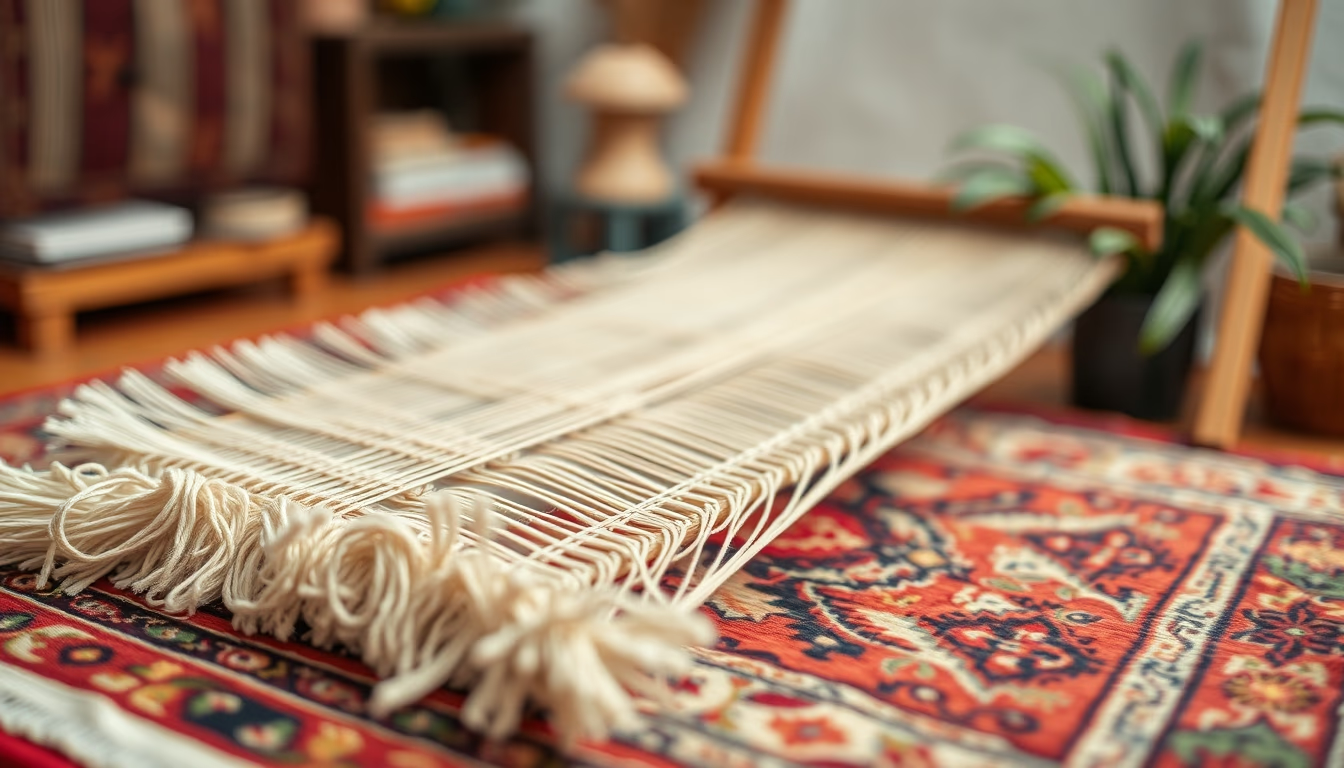
Persian rug weaving is one of the world's oldest textile traditions, blending ancient techniques with deep cultural symbolism.
About this subject
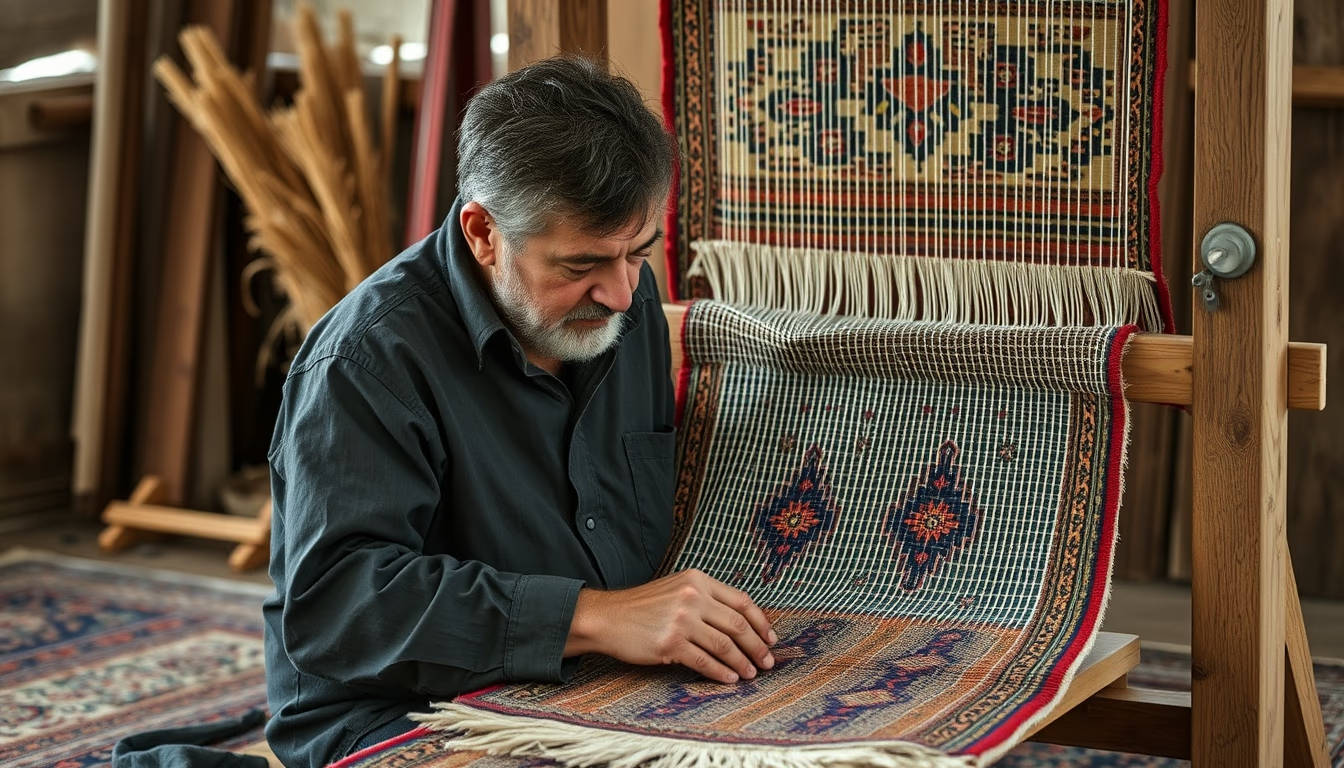
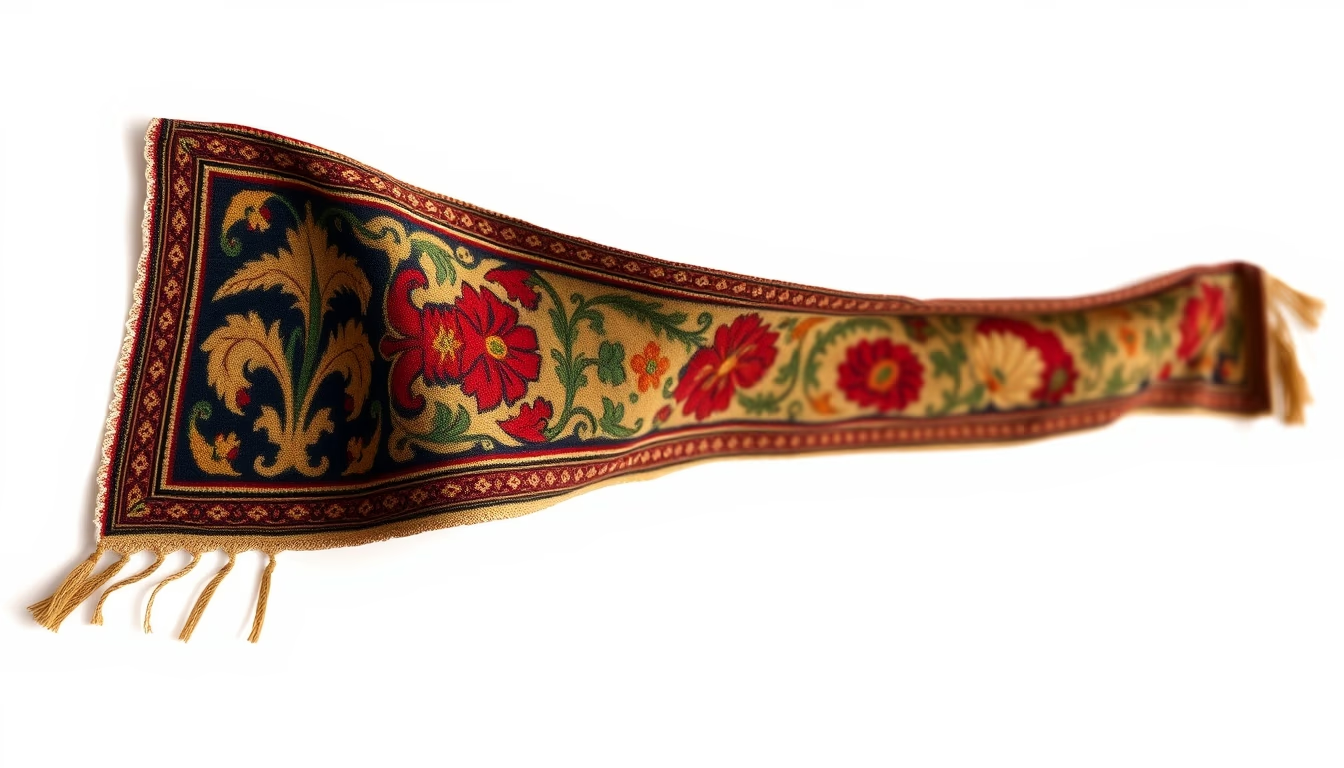
Persian rug weaving dates back over 2,500 years, originating in ancient Persia (modern-day Iran). These rugs are handcrafted on looms using symmetrical (Turkish) or asymmetrical (Persian) knots to create intricate patterns. Wool is the most common material, but silk and cotton are also used for luxury pieces. Each region of Iran developed distinct styles: Isfahan rugs are known for floral designs and central medallions, while Tabriz rugs feature geometric motifs and vibrant colors.
A single Persian rug can take months or years to complete, depending on size and pattern complexity. Natural dyes derived from plants such as madder (red) and indigo (blue) are traditionally used for coloring the yarn. Cultural significance extends beyond decoration: Persian rugs are often considered family heirlooms, passed down through generations, and many carry symbols of protection, fertility, or social status. In Iran's economy, the textile industry employs thousands of artisans, especially in rural villages like Nain and Kashan.
Unfortunately, genuine rug production faces challenges: competition from industrial imitations and a decline in young people interested in learning the craft. Organizations like the World Carpets Council promote authenticity certification and preservation programs. Even so, an original Persian rug remains a valued investment, with antique pieces fetching hundreds of thousands of dollars at auction. The city of Mashhad is one of the world's largest rug trading hubs, attracting global buyers.
Frequently Asked Questions
How can I tell if a Persian rug is authentic?
Check the knot density: genuine rugs have high knots per square inch (KPSI). Look for irregularities in the pattern, a sign of handcraft. Prefer certificates from organizations like the World Carpets Council or Iranian origin labels.
What are the types of knots used in Persian weaving?
The symmetrical (Turkish) knot is common in northwestern Iran, while the asymmetrical (Persian) knot prevails in the center and south. The asymmetrical knot allows more curvilinear and detailed patterns.
How long does it take to weave an average Persian rug?
A medium-sized rug (6x10 feet) can take from 6 months to 2 years, depending on design complexity and the number of artisans involved.
Direct URL
https://pub-c7d6a6ea828543ac903a74a341ccb2e1.r2.dev/imagens/persian-rug-weaving-tilt-shift-miniature-fresh7.avifHow to credit
Include a visible link back to UtilizAí. Copy one of the snippets below:
<a href="https://xn--utiliza-eza.com/en/midia/imagens/persian-rug-weaving-tilt-shift-miniature-fresh7">Persian rug weaving</a> by <a href="https://xn--utiliza-eza.com">UtilizAí</a>, licensed under <a href="https://creativecommons.org/licenses/by/4.0/">CC BY 4.0</a>.
[Persian rug weaving](https://xn--utiliza-eza.com/en/midia/imagens/persian-rug-weaving-tilt-shift-miniature-fresh7) by [UtilizAí](https://xn--utiliza-eza.com), CC BY 4.0
License: CC-BY-4.0