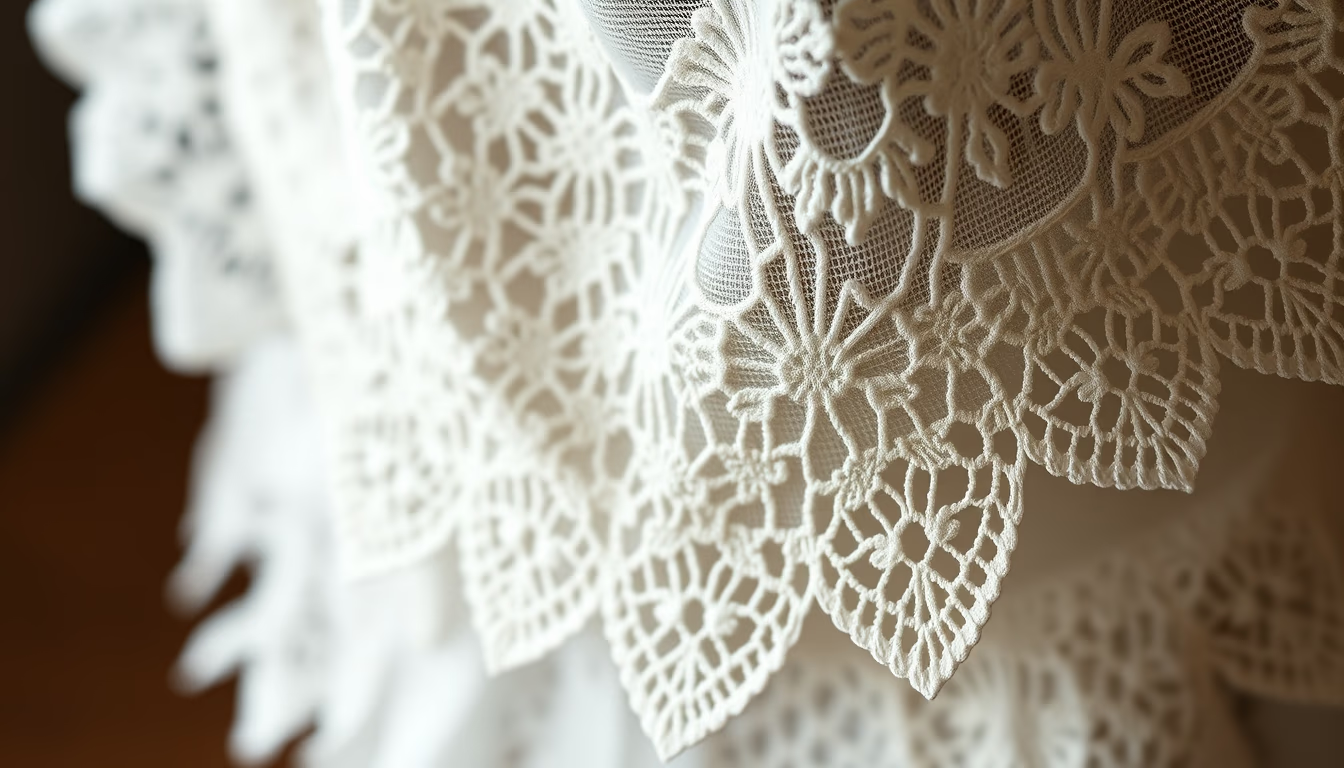
Persian rug weaving
1344×768 · AVIF · CC BY 4.0
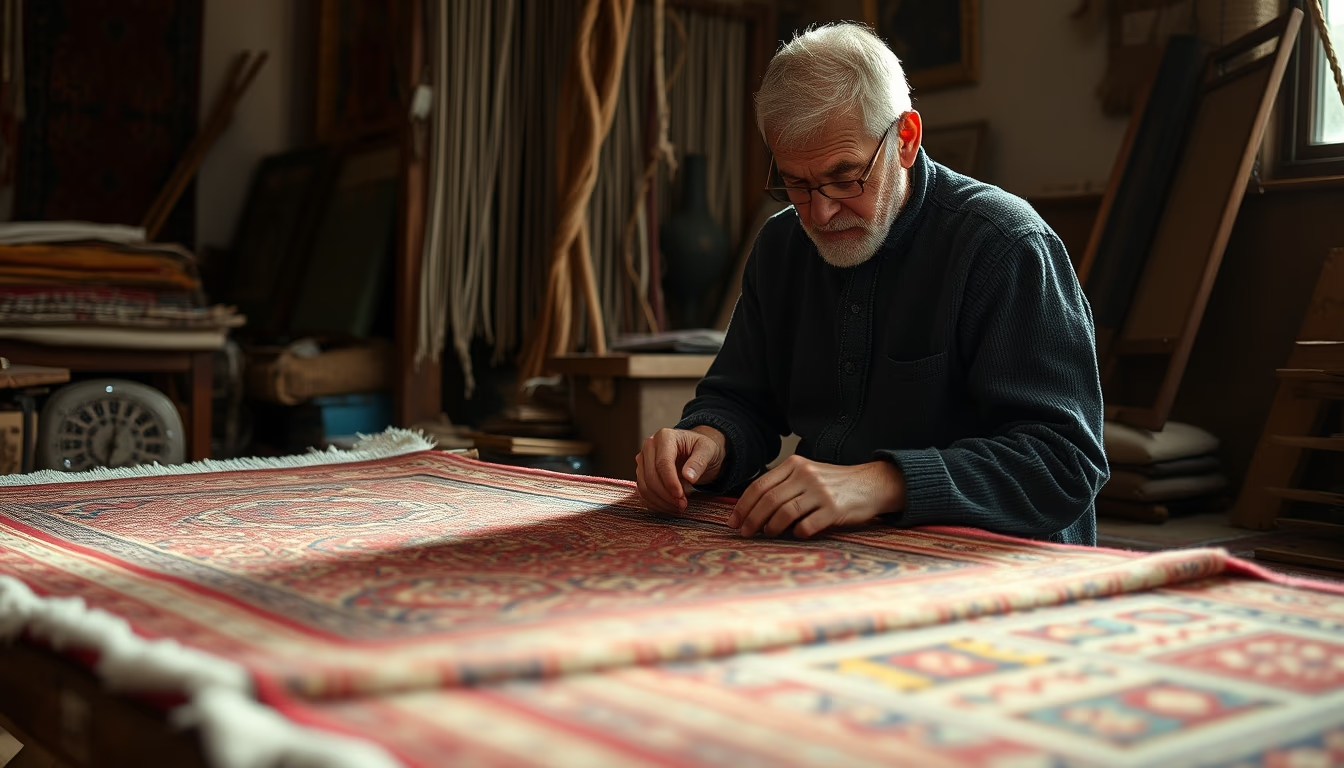
The intricate process of Persian rug weaving, an ancient art blending tradition, symbolism, and handcrafted skill.
About this subject
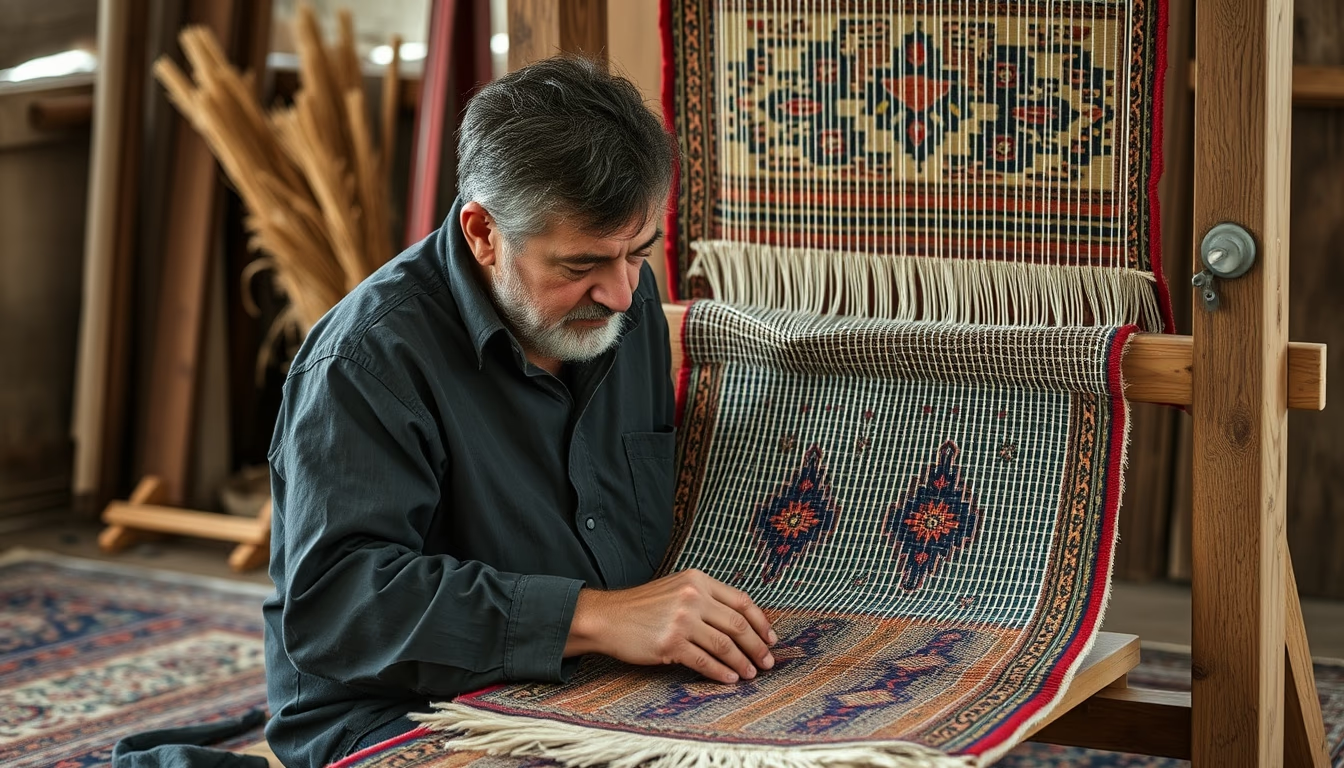
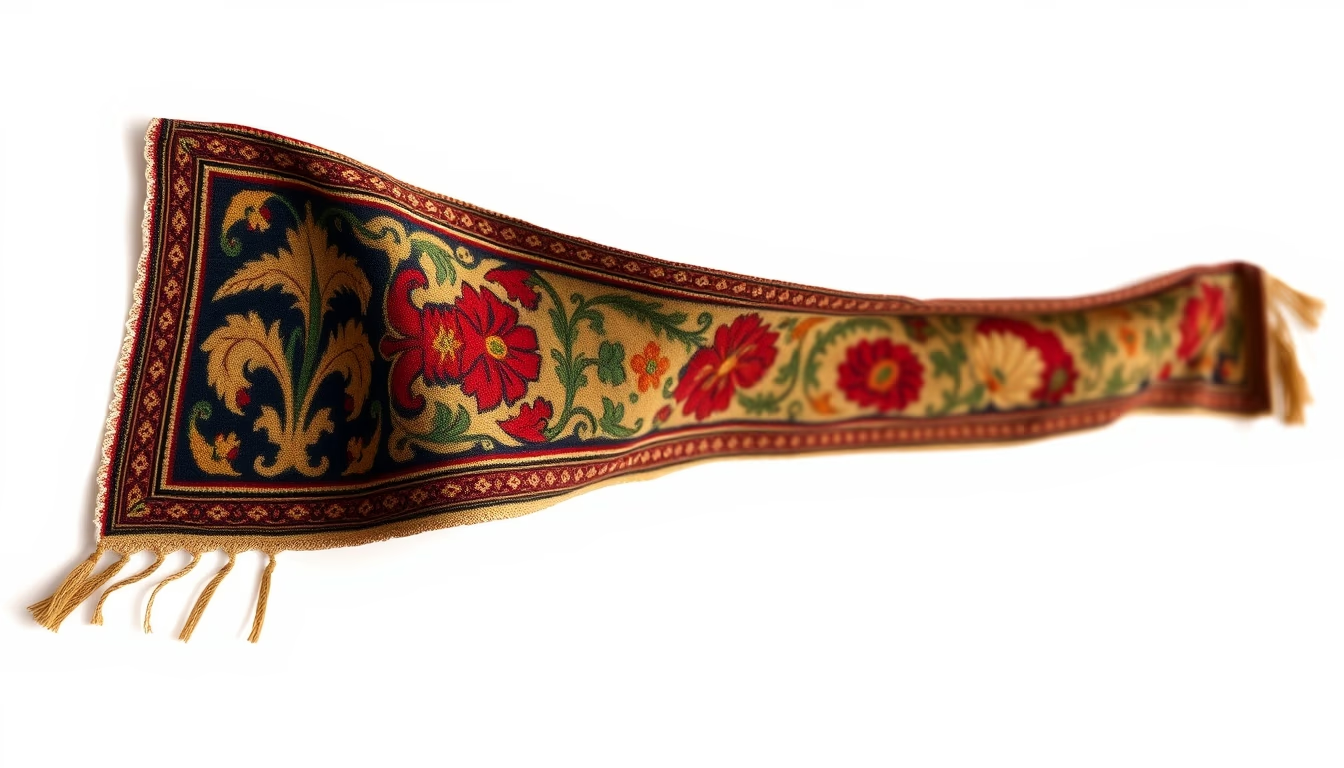
Persian rugs are world-renowned as textile masterpieces, handwoven by artisans in Iran (ancient Persia) for millennia. Each piece carries centuries of tradition, with patterns often symbolizing elements of nature, mythology, or religious beliefs. The technique involves a vertical loom where warp threads are stretched and knots are tied one by one to form the design. Common materials are wool, silk, and cotton, dyed with natural dyes from plants, insects, or minerals, ensuring vibrant and lasting colors.
Persian weaving is distinguished by the asymmetric knot (also called Persian or Senneh knot), which allows for higher density and finer detail compared to the symmetric Turkish knot. The process is extremely meticulous: a medium-sized rug can contain millions of knots, taking months or even years to complete. Each producing region has unique characteristics; for instance, rugs from Isfahan are famous for their floral designs and soft colors, while Tabriz rugs feature geometric patterns and earthy tones.
Culturally, Persian rugs transcend mere functionality. They are considered heirloom valuables, often given as dowries in marriages or displayed as status symbols. In 2010, UNESCO inscribed the traditional art of carpet weaving in Iran on the Representative List of the Intangible Cultural Heritage of Humanity. An interesting fact is the 'Gol Farang' (foreign flower) pattern, which introduced European influences into Persian design after trade contacts with the West. Today, the craft faces challenges such as competition from machine-made rugs and the difficulty of preserving ancient techniques, yet there remains a global market eager for authenticity and craftsmanship.
Frequently Asked Questions
How long does it take to weave a Persian rug?
It ranges from a few months to several years, depending on size, design complexity, and knot density. A medium-sized rug can take 6 months to 2 years to complete by a single artisan.
What are the main production centers for Persian rugs in Iran?
The most renowned centers include Isfahan, Tabriz, Qom, Kashan, and Mashhad. Each has distinct styles, such as Isfahan's florals or Tabriz's geometric patterns.
How to identify an authentic Persian rug?
Check the knot type (asymmetric Persian knot), knot density per square meter, use of natural dyes, and origin certification. Authentic rugs often have slight imperfections that indicate handcrafting.
Direct URL
https://pub-c7d6a6ea828543ac903a74a341ccb2e1.r2.dev/imagens/persian-rug-weaving-fine-art-photography-fresh15.avifHow to credit
Include a visible link back to UtilizAí. Copy one of the snippets below:
<a href="https://xn--utiliza-eza.com/en/midia/imagens/persian-rug-weaving-fine-art-photography-fresh15">Persian rug weaving</a> by <a href="https://xn--utiliza-eza.com">UtilizAí</a>, licensed under <a href="https://creativecommons.org/licenses/by/4.0/">CC BY 4.0</a>.
[Persian rug weaving](https://xn--utiliza-eza.com/en/midia/imagens/persian-rug-weaving-fine-art-photography-fresh15) by [UtilizAí](https://xn--utiliza-eza.com), CC BY 4.0
License: CC-BY-4.0