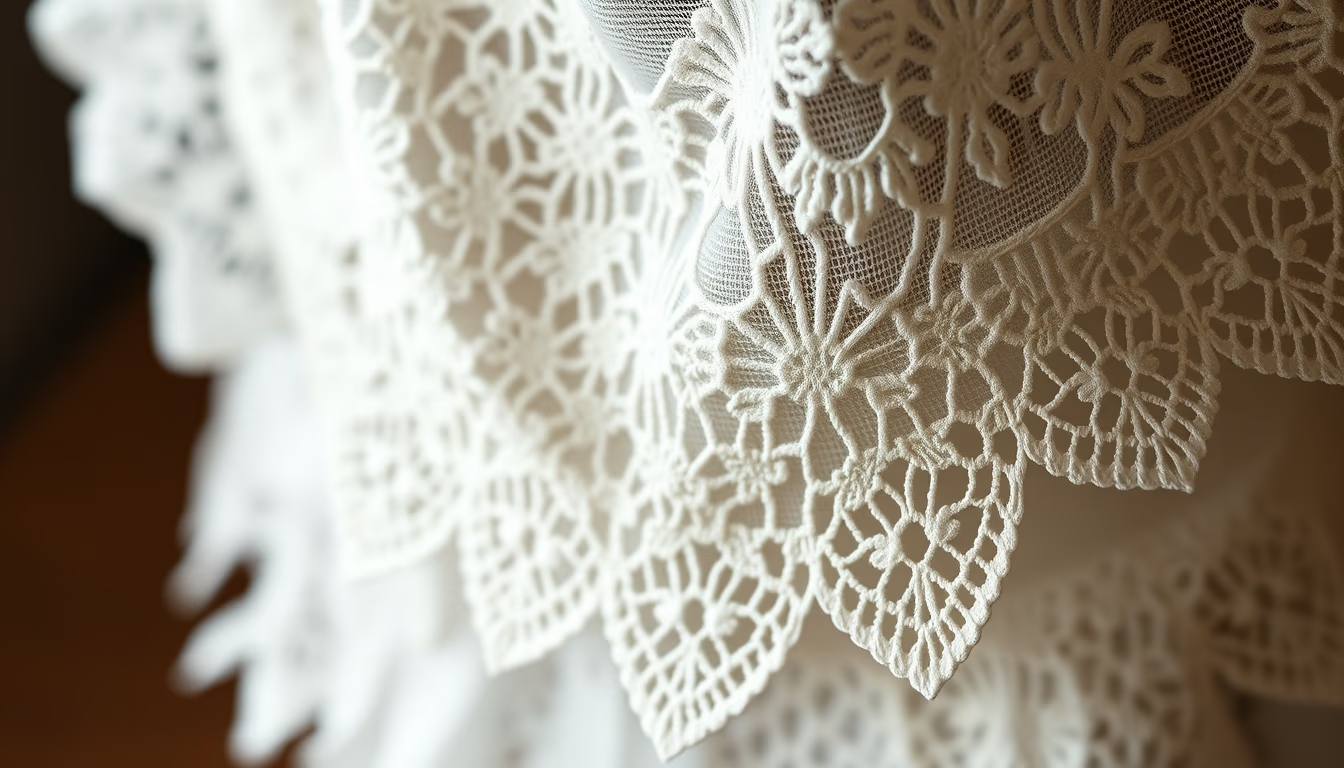
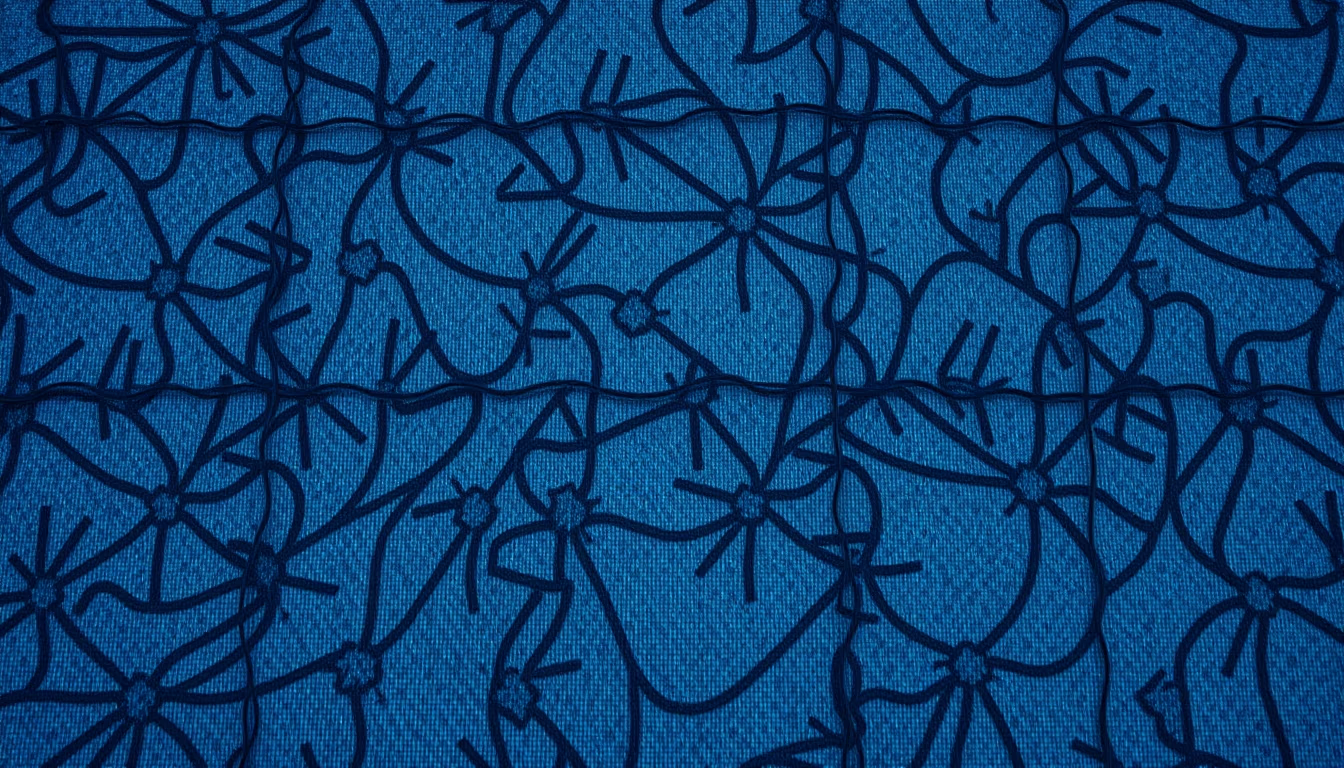
Persian rug weaving
1344×768 · AVIF · CC BY 4.0
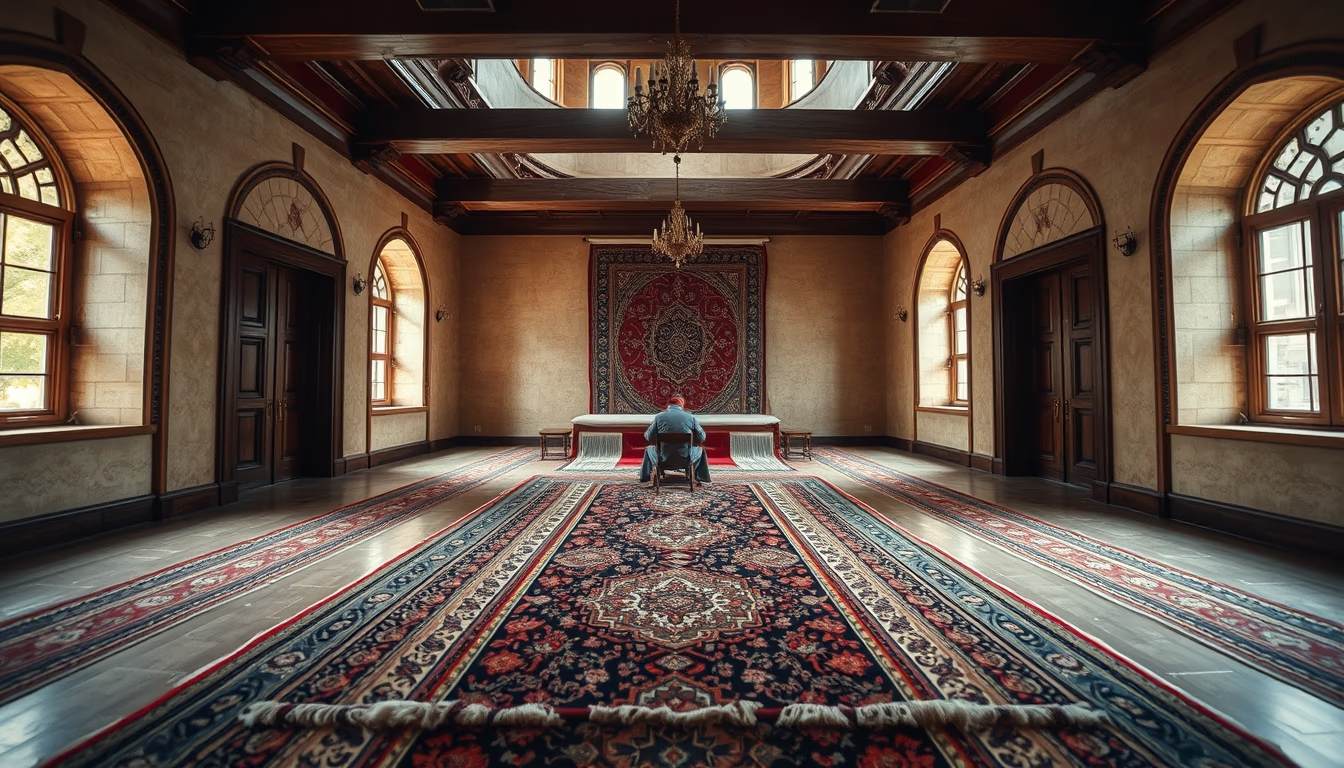
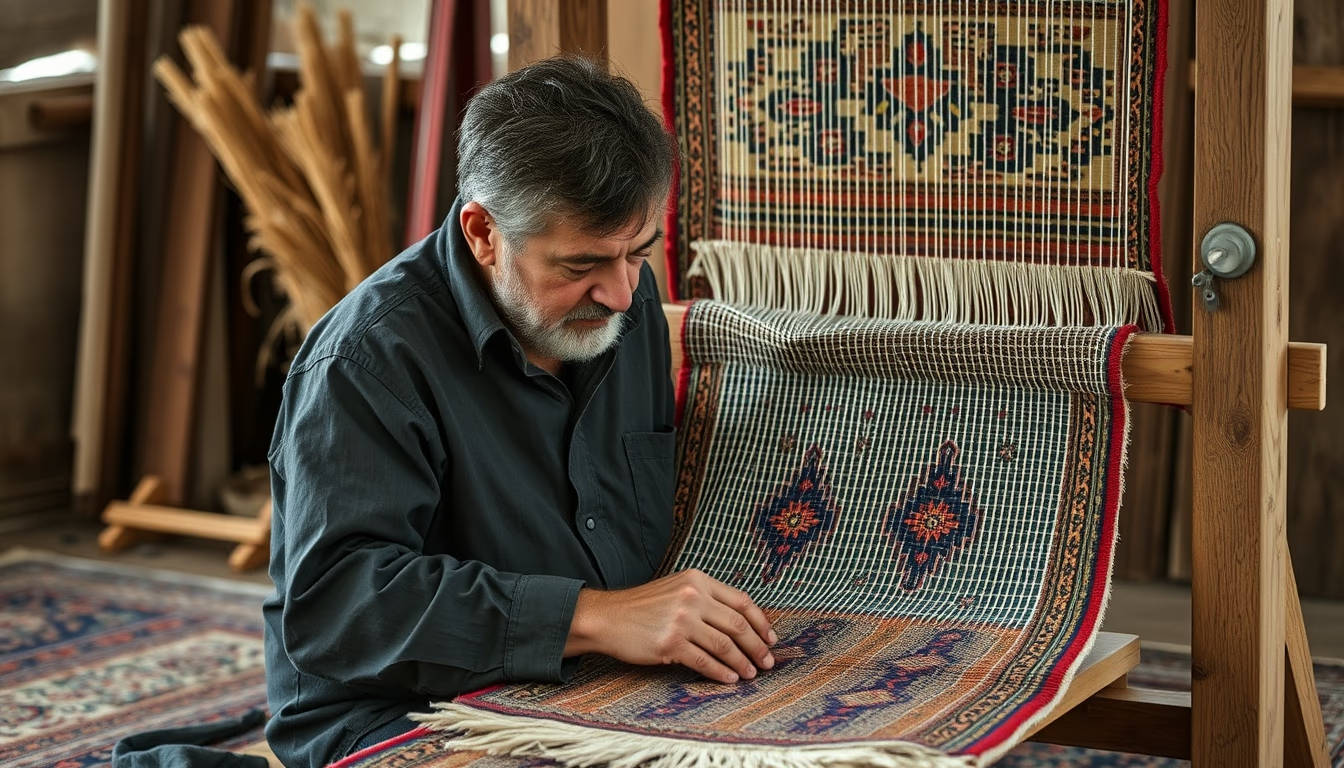
The Persian handloom, a cultural heritage of Iran, produces carpets with thousand-year-old knots blending Islamic geometry and Zoroastrian symbolism.
About this subject
Persian carpet weaving is one of the world's oldest handicraft traditions, with archaeological evidence dating back to the Achaemenid period (550, 330 BCE). The so-called Pazyryk carpet, from the 5th century BCE, discovered in a frozen tomb in Siberia, confirms that the Persian Empire already mastered the double-knot technique (senneh) and sophisticated geometric patterns. This art was refined over the centuries, incorporating Islamic influences after the Arab conquest in the 7th century, when floral and calligraphic motifs began to coexist with pre-Islamic symbols such as the Senmurv (winged griffin).
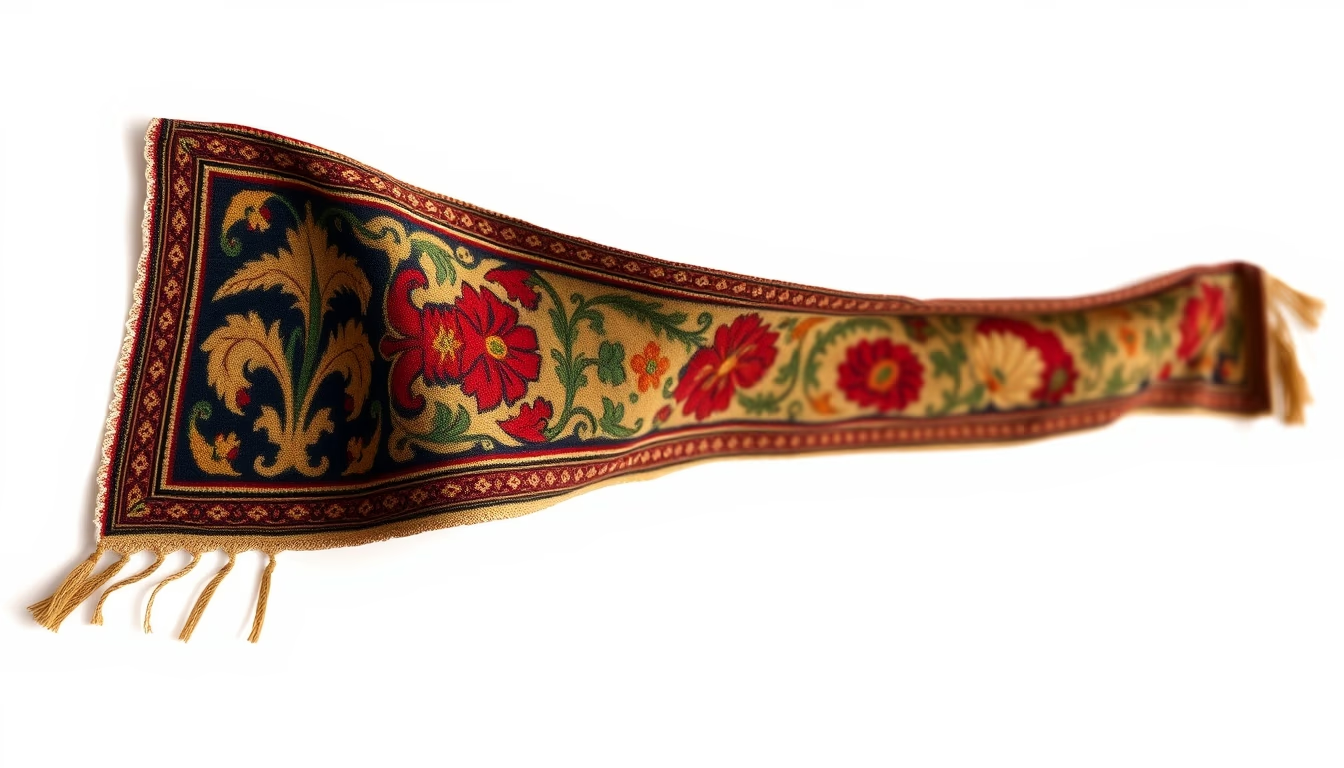
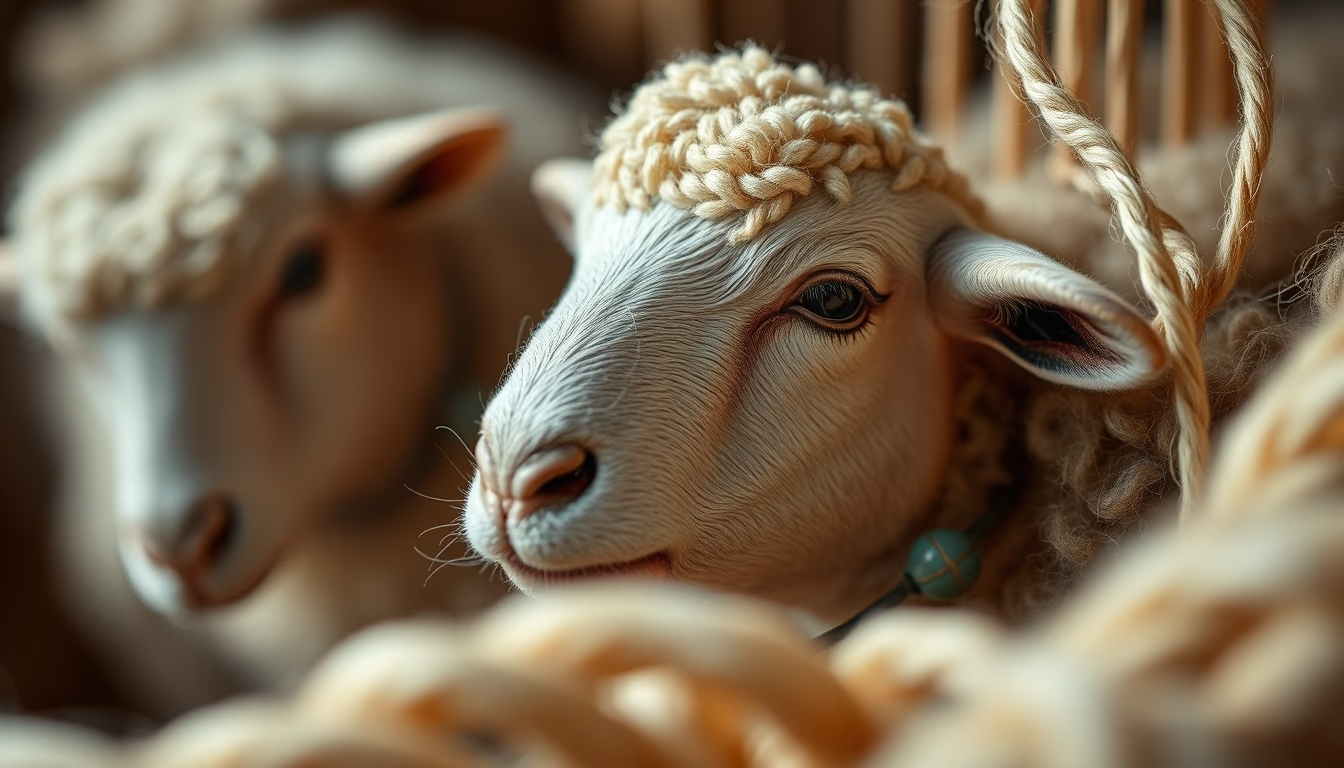
The weaving process uses sheep wool or silk, dyed with natural colorants extracted from plants like madder (Rubia tinctorum) for red and indigo (Indigofera tinctoria) for blue. Each Persian carpet is characterized by the number of knots per square meter, ranging from 200 to over 1,000, determining the resolution of the design. Cities such as Isfahan, Tabriz, and Qom are renowned production centers, each with distinct patterns: Tabriz is known for carpets with central medallions and arabesques, while Qom produces silk pieces with high knot density.
Today, Iran is the world's largest exporter of handmade carpets, generating about $420 million annually (2020 data). UNESCO recognized traditional Persian carpet weaving as an Intangible Cultural Heritage of Humanity in 2010, highlighting its role in national identity and intergenerational knowledge transmission. Despite competition from machine-made carpets, demand for authentic pieces remains strong among collectors and decorators who value the ancient technique and uniqueness of each work.
Frequently Asked Questions
What is the difference between Persian and Oriental rugs?
Persian rugs are a subset of Oriental rugs, produced exclusively in Iran (formerly Persia). They are distinguished by the use of the Persian (asymmetric) knot and patterns such as medallions, arabesques, and region-specific floral motifs.
How can I identify an authentic Persian rug?
Check the back of the rug: in the Persian (senneh) knot, the threads are visible in diagonal lines. Additionally, authentic rugs have subtle irregularities in design and color because they are handmade. Certificates of origin and seals from cities like Tabriz or Isfahan also help.
What is the most valuable Persian rug ever sold?
The most expensive Persian rug sold at auction is a 16th-century Safavid carpet known as the 'Clark Sickle-Leaf Carpet,' which fetched US$ 33.8 million in 2013 at Sotheby's.
Direct URL
https://pub-c7d6a6ea828543ac903a74a341ccb2e1.r2.dev/imagens/persian-rug-weaving-architectural-photography-fresh0.avifHow to credit
Include a visible link back to UtilizAí. Copy one of the snippets below:
<a href="https://xn--utiliza-eza.com/en/midia/imagens/persian-rug-weaving-architectural-photography-fresh0">Persian rug weaving</a> by <a href="https://xn--utiliza-eza.com">UtilizAí</a>, licensed under <a href="https://creativecommons.org/licenses/by/4.0/">CC BY 4.0</a>.
[Persian rug weaving](https://xn--utiliza-eza.com/en/midia/imagens/persian-rug-weaving-architectural-photography-fresh0) by [UtilizAí](https://xn--utiliza-eza.com), CC BY 4.0
License: CC-BY-4.0