Persian perfume vial
1344×768 · AVIF · CC BY 4.0
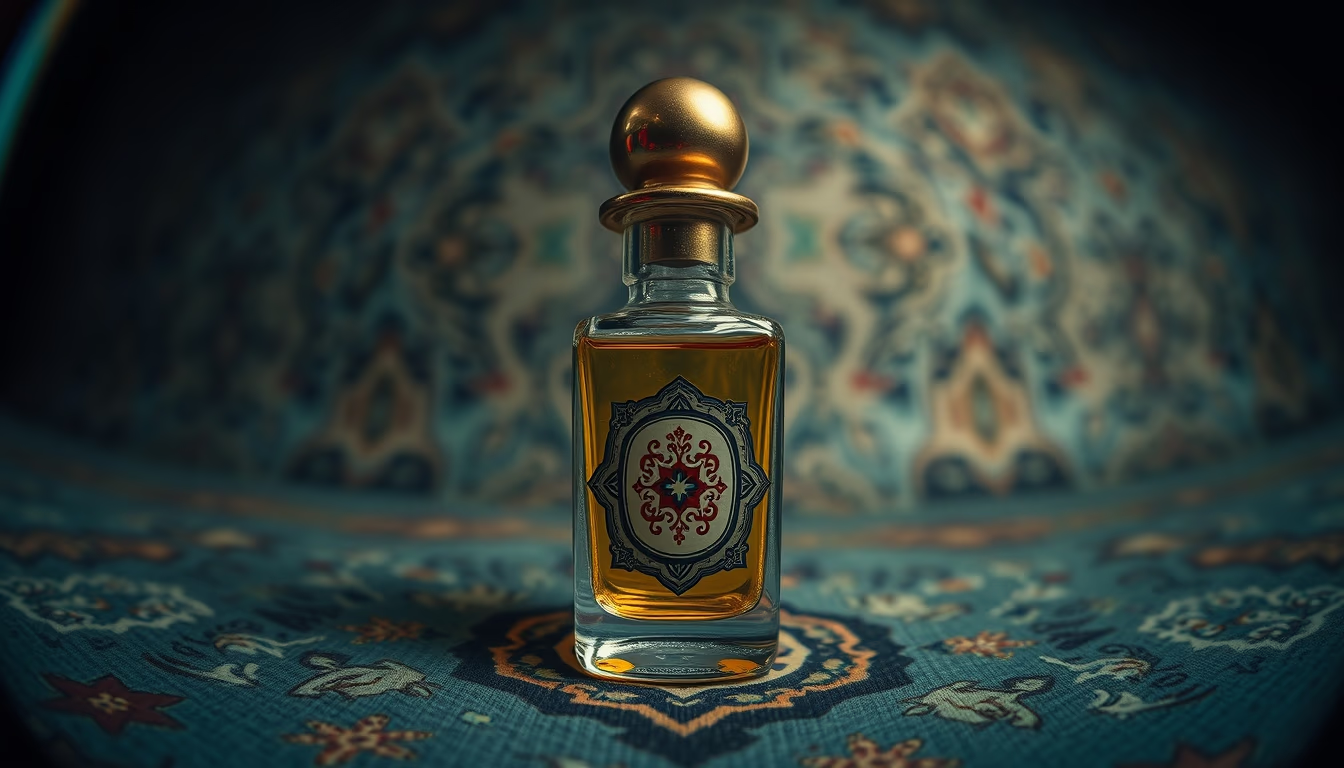
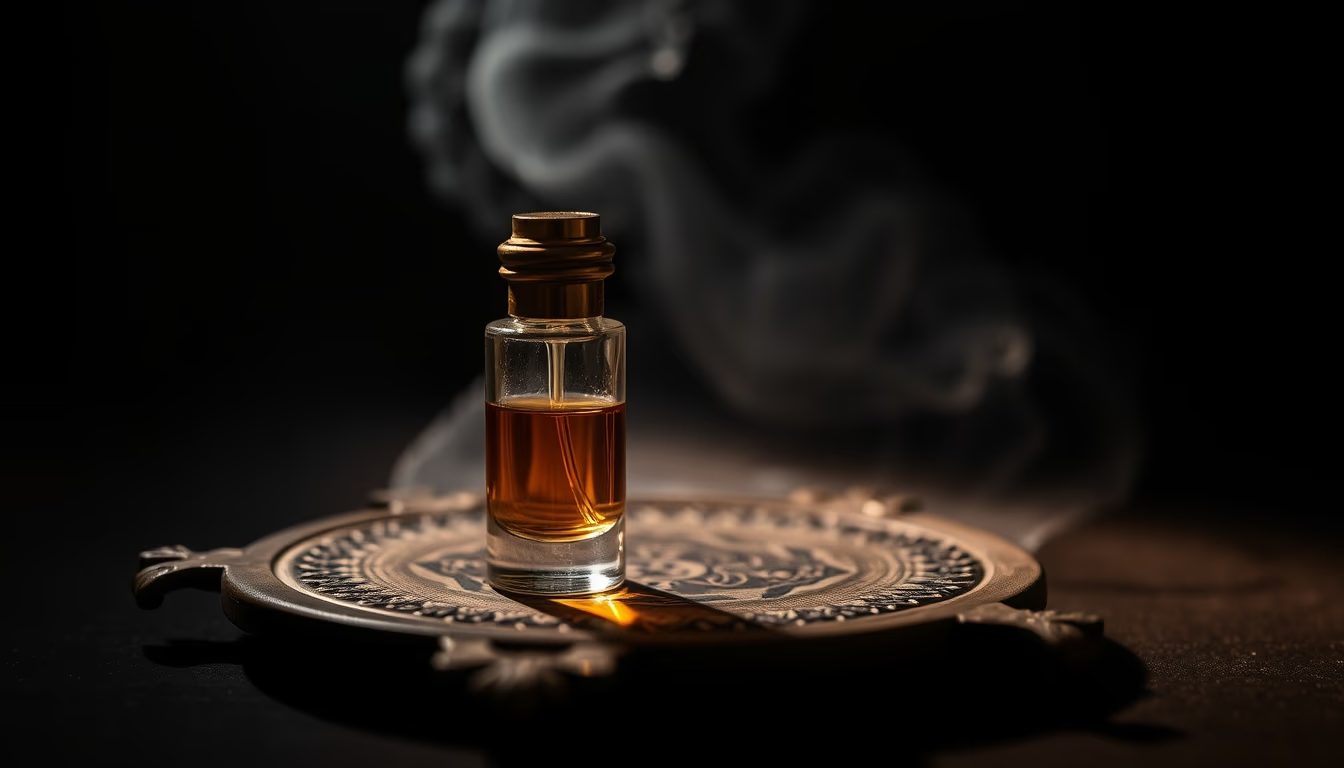
A traditional Persian perfume vial, often decorated with arabesques and calligraphy, represents centuries of perfumery tradition in Iran.
About this subject
The Persian perfume vial is an artifact that encapsulates the rich history of perfumery in Iran, dating back to the Achaemenid Empire (550 BC). In ancient Persia, fragrances were used in religious rituals, royal baths, and diplomatic gifts. Essential oils extracted from roses, saffron, and sandalwood were stored in glass or ceramic vials, often designed to preserve purity. The city of Shiraz became famous for rose water production, and its vials were exported across the Islamic world.
Persian vials are distinguished by their elaborate design, blending Islamic and pre-Islamic influences. Artisans employ centuries-old glassblowing, inlay, and enameling techniques. Floral motifs like roses and lilies are common, along with geometric patterns and Persian calligraphy. Many vials feature an elongated shape with a narrow neck, topped with glass or wooden stoppers. Mosaic glass, which imitates semiprecious stones, is a typical local technique.
Culturally, perfume has always played a central role in Iranian society. Offering a perfume vial was a gesture of respect and hospitality. In religious ceremonies such as Nowruz (Persian New Year), fragrances are used to purify spaces. The tradition of gifting perfume vials persists today, with pieces ranging from simple travel containers to ornate works of art decorated with gold and gemstones.
Intriguingly, Persian perfume vials influenced glass design throughout the Islamic world, especially during the Islamic Golden Age (8th to 13th centuries). Museums like the Glass Museum of Iran in Tehran display specimens over a thousand years old. Contemporary production maintains traditions, with artisans in Isfahan and Shiraz creating pieces that blend heritage and innovation, attracting collectors and perfume enthusiasts.
Frequently Asked Questions
How are Persian perfume vials made?
Vials are traditionally made by hand-blowing glass or using ceramics. The process includes high-temperature shaping, adding colored enamels, and for finer pieces, gold or stone inlays. The mosaic glass technique is a Persian specialty.
What is the significance of perfume in Persian culture?
Perfume has deep roots in Persian culture, used in religious rituals, traditional medicine, and as a status symbol. The production of rose water in Shiraz is a millennia-old tradition, and gifting a perfume vial is a gesture of courtesy.
Where can I find authentic Persian perfume vials?
Authentic Persian vials can be purchased in bazaars of cities like Isfahan and Shiraz, as well as specialized online stores. Museums such as the National Museum of Iran and the Glass Museum of Tehran display historical specimens.
Direct URL
https://pub-c7d6a6ea828543ac903a74a341ccb2e1.r2.dev/imagens/persian-perfume-vial-fish-eye-wide-angle-fresh9.avifHow to credit
Include a visible link back to UtilizAí. Copy one of the snippets below:
<a href="https://xn--utiliza-eza.com/en/midia/imagens/persian-perfume-vial-fish-eye-wide-angle-fresh9">Persian perfume vial</a> by <a href="https://xn--utiliza-eza.com">UtilizAí</a>, licensed under <a href="https://creativecommons.org/licenses/by/4.0/">CC BY 4.0</a>.
[Persian perfume vial](https://xn--utiliza-eza.com/en/midia/imagens/persian-perfume-vial-fish-eye-wide-angle-fresh9) by [UtilizAí](https://xn--utiliza-eza.com), CC BY 4.0
License: CC-BY-4.0