Persian perfume vial
1344×768 · AVIF · CC BY 4.0
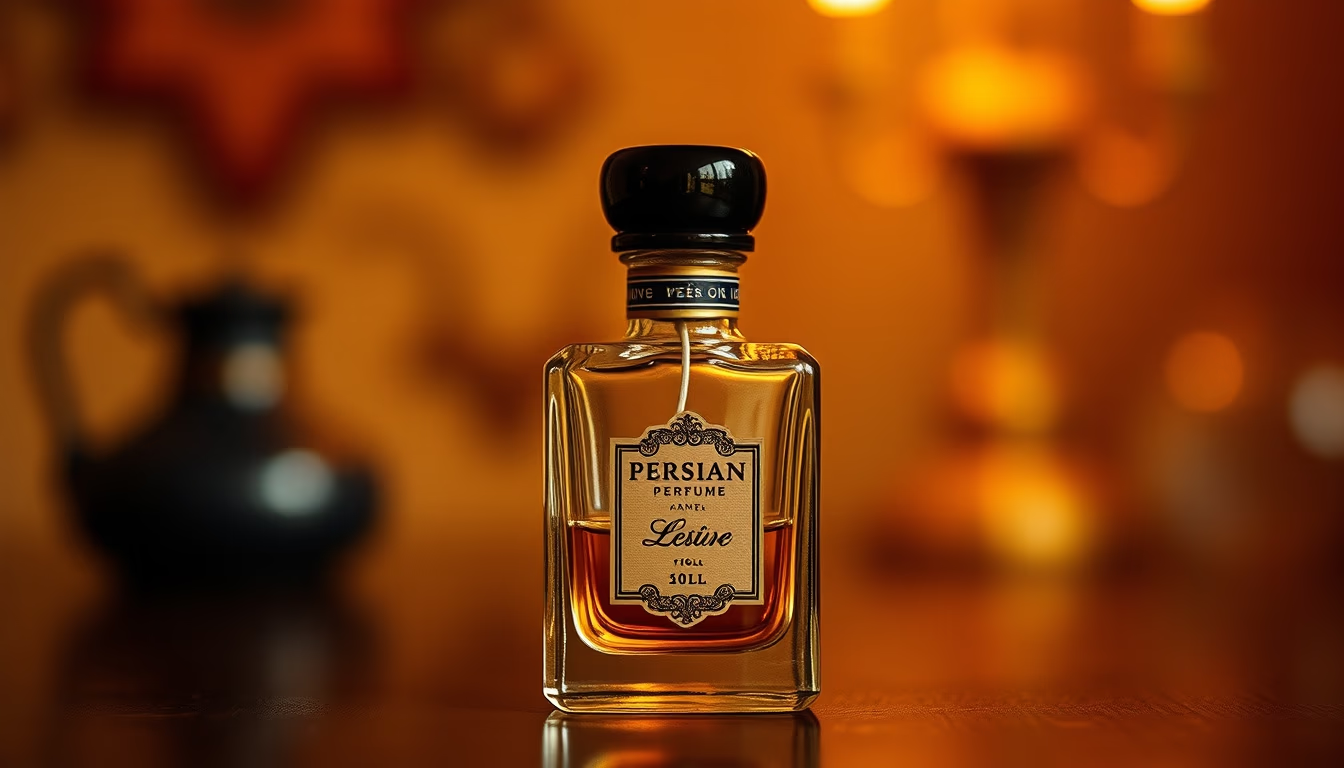
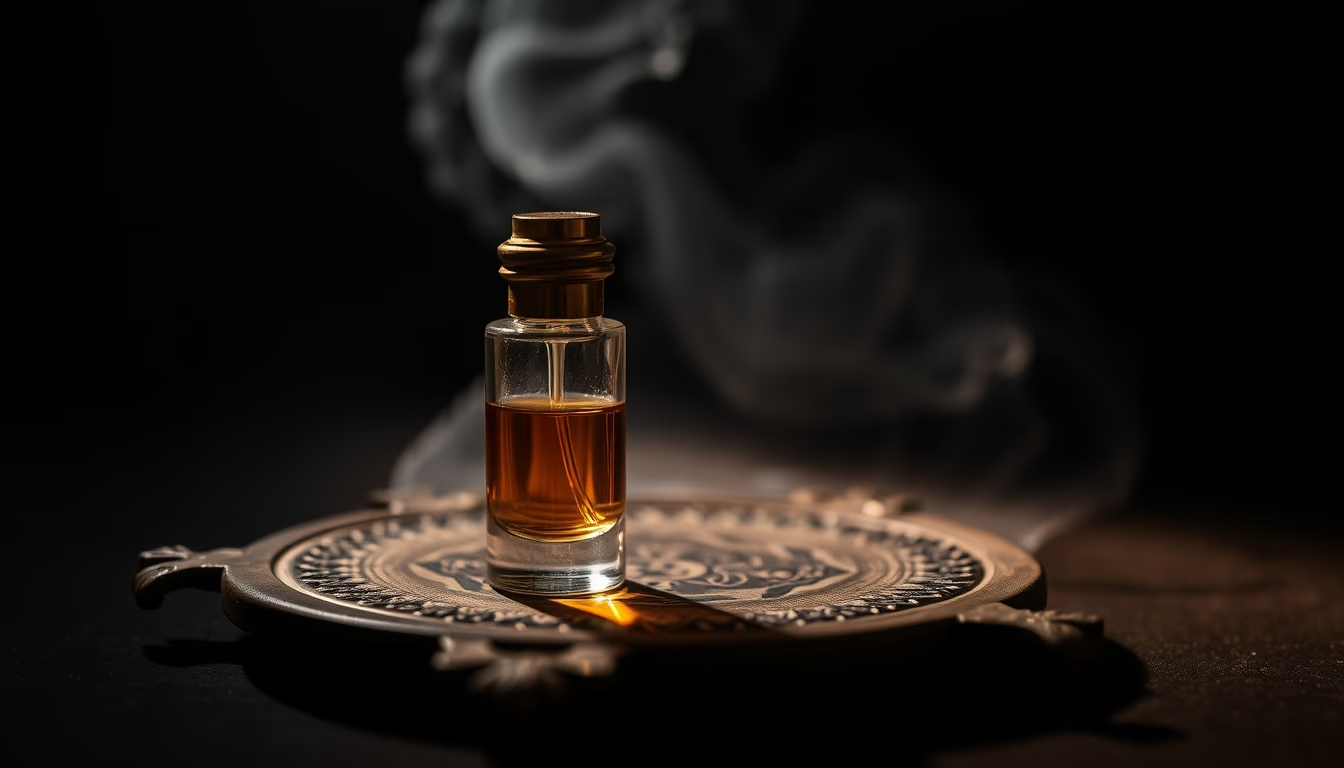
Persian perfume vials are historical artifacts combining blown glass, precious metals, and calligraphy, used since the Achaemenid Empire.
About this subject
Persian perfume vials, originating from the ancient Persian Empire (c. 550 BCE), represent a fusion of art and functionality. They were often made of blown glass, a technique spread by Phoenicians and perfected by Persians in what is now southwestern Iran. Pieces could be crafted from alabaster, ceramic, or metal, with details in gold and silver. Designs featured floral motifs, geometric patterns, and poetic verses in Persian calligraphy, reflecting the importance of perfume in local culture.
In ancient Persia, perfumes were associated with religious rituals and the royal court. The vial held aromatic oils such as rose, musk, and amber, brought in via the Silk and Spice Routes. During the Safavid period (16th, 18th centuries), Persian glass production peaked in centers like Shiraz and Isfahan. These vials were often sealed with wax to preserve the scent.
The technique of engraving and enameling made each piece unique. Many surviving examples are in museums like the Louvre or the National Museum of Iran. In the antiques market, intact 18th-century vials can fetch tens of thousands of dollars. Today, Iranian artisans sustain the tradition using handmade molds and kilns to recreate historical designs.
Interestingly, the elongated shape with a narrow neck was not merely aesthetic: it reduced evaporation and allowed the user to apply perfume with a glass rod. This design later influenced Venetian and Ottoman perfume bottles. The film grain effect in the image (mentioned in tags) may allude to photographic records of artifacts, but the core lies in Persian heritage.
Frequently Asked Questions
What is the origin of Persian perfume vials?
Persian perfume vials date back to the Achaemenid Empire around 550 BCE, when blown glass began to be used in present-day Iran. They were made of glass, alabaster, or metal and used to store aromatic oils.
What materials were used in their production?
Materials included blown glass (a technique perfected by Persians), alabaster (translucent stone), enameled ceramic, and metals like gold and silver. Glass vials often featured enamel decoration and calligraphy.
How did Persian vials influence other styles?
The elongated shape with a narrow neck was later adopted by Venetian and Ottoman perfume bottles from the 16th century. The enameling technique and Persian floral motifs also inspired European artisans along the Silk Road.
Direct URL
https://pub-c7d6a6ea828543ac903a74a341ccb2e1.r2.dev/imagens/persian-perfume-vial-film-grain-authentic-fresh4.avifHow to credit
Include a visible link back to UtilizAí. Copy one of the snippets below:
<a href="https://xn--utiliza-eza.com/en/midia/imagens/persian-perfume-vial-film-grain-authentic-fresh4">Persian perfume vial</a> by <a href="https://xn--utiliza-eza.com">UtilizAí</a>, licensed under <a href="https://creativecommons.org/licenses/by/4.0/">CC BY 4.0</a>.
[Persian perfume vial](https://xn--utiliza-eza.com/en/midia/imagens/persian-perfume-vial-film-grain-authentic-fresh4) by [UtilizAí](https://xn--utiliza-eza.com), CC BY 4.0
License: CC-BY-4.0