Persian perfume vial
1344×768 · AVIF · CC BY 4.0
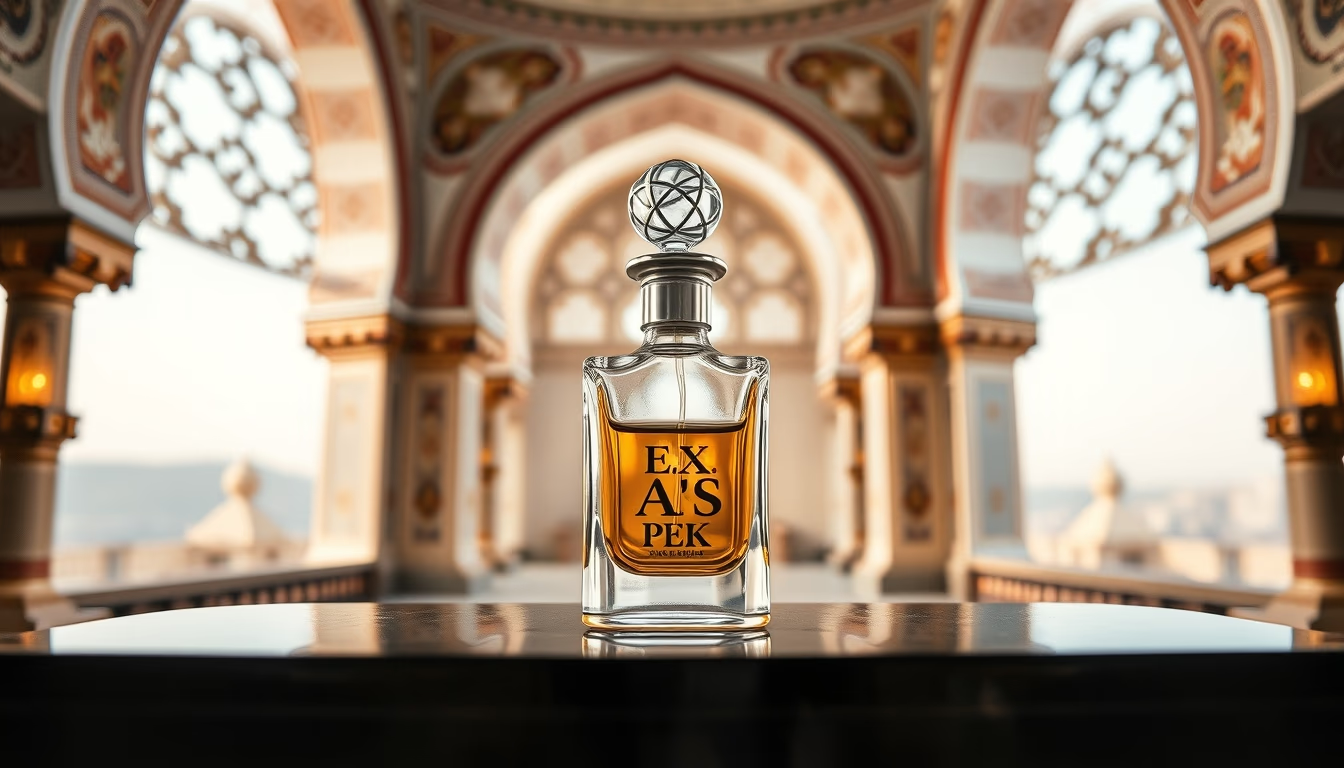
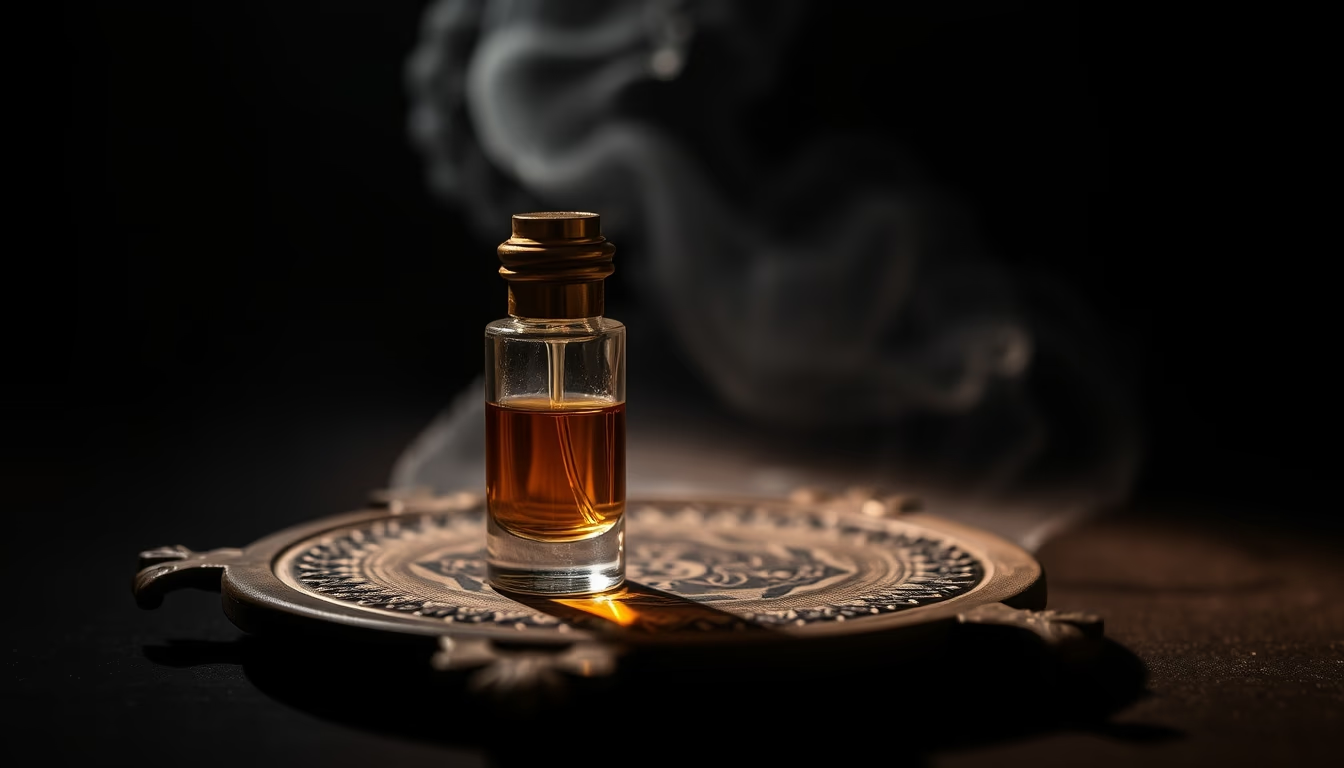
Persian perfume vial blends ancient goldsmith artistry with architectural design, used to store precious essences since the Achaemenid Empire.
About this subject
Persian perfume vials, known as "atardan" or "ghabghab", inherit a tradition dating back over 2,500 years. In the Achaemenid Empire (550, 330 BCE), Persian goldsmiths already produced sophisticated containers in gold, silver, and glass to store perfumed oils and aromatic resins used in religious rituals and the royal court. Their elongated shape and geometric decorations inspired by Islamic architecture, arches, arabesques, and domes, reflect the influence of Persian mosques and palaces on vial design.
Traditional production employs techniques such as filigree, enameling, and inlay of semi-precious stones like turquoise and lapis lazuli. Each piece is handmade by specialized artisans in the historic cities of Isfahan and Shiraz, where the art of goldsmithing is passed down through generations. The vials serve more than an aesthetic purpose: the chosen material (thick glass or metal) and shape help protect essential oils from light and heat, preserving their fragrance for decades.
During the 17th century under the Safavid dynasty, the perfume trade flourished, and the vials became luxury items coveted by European nobility. Today, antique pieces are valuable historical artifacts, while modern vials continue to be produced as part of Iranian cultural identity. UNESCO recognizes several Persian goldsmithing techniques as Intangible Cultural Heritage, underscoring the importance of these objects.
Frequently Asked Questions
What is the historical origin of Persian perfume vials?
The origin dates back to the Achaemenid Empire (550, 330 BCE), when Persian goldsmiths created containers of gold, silver, and glass to store perfumed oils used in religious rituals and the royal court.
What materials are used in making these vials?
Traditionally gold, silver, and glass, decorated with semi-precious stones like turquoise and lapis lazuli. Techniques include filigree, enameling, and inlay.
Where are Persian perfume vials produced today?
They are handcrafted in the cities of Isfahan and Shiraz in Iran, where Persian goldsmithing is a tradition passed down through generations.
Direct URL
https://pub-c7d6a6ea828543ac903a74a341ccb2e1.r2.dev/imagens/persian-perfume-vial-architectural-photography-fresh3.avifHow to credit
Include a visible link back to UtilizAí. Copy one of the snippets below:
<a href="https://xn--utiliza-eza.com/en/midia/imagens/persian-perfume-vial-architectural-photography-fresh3">Persian perfume vial</a> by <a href="https://xn--utiliza-eza.com">UtilizAí</a>, licensed under <a href="https://creativecommons.org/licenses/by/4.0/">CC BY 4.0</a>.
[Persian perfume vial](https://xn--utiliza-eza.com/en/midia/imagens/persian-perfume-vial-architectural-photography-fresh3) by [UtilizAí](https://xn--utiliza-eza.com), CC BY 4.0
License: CC-BY-4.0