Pcr machine running cycle
1344×768 · AVIF · CC BY 4.0
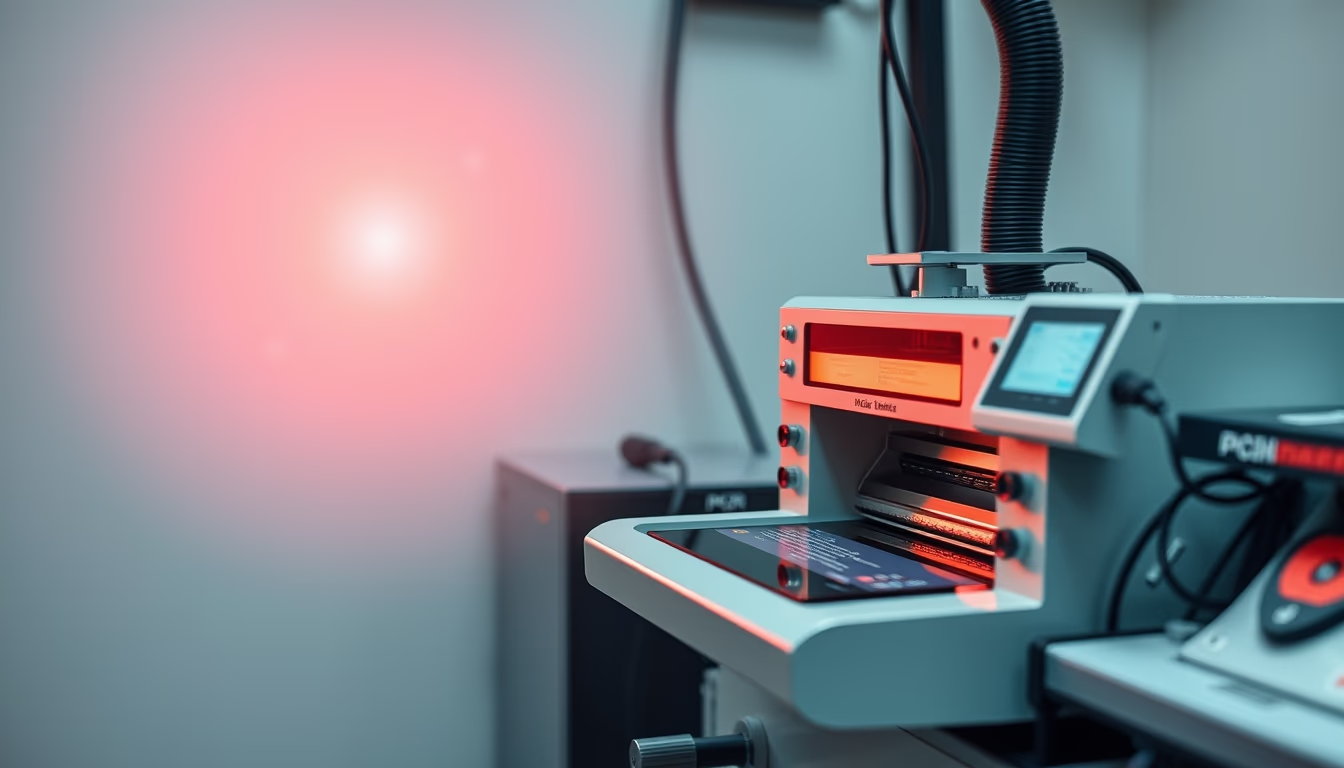
A PCR machine performs thermal cycles to amplify DNA, an essential technique in molecular biology, diagnostics, and genetic research.
About this subject
The polymerase chain reaction, commonly known as PCR, is a revolutionary technique that amplifies a specific DNA sequence millions of times from a minimal sample. The PCR machine, or thermal cycler, automates the repeated temperature cycles required for denaturation, annealing, and extension of DNA strands. Each cycle doubles the amount of target DNA, enabling detection and analysis of genetic material from bacteria, viruses, organisms, or forensic samples.
Developed by Kary Mullis in 1983, this work earned him the Nobel Prize in Chemistry in 1993. Today, thermal cyclers are bench-top instruments found in laboratories worldwide, capable of processing 16 to 384 samples simultaneously. Modern models feature touch screens, connectivity with analysis software, and thermal gradient systems for optimizing experimental conditions.
PCR applications are vast: diagnosing infectious diseases such as COVID-19, identifying genetic variants associated with cancer, paternity testing, detecting genetically modified organisms in food, and studying molecular evolution. The technique has become so fundamental that the phrase "doing PCR" is colloquially used in labs to refer to any DNA amplification experiment.
Despite its precision, PCR is susceptible to contamination, requiring strict care with pipettes, tips, and separate work areas. The running machine displays real-time temperature and time graphs, allowing researchers to monitor reaction progress. Typical cycles range from 25 to 40, depending on initial DNA quantity and desired amplification level.
Frequently Asked Questions
How many cycles are needed to amplify DNA in a PCR machine?
Typically 25 to 40 cycles are performed. The exact number depends on the initial DNA amount and desired sensitivity; more cycles increase amplification up to a plateau.
What are the main steps of a PCR cycle?
Each cycle has three steps: denaturation (around 95°C to separate strands), annealing (50-65°C for primers to bind), and extension (72°C for Taq polymerase to synthesize the new strand).
Can PCR be used to detect RNA?
Yes, through RT-PCR (reverse transcription followed by PCR). RNA is converted to complementary DNA (cDNA) by reverse transcriptase, and then the cDNA is amplified. This is common for RNA virus tests like SARS-CoV-2.
Direct URL
https://pub-c7d6a6ea828543ac903a74a341ccb2e1.r2.dev/imagens/pcr-machine-running-cycle-magazine-editorial-p9.avifHow to credit
Include a visible link back to UtilizAí. Copy one of the snippets below:
<a href="https://xn--utiliza-eza.com/en/midia/imagens/pcr-machine-running-cycle-magazine-editorial-p9">Pcr machine running cycle</a> by <a href="https://xn--utiliza-eza.com">UtilizAí</a>, licensed under <a href="https://creativecommons.org/licenses/by/4.0/">CC BY 4.0</a>.
[Pcr machine running cycle](https://xn--utiliza-eza.com/en/midia/imagens/pcr-machine-running-cycle-magazine-editorial-p9) by [UtilizAí](https://xn--utiliza-eza.com), CC BY 4.0
License: CC-BY-4.0