Parthenon marbles
1344×768 · AVIF · CC BY 4.0
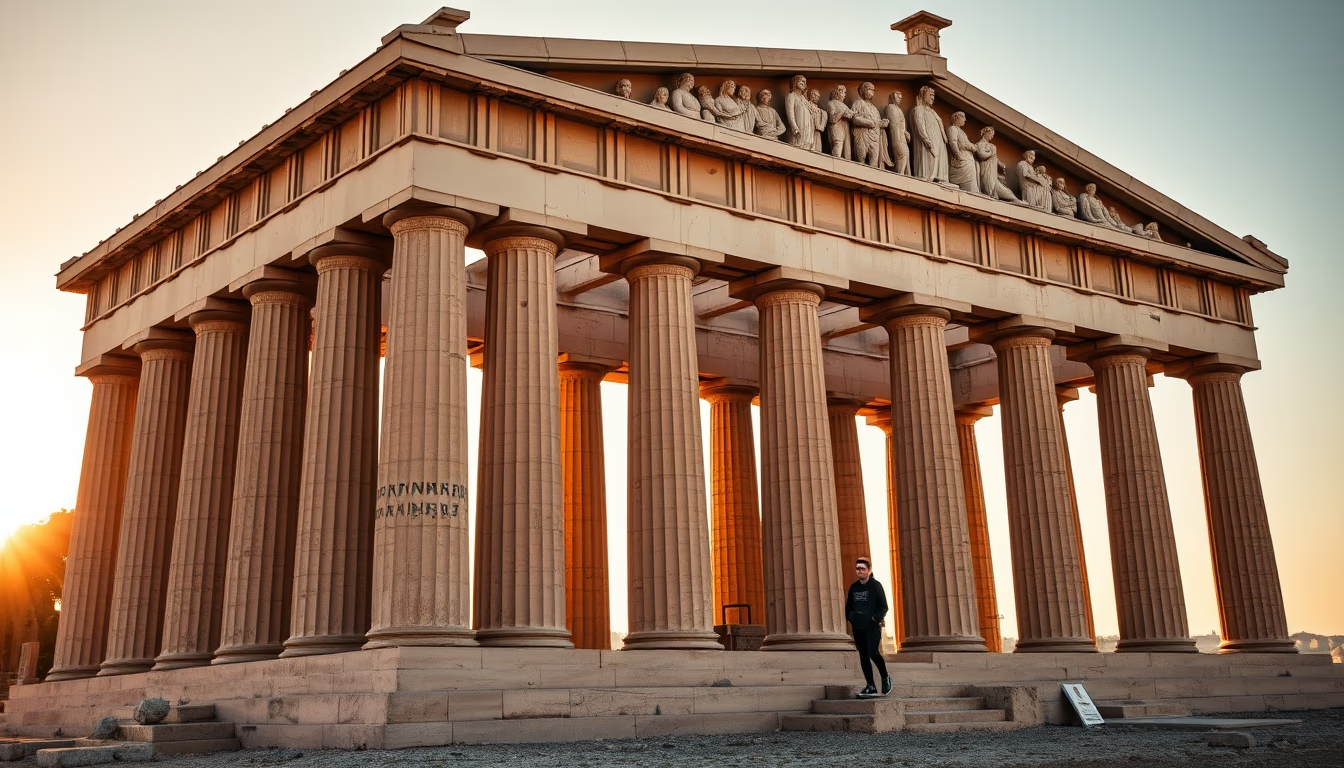
The Parthenon Marbles, Greek sculptures from the 5th century BC, have been at the British Museum since 1816, sparking repatriation debates.
About this subject
The Parthenon Marbles, also known as the Elgin Marbles, are a collection of sculptures and friezes that originally adorned the Parthenon, the temple dedicated to the goddess Athena on the Acropolis of Athens, Greece. Dating back to the 5th century BC, during the Greek classical period, these works were sculpted under the supervision of Phidias, one of the most renowned sculptors of antiquity. The collection includes pediment figures, metopes depicting mythological battles, and the famous Ionic frieze representing the Panathenaic procession, a religious festival in honor of Athena.
In 1801, Lord Elgin, the British ambassador to the Ottoman Empire, obtained a controversial permit to remove about half of the remaining sculptures from the Parthenon. Between 1801 and 1805, the pieces were transported to England, and in 1816, they were purchased by the British government for £35,000, then housed in the British Museum in London. The legality and morality of this removal are widely questioned, as Greece was under Ottoman rule and the permit came from a foreign subject.
Greece has for decades demanded the repatriation of the Marbles, arguing that they are integral to Greek cultural heritage and that their removal was an act of plunder. The debate involves international law, museum ethics, and preservation. The British Museum argues that the pieces are in a global context and preserved for the world, but international pressure and campaigns such as UNESCO's have intensified negotiations. In 2023, Greek Prime Minister Kyriakos Mitsotakis and the British chancellor discussed the issue, but no agreement has been reached so far.
Interestingly, the term "Elgin Marbles" is controversial: many prefer "Parthenon Marbles" to emphasize their origin. About 50% of the original sculptures are in London; the rest remain in the Acropolis Museum in Athens, opened in 2009 specifically to house these works and display what is missing. Recent 3D scanning studies reveal details of their original colors, which were painted with vivid pigments.
Frequently Asked Questions
Why are the Parthenon Marbles at the British Museum?
They were removed by Lord Elgin in the early 19th century when Greece was part of the Ottoman Empire. He claimed to have an Ottoman permit and later sold them to the British government in 1816.
Has Greece ever recovered the Marbles?
No. Despite decades of diplomatic pressure and international campaigns, the British Museum refuses full repatriation, although it has temporarily lent some pieces for exhibitions in Greece.
What is the historical significance of the Parthenon Marbles?
They are supreme examples of classical Greek sculpture, depicting mythology and Athenian culture from the 5th century BC. The Panathenaic frieze is especially invaluable for understanding ancient Athenian religious and civic life.
Direct URL
https://pub-c7d6a6ea828543ac903a74a341ccb2e1.r2.dev/imagens/parthenon-marbles-travel-photography-p9.avifHow to credit
Include a visible link back to UtilizAí. Copy one of the snippets below:
<a href="https://xn--utiliza-eza.com/en/midia/imagens/parthenon-marbles-travel-photography-p9">Parthenon marbles</a> by <a href="https://xn--utiliza-eza.com">UtilizAí</a>, licensed under <a href="https://creativecommons.org/licenses/by/4.0/">CC BY 4.0</a>.
[Parthenon marbles](https://xn--utiliza-eza.com/en/midia/imagens/parthenon-marbles-travel-photography-p9) by [UtilizAí](https://xn--utiliza-eza.com), CC BY 4.0
License: CC-BY-4.0