Parthenon marbles
1344×768 · AVIF · CC BY 4.0
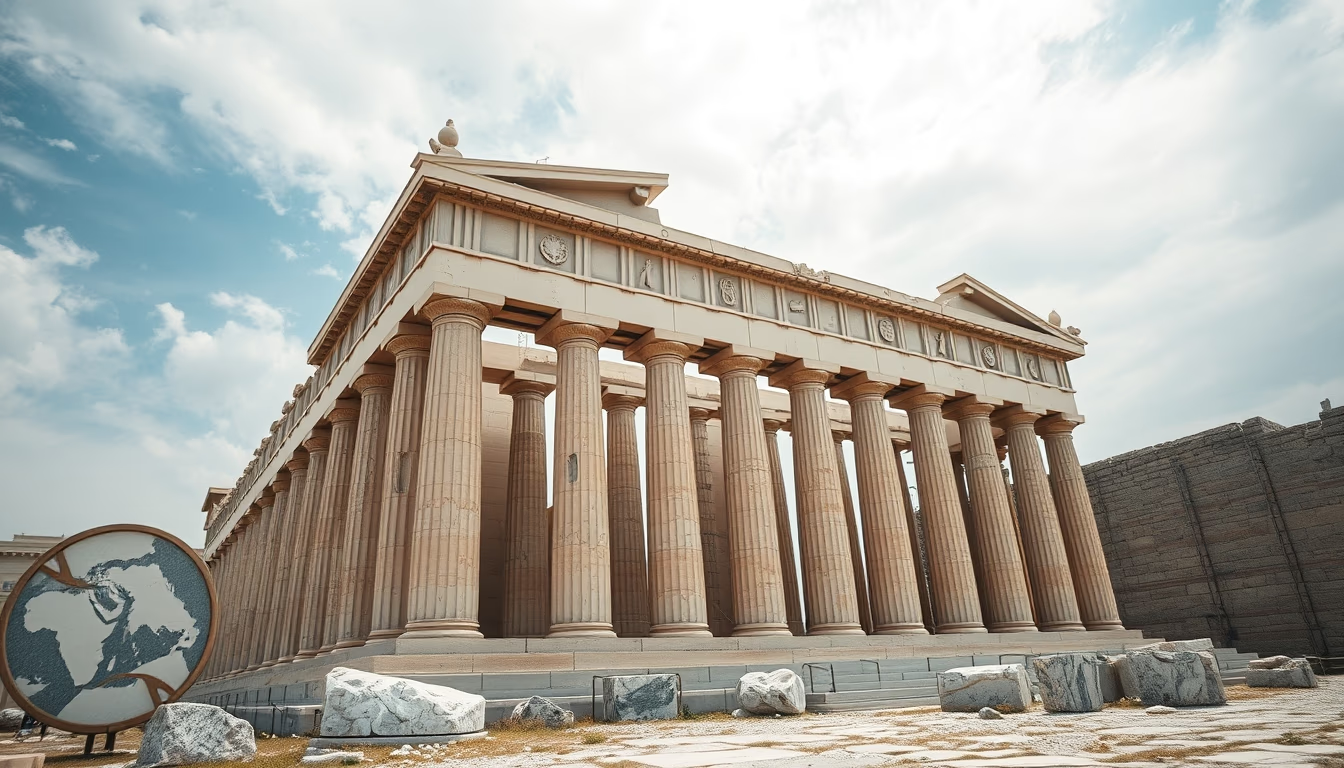
The Parthenon Marbles, sculpted in the 5th century BCE, are among the most significant surviving ancient Greek sculptures, currently subject to a repatriation dispute between Greece and the United Kingdom.
About this subject
The Parthenon Marbles, often referred to as the Elgin Marbles, are a collection of classical Greek marble sculptures that originally adorned the Parthenon and other buildings on the Acropolis of Athens. Created between 447 and 432 BCE during the Classical period under the supervision of sculptor Phidias, the pieces include reliefs from the inner frieze, metopes depicting scenes from Greek mythology, and figures from the pediments. Approximately half of the surviving sculptures are housed in the British Museum in London, while the rest remain in Athens.
The removal of the pieces occurred between 1801 and 1812, when Lord Elgin, British ambassador to the Ottoman Empire, obtained a controversial permit to remove them. Since then, Greece has demanded their return, arguing that they were illegally taken and should be reunited in the new Acropolis Museum, which opened in 2009. The British government maintains that the marbles were legally acquired and are better preserved in London.
The debate over the Parthenon Marbles involves issues of cultural heritage, property rights, and international diplomacy. Many countries and international law experts support repatriation, while others advocate for their retention in the British Museum as part of a universal collection. In 2023, Greek Prime Minister Kyriakos Mitsotakis renewed calls for their return, but so far without success.
Frequently Asked Questions
What are the Parthenon Marbles?
They are marble sculptures that originally adorned the Parthenon and other buildings on the Acropolis of Athens, created in the 5th century BCE by Phidias and his team.
Why are the Parthenon Marbles in the United Kingdom?
They were removed by Lord Elgin between 1801 and 1812, when he was British ambassador to the Ottoman Empire, and later sold to the British government in 1816.
What is the current status of the dispute?
Greece continues to demand their return, but the British Museum resists. The Greek government has offered loans of other artifacts in exchange, but as of 2023 no agreement has been reached.
Direct URL
https://pub-c7d6a6ea828543ac903a74a341ccb2e1.r2.dev/imagens/parthenon-marbles-national-geographic-style-p10.avifHow to credit
Include a visible link back to UtilizAí. Copy one of the snippets below:
<a href="https://xn--utiliza-eza.com/en/midia/imagens/parthenon-marbles-national-geographic-style-p10">Parthenon marbles</a> by <a href="https://xn--utiliza-eza.com">UtilizAí</a>, licensed under <a href="https://creativecommons.org/licenses/by/4.0/">CC BY 4.0</a>.
[Parthenon marbles](https://xn--utiliza-eza.com/en/midia/imagens/parthenon-marbles-national-geographic-style-p10) by [UtilizAí](https://xn--utiliza-eza.com), CC BY 4.0
License: CC-BY-4.0