Parthenon marbles
1344×768 · AVIF · CC BY 4.0
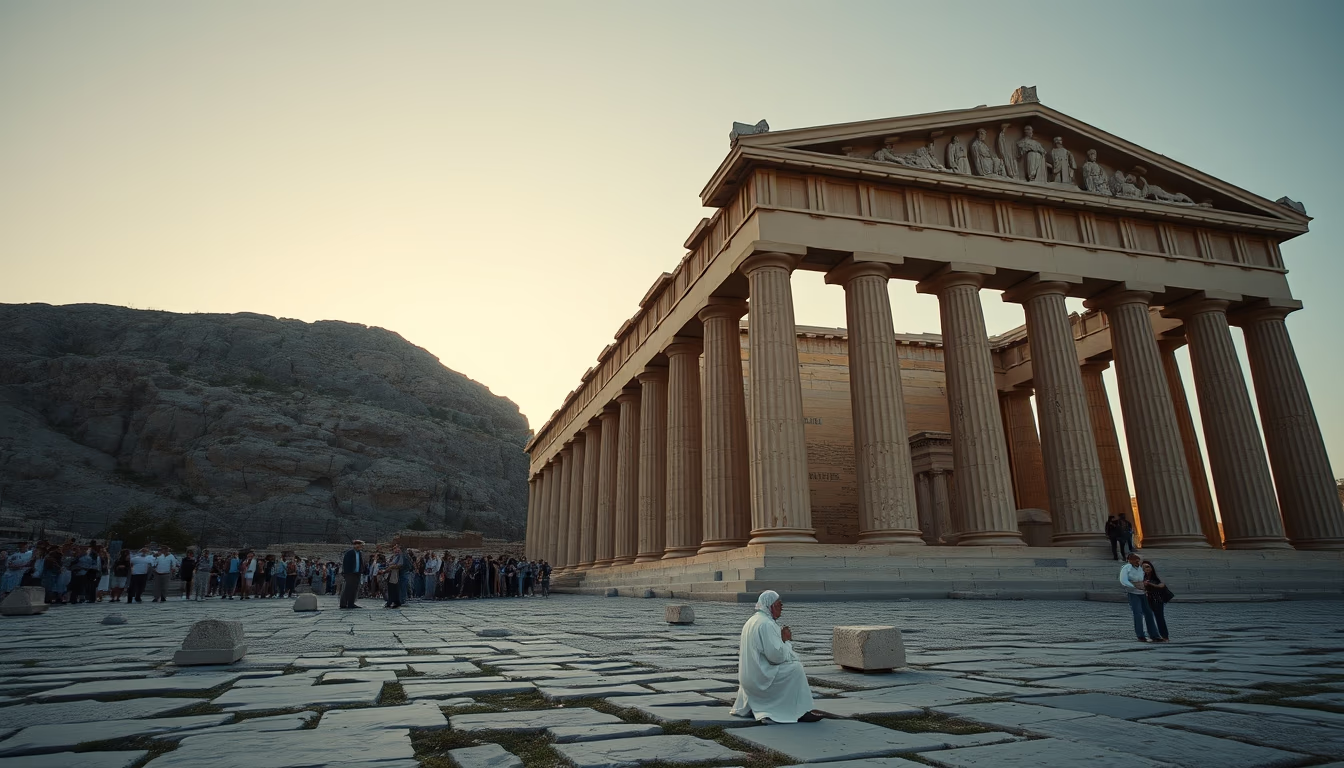
The Parthenon marbles, also known as the Elgin Marbles, are classical Greek sculptures from the Parthenon in Athens.
About this subject
The Parthenon marbles are a collection of classical Greek marble sculptures that originally adorned the Parthenon, a temple dedicated to Athena on the Acropolis of Athens. They were created between 447 and 438 BC under the supervision of the sculptor Phidias, during the golden age of Pericles. The pieces include metopes, pediments, and the Ionic frieze, depicting mythological scenes and Panathenaic processions.
In the early 19th century, Lord Elgin, the British ambassador to the Ottoman Empire, obtained a controversial permit to remove about half of the surviving sculptures. Between 1801 and 1805, the pieces were transported to England and later purchased by the British Museum in 1816, where they remain on display. The legality and morality of the removal are disputed, with Greece advocating for repatriation since its independence.
The debate over the Elgin Marbles has become a symbol of the struggle for the return of cultural property. The British Museum argues that possession allows global access and preservation, while Greece claims the sculptures are integral to Greek heritage and should be reunited in the Acropolis Museum, built in 2009 to house all pieces. UNESCO has mediated the case without a definitive agreement.
Culturally, the marbles represent the pinnacle of classical art and have influenced generations of artists. Recent studies, such as 3D modeling, aim to better understand their original polychromy and arrangement on the temple. Regardless of their location, they remain a testament to the technical skill and visual storytelling of ancient Greece.
Frequently Asked Questions
Why are the Parthenon marbles called the Elgin Marbles?
They are named after Lord Elgin, who removed the sculptures from the Parthenon in the early 19th century and transported them to England.
Where are the Parthenon marbles currently located?
Most are housed in the British Museum in London, while some fragments are in other European museums and on the Acropolis in Athens.
What is the controversy surrounding the Elgin Marbles?
Greece demands repatriation, claiming the marbles were taken illegally. The British Museum argues that the acquisition was legal and that the marbles benefit global scholarship.
Direct URL
https://pub-c7d6a6ea828543ac903a74a341ccb2e1.r2.dev/imagens/parthenon-marbles-cinematic-wide-shot-p1.avifHow to credit
Include a visible link back to UtilizAí. Copy one of the snippets below:
<a href="https://xn--utiliza-eza.com/en/midia/imagens/parthenon-marbles-cinematic-wide-shot-p1">Parthenon marbles</a> by <a href="https://xn--utiliza-eza.com">UtilizAí</a>, licensed under <a href="https://creativecommons.org/licenses/by/4.0/">CC BY 4.0</a>.
[Parthenon marbles](https://xn--utiliza-eza.com/en/midia/imagens/parthenon-marbles-cinematic-wide-shot-p1) by [UtilizAí](https://xn--utiliza-eza.com), CC BY 4.0
License: CC-BY-4.0