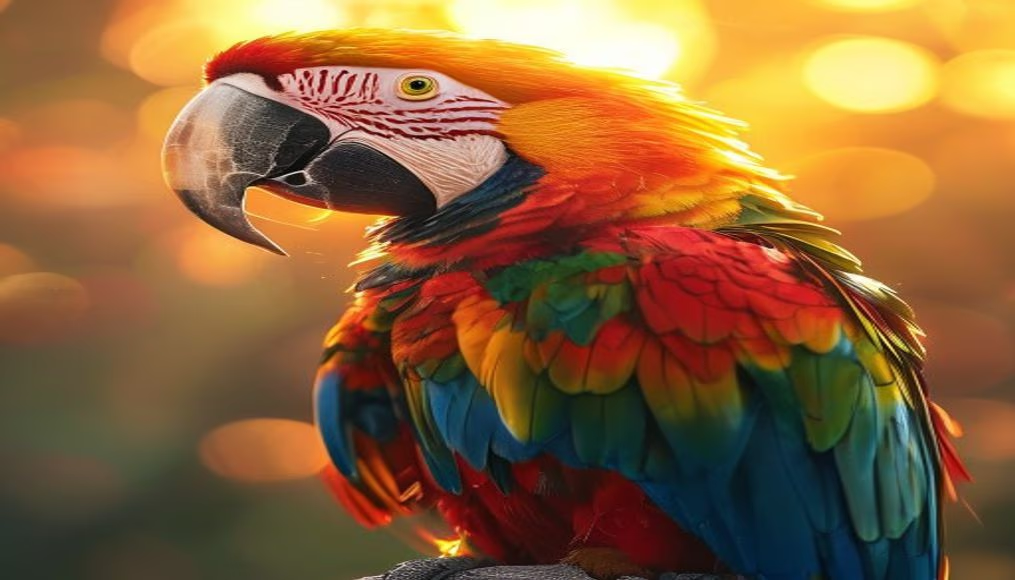
Parrot colorful feathers
1344×768 · AVIF · CC BY 4.0
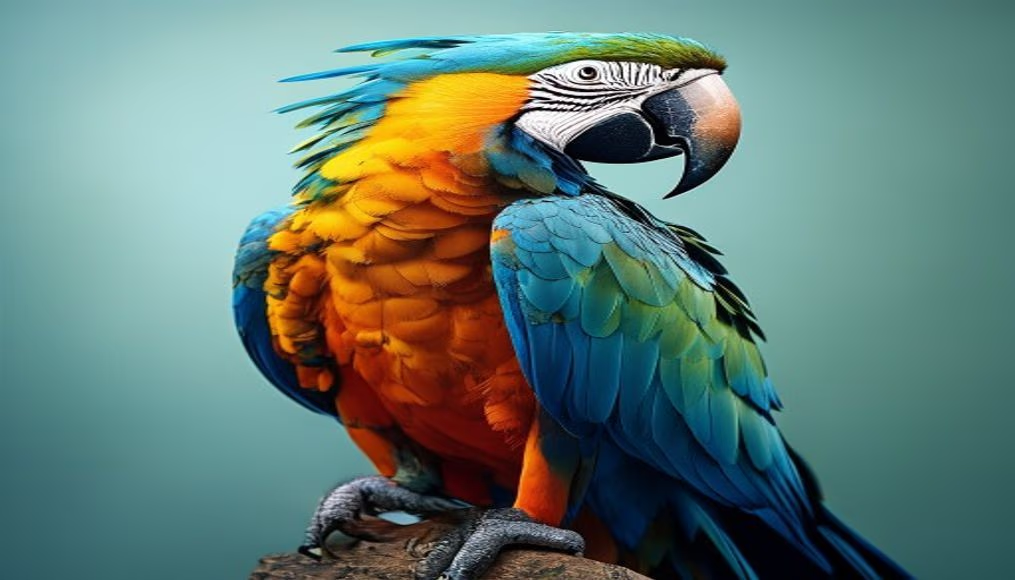
Parrot colorful feathers are one of the most striking examples of evolutionary adaptation, combining pigments and optical structures to create vibrant colors that play vital roles in survival and reproduction.
About this subject
Parrot feathers, including those of macaws, parakeets, and other Psittaciformes, owe their intense coloration to a combination of pigments and nanoscale structures. Psittacofulvin, a pigment unique to these birds, produces reds, oranges, and yellows, while melanin contributes blacks, grays, and browns. Blue and green colors are generated by microscopic structures in the feathers that interfere with light, a phenomenon called structural coloration. This natural engineering allows species like the hyacinth macaw (Anodorhynchus hyacinthinus) to display a vibrant blue without any actual blue pigment.
The primary function of these colors goes beyond aesthetics: they are crucial for intraspecific communication, especially in mate selection. Studies show that females of some species prefer males with brighter plumage, as it indicates good health and foraging ability. Additionally, coloration can serve as camouflage in dense tropical forests, where green tones blend with foliage, or as a warning signal in species that mimic colors of venomous animals.
Several parrot species stand out for their chromatic exuberance. Scarlet macaws (Ara chloropterus) combine red, blue, and yellow, while lorikeets (Trichoglossus spp.) of Southeast Asia have multicolored plumage including green, blue, purple, and orange. In Brazil, the turquoise-fronted amazon (Amazona aestiva) is famous for its green feathers with yellow and red patches on the wings. These birds inhabit environments ranging from humid tropical forests to savannas and mangroves, adapting their colors to different habitats.
Culturally, parrot feathers hold great importance for indigenous peoples in Brazil, who have used them in ritual artifacts, headdresses, and body adornments for centuries. In contemporary fashion and design, vibrant colors inspire prints and products, including in commercial product photography where feathers are used as decorative elements. Conservation of these birds is essential not only for their beauty but for their ecological role as seed dispersers in tropical ecosystems.
Frequently Asked Questions
Why are parrot feathers so colorful?
The vibrant colors of parrot feathers result from a combination of unique pigments (such as psittacofulvin) and microscopic structures that reflect light. These colors are used to attract mates, communicate with other members of the species, and in some cases, camouflage in the environment.
How are the colors of the feathers produced?
Colors are produced by two mechanisms: chemical pigments (psittacofulvin for reds and yellows; melanin for dark tones) and structural coloration, where microstructures in the feather interfere with light to generate blues and greens. This combination allows for an incredibly diverse palette.
What is the importance of colorful feathers for parrots?
Colorful feathers play vital roles in survival: they help in mate selection (indicating health and good genetics), serve for recognition among individuals of the same species, and can act as camouflage or a warning signal to predators.
Direct URL
https://pub-c7d6a6ea828543ac903a74a341ccb2e1.r2.dev/imagens/parrot-colorful-feathers-commercial-product-photography-v9.avifHow to credit
Include a visible link back to UtilizAí. Copy one of the snippets below:
<a href="https://xn--utiliza-eza.com/en/midia/imagens/parrot-colorful-feathers-commercial-product-photography-v9">Parrot colorful feathers</a> by <a href="https://xn--utiliza-eza.com">UtilizAí</a>, licensed under <a href="https://creativecommons.org/licenses/by/4.0/">CC BY 4.0</a>.
[Parrot colorful feathers](https://xn--utiliza-eza.com/en/midia/imagens/parrot-colorful-feathers-commercial-product-photography-v9) by [UtilizAí](https://xn--utiliza-eza.com), CC BY 4.0
License: CC-BY-4.0