Paramotor flight
1344×768 · AVIF · CC BY 4.0
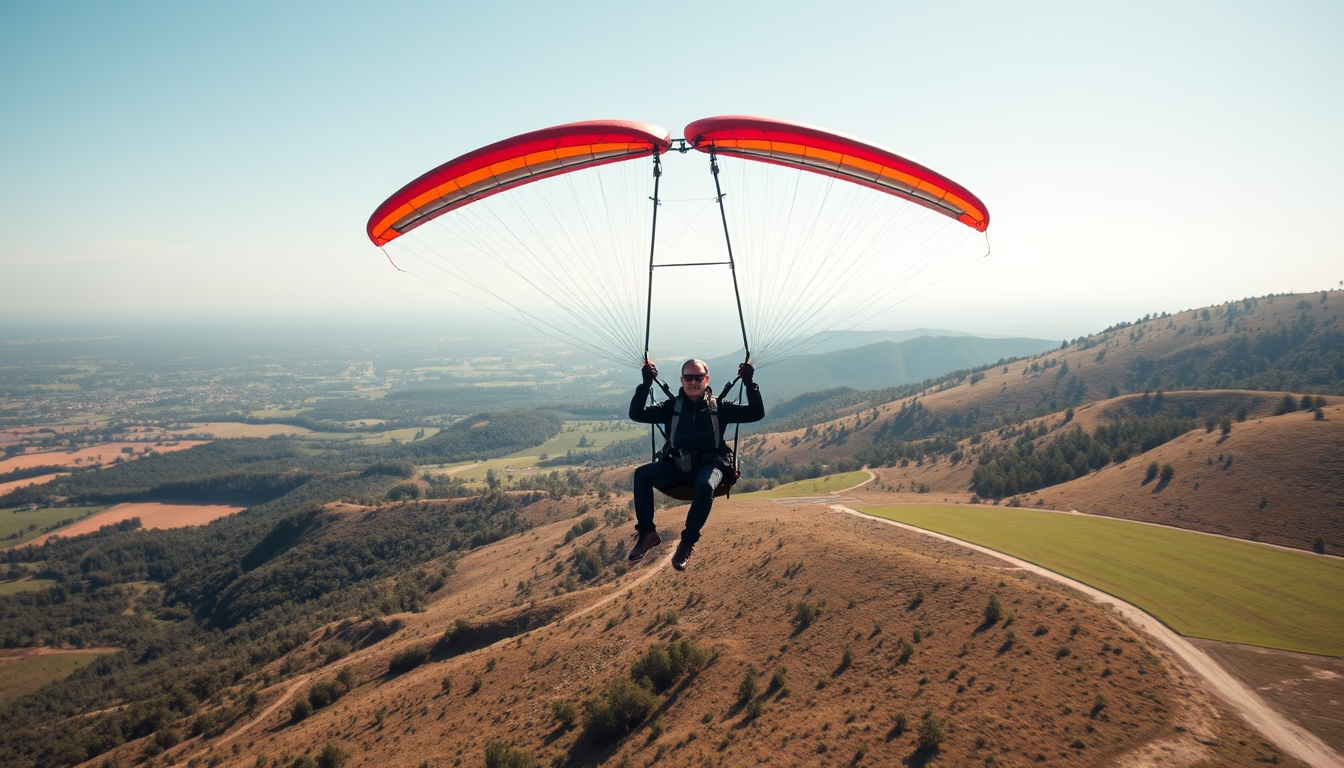
Paramotor flight combines the freedom of paragliding with the power of a propeller engine, enabling takeoffs from flat terrain and hours of low‑altitude flight.
About this subject
A paramotor, also known as powered paragliding, is an ultralight aviation discipline that pairs a paraglider wing with a propeller engine, typically worn on the back or mounted on a trike. Invented in France during the 1980s, the paramotor made powered flight accessible to enthusiasts without requiring hills or thermal currents for takeoff. The pilot runs with the engine running; after a few steps, the wing inflates and the craft lifts off gently.
Technically, most paramotor engines are two‑stroke, producing 15 to 30 hp and consuming 3 to 5 liters of fuel per hour. Cruise speed ranges from 30 to 60 km/h, and typical flying altitude stays between 100 and 500 meters, high enough to enjoy landscapes without interacting with controlled airspace. With 10‑liter tanks, endurance reaches 2 to 3 hours. The complete rig weighs 20 to 35 kg, requiring about 100 meters of flat grass or dirt for takeoff.
Paramotors are used primarily for recreation, aerial photography, agricultural monitoring, and search‑and‑rescue missions in remote terrain. Precision landing competitions and cross‑country races draw participants worldwide. In Brazil, the sport grows in states such as São Paulo, Minas Gerais, and Rio de Janeiro, where clubs organize flights over hills and open fields. The Brazilian Paramotor Championship gathers pilots from various regions, fostering knowledge exchange and technical innovation.
Safety is regulated in Brazil by ANAC (RBAC 103), which mandates a pilot license from an accredited school, liability insurance, and adherence to visual flight rules. Key risks include collisions with power lines, sudden wind shifts, and engine failure at low altitude. Every pilot trains with a reserve parachute and uses a radio for communication. Regular maintenance of the engine and wing is critical to prevent accidents.
Frequently Asked Questions
What is the difference between a paramotor and a paraglider?
A paramotor has an engine attached, allowing level takeoff and flight independent of thermal currents; a paraglider relies solely on rising air for lift.
Is training required to fly a paramotor?
Yes. In most countries, including Brazil and the US, a certified training course with a licensed instructor and both ground and flight hours is mandatory to obtain a license.
How much does a paramotor setup cost?
A complete kit (wing, engine, reserve parachute) ranges from $8,000 to $15,000 USD, depending on brand and technology. Electric motors are more expensive.
Direct URL
https://pub-c7d6a6ea828543ac903a74a341ccb2e1.r2.dev/imagens/paramotor-flight-documentary-nature-style-fresh16.avifHow to credit
Include a visible link back to UtilizAí. Copy one of the snippets below:
<a href="https://xn--utiliza-eza.com/en/midia/imagens/paramotor-flight-documentary-nature-style-fresh16">Paramotor flight</a> by <a href="https://xn--utiliza-eza.com">UtilizAí</a>, licensed under <a href="https://creativecommons.org/licenses/by/4.0/">CC BY 4.0</a>.
[Paramotor flight](https://xn--utiliza-eza.com/en/midia/imagens/paramotor-flight-documentary-nature-style-fresh16) by [UtilizAí](https://xn--utiliza-eza.com), CC BY 4.0
License: CC-BY-4.0