Pantanal wetlands sunrise
1344×768 · AVIF · CC BY 4.0
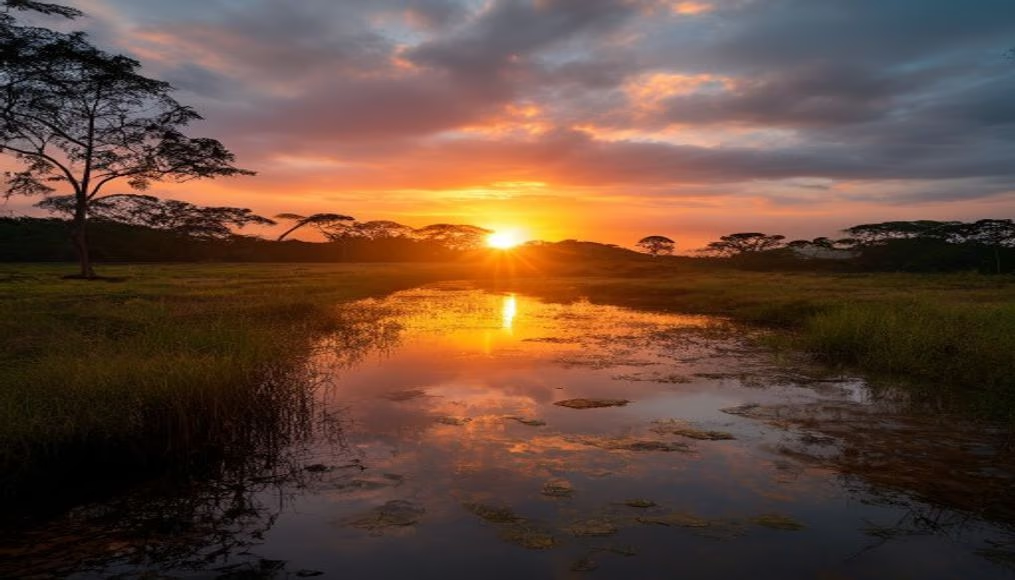
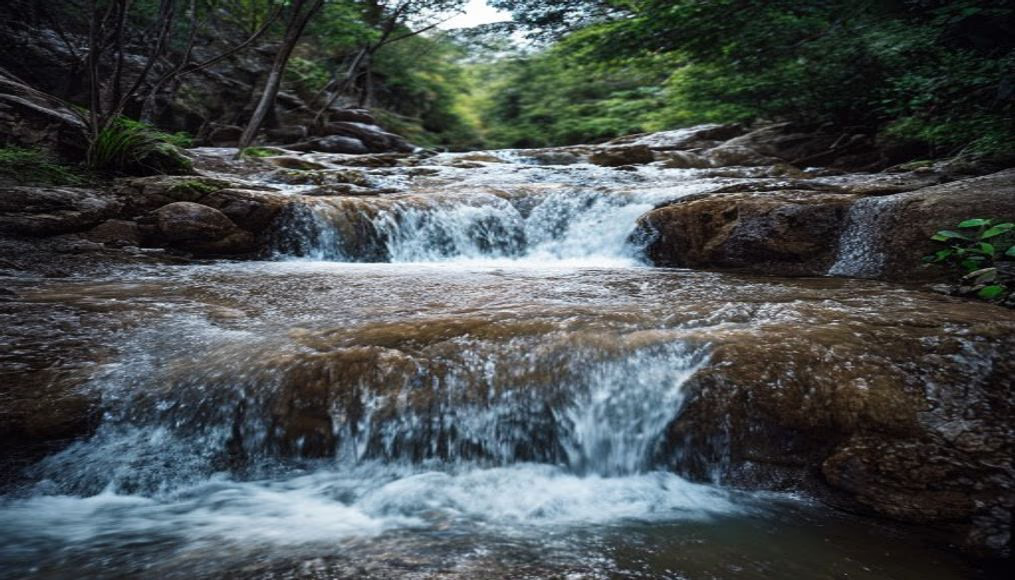
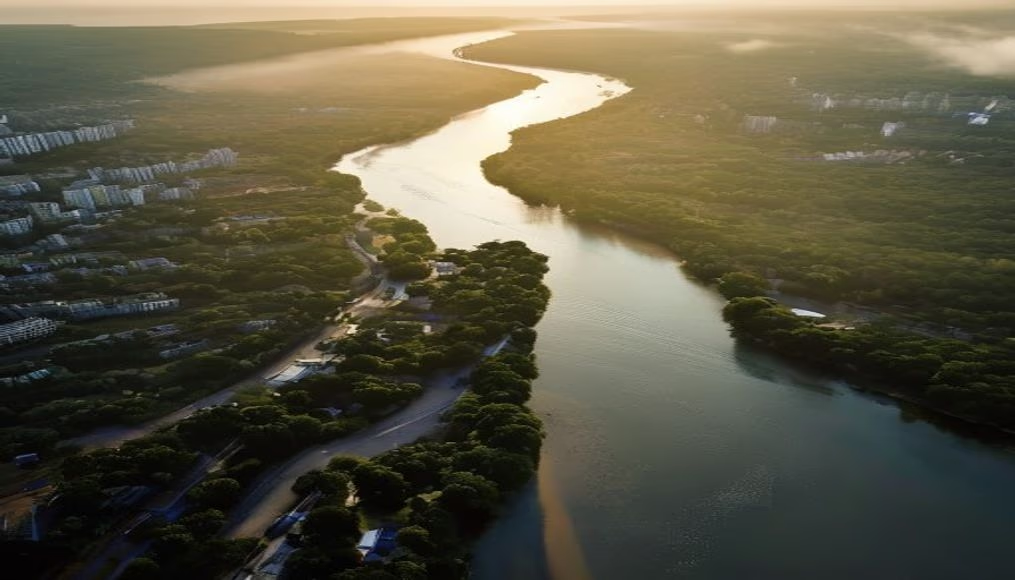
The Pantanal is the world's largest tropical wetland, and its sunrise reveals immense biodiversity and unique landscapes.
About this subject
The Pantanal, located in central-western Brazil and extending into Bolivia and Paraguay, is the world's largest continuous tropical wetland, covering approximately 140,000 to 160,000 square kilometers. During the rainy season, from October to March, rivers overflow, flooding vast areas and creating a mosaic of habitats that sustain one of the highest concentrations of wildlife on the planet. It is recognized by UNESCO as a Biosphere Reserve and a World Heritage Site.
The flood pulse, the seasonal cycle of rising and falling waters, is the ecological engine of the Pantanal. It drives species migration, fish reproduction, and food availability. During the dry season, from April to September, waters recede, exposing grasslands that attract large herbivores like capybaras and deer, along with their predators, such as the jaguar, the largest cat in the Americas. The region hosts about 650 bird species, 260 fish species, and 80 mammal species, including the giant otter and the jabiru stork, the Pantanal's symbol.
Culturally, the Pantanal is home to traditional communities like the pantaneiros, who live from extensive cattle ranching and sustainable resource management. Ecotourism has grown, with photo safaris and birdwatching, especially during the dry season when wildlife concentrates around water bodies. Sunrise in the Pantanal is a spectacle, with the horizon opening over flooded plains and the sky turning orange and pink, reflected in the calm waters.
Despite its richness, the Pantanal faces significant threats, such as deforestation in the Upper Paraguay Basin, hydroelectric dam construction, and wildfires, which in 2020 devastated about 30% of the region. Conservation of this biome is crucial not only for biodiversity but also for climate regulation and water resources in South America.
Frequently Asked Questions
What is the best time to visit the Pantanal?
The best time to visit the Pantanal is during the dry season, from April to September, when wildlife concentrates around water sources, making it easier to spot jaguars, capybaras, and birds. The weather is milder and roads are passable.
What animals can be found in the Pantanal?
The Pantanal hosts rich biodiversity, including the jaguar, capybara, jabiru stork, giant otter, Pantanal caiman, various heron species, and the marsh deer. Over 650 bird species, 260 fish species, and 80 mammal species are recorded.
Is the Pantanal threatened by wildfires?
Yes, wildfires pose a serious threat to the Pantanal, especially in years of extreme drought. In 2020, about 30% of the region was burned, affecting fauna, flora, and local communities. Prevention and firefighting are crucial for the biome's conservation.
Direct URL
https://pub-c7d6a6ea828543ac903a74a341ccb2e1.r2.dev/imagens/pantanal-wetlands-sunrise-street-photography-v11.avifHow to credit
Include a visible link back to UtilizAí. Copy one of the snippets below:
<a href="https://xn--utiliza-eza.com/en/midia/imagens/pantanal-wetlands-sunrise-street-photography-v11">Pantanal wetlands sunrise</a> by <a href="https://xn--utiliza-eza.com">UtilizAí</a>, licensed under <a href="https://creativecommons.org/licenses/by/4.0/">CC BY 4.0</a>.
[Pantanal wetlands sunrise](https://xn--utiliza-eza.com/en/midia/imagens/pantanal-wetlands-sunrise-street-photography-v11) by [UtilizAí](https://xn--utiliza-eza.com), CC BY 4.0
License: CC-BY-4.0