Pan flute andean
1344×768 · AVIF · CC BY 4.0
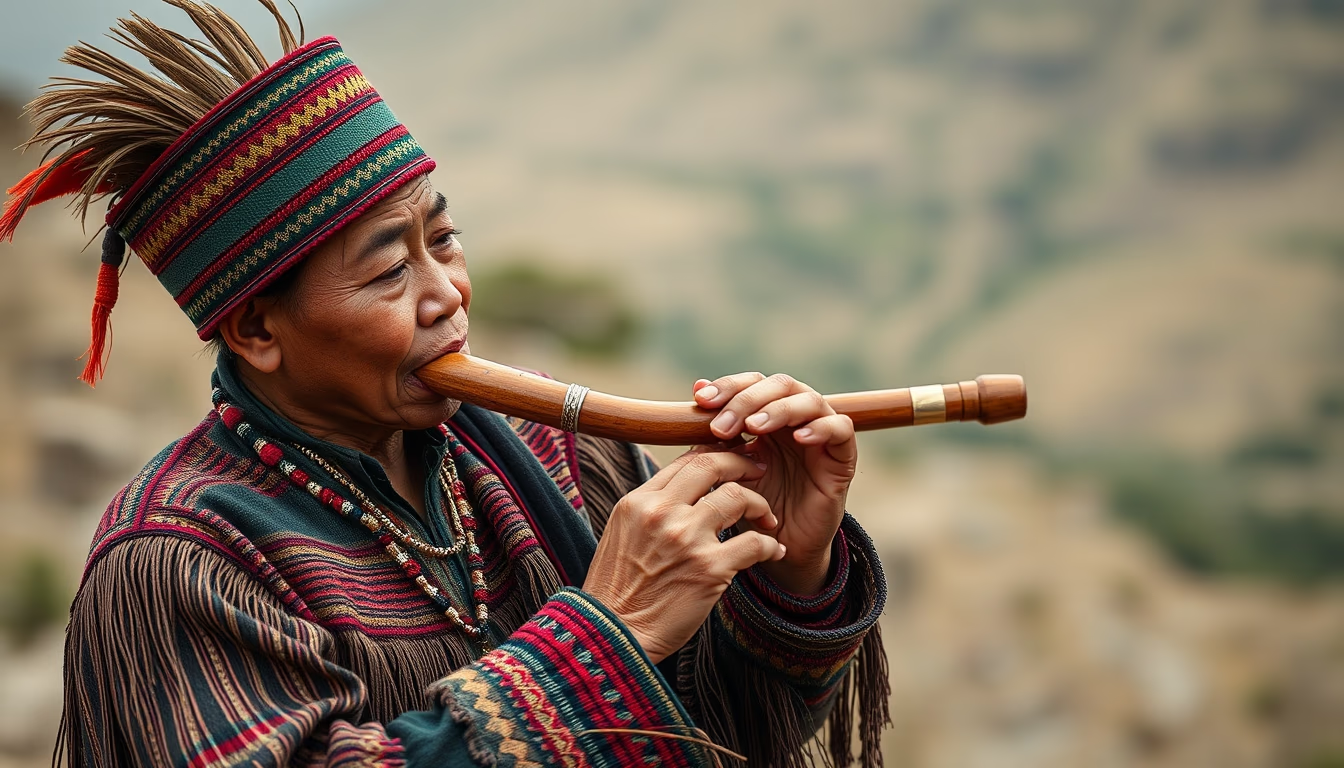
The Andean pan flute, known as zampoña or antara, is an ancient instrument from the indigenous peoples of the Andes, deeply rooted in the folklore of Peru, Bolivia, and Ecuador.
About this subject
The Andean pan flute is a pre-Columbian aerophone made of a series of tubes of varying lengths, traditionally crafted from cane or bamboo, bound together in a row. Each tube produces a distinct note when the player blows across the top edge. It is known by several regional names: zampoña in Peru and Bolivia, antara in Ecuador and northern Chile, and sikus among the Aymara people. Modern zampoñas typically have two rows: one for the melody (ira) and one for accompaniment (arca). The tubes are tuned to pentatonic scales, characteristic of Andean music.
Historically, the pan flute was used in ritual ceremonies and agricultural festivals by the Incas and earlier cultures such as the Nazca and Moche. Archaeological evidence, including pan flutes made of pottery and bone, dates back over 2,000 years. The instrument survived Spanish colonization and became integrated into Christian folklore, played in processions and patron saint festivals. In the 20th century, the zampoña gained international fame through groups like Los Incas and Inti-Illimani, and Argentine musician Uña Ramos.
Playing technique involves controlled blowing and moving the instrument to reach the desired tubes. Advanced players use circular breathing to sustain long notes. The repertoire includes traditional melodies such as "El Cóndor Pasa", "Virgenes del Sol", and dances like huayno and saya. The Andean pan flute is often accompanied by charango, quena, bombo, and guitar.
Today, artisans in Peru and Bolivia continue to produce handmade zampoñas, often decorated with geometric patterns. The instrument stands as a symbol of Andean cultural identity and is taught in folk music schools. Festivals such as the Festival de la Zampoña in Puno, Peru, celebrate its heritage.
Frequently Asked Questions
What is the difference between zampoña, antara, and sikus?
These are regional names for the same Andean pan flute. Zampoña is used in Peru and Bolivia, antara in Ecuador, and sikus among the Aymara. Differences lie in materials and tuning, but all share the basic row-of-tubes structure.
How does the Andean pan flute produce sound?
The player blows horizontally across the top edge of each tube. The air splits at the edge, creating a vibration that produces sound. Each tube has a different length, yielding distinct notes. Proper control of breath pressure and angle is needed for correct pitch.
What are the most famous songs played on the pan flute?
The best-known internationally is "El Cóndor Pasa" by Daniel Alomía Robles. Others include "Virgenes del Sol" and traditional Andean tunes like "Adiós Pueblo de Ayacucho" and "Ojos Azules". These are frequently performed by folk groups.
Direct URL
https://pub-c7d6a6ea828543ac903a74a341ccb2e1.r2.dev/imagens/pan-flute-andean-national-geographic-style-p4.avifHow to credit
Include a visible link back to UtilizAí. Copy one of the snippets below:
<a href="https://xn--utiliza-eza.com/en/midia/imagens/pan-flute-andean-national-geographic-style-p4">Pan flute andean</a> by <a href="https://xn--utiliza-eza.com">UtilizAí</a>, licensed under <a href="https://creativecommons.org/licenses/by/4.0/">CC BY 4.0</a>.
[Pan flute andean](https://xn--utiliza-eza.com/en/midia/imagens/pan-flute-andean-national-geographic-style-p4) by [UtilizAí](https://xn--utiliza-eza.com), CC BY 4.0
License: CC-BY-4.0