Pan flute andean
1344×768 · AVIF · CC BY 4.0
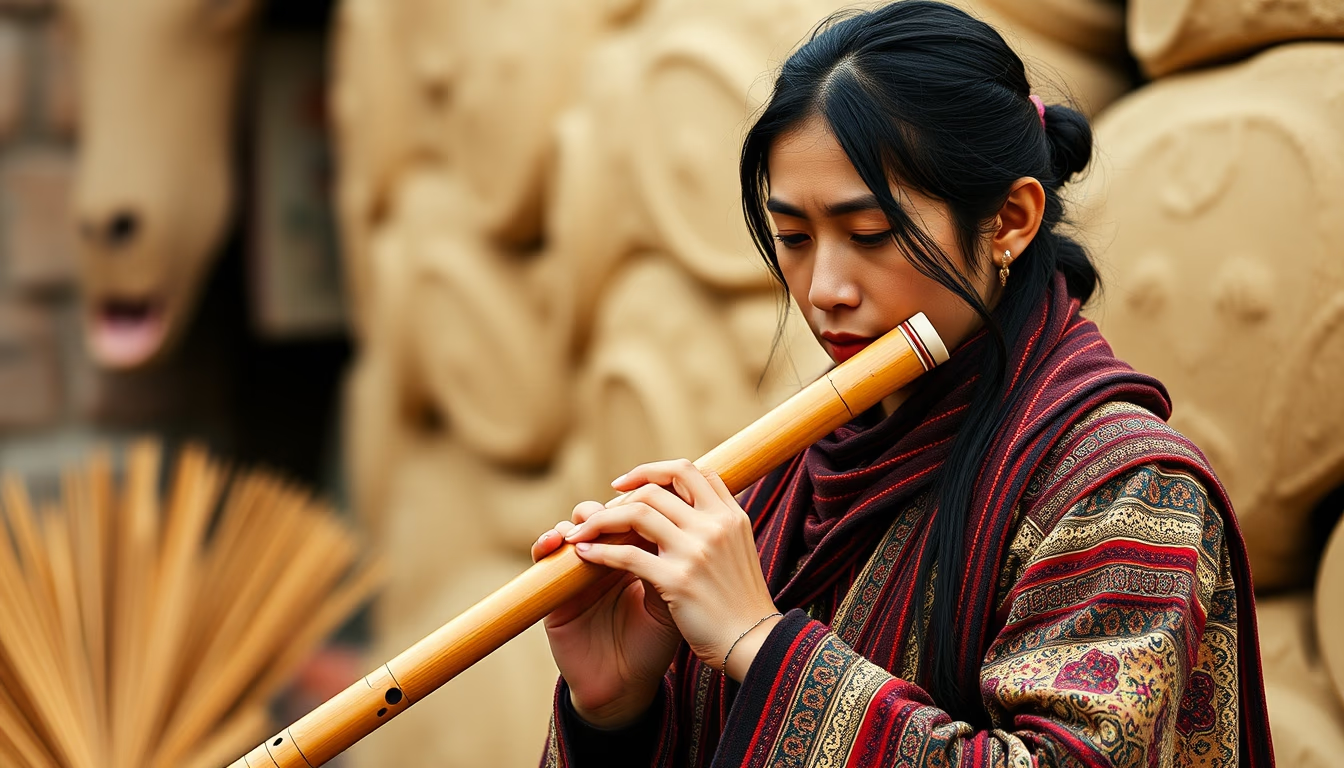
The Andean pan flute, or zampoña, is an ancient instrument of the Aymara and Quechua peoples, made from bamboo or reed tubes.
About this subject
The Andean pan flute, known as zampoña in the Andes region, is one of the most iconic instruments of South American traditional music. Its origins date back over two thousand years, with archaeological evidence found in pre-Incan cultures such as the Nazca and Moche. The instrument consists of tubes of different lengths, usually made of bamboo or reed, which produce distinct notes when blown. The zampoña is played in pairs: the player uses two rows of tubes, one for the melody and the other for accompaniment, a technique that requires great skill and coordination.
In Andean culture, the pan flute holds spiritual and communal significance. It was used in religious rituals, agricultural ceremonies, and festivals such as the Feast of the Virgin of Candelaria in Peru and the Fiesta de la Virgen de Urkupiña in Bolivia. The sound of the zampoña evokes the mountainous landscape of the Andes, being associated with wind and nature. Each community has its own tunings and playing styles, transmitted orally from generation to generation.
The zampoña gained international prominence from the 1960s onward, with groups like Los Incas and Bolivian musician Ernesto Cavour. Works such as "El Cóndor Pasa", immortalized by Simon & Garfunkel, popularized the Andean sound worldwide. Today, the instrument is studied in conservatories and remains present both in folk ensembles and in fusions with jazz, rock, and electronic music. The handmade construction of the zampoña varies: tubes can be tied with strings or fixed on wooden frames, and the length of the tubes determines the tuning, capable of reaching up to four octaves.
Interestingly, the pan flute is not exclusive to the Andes. Similar instruments exist in many cultures, such as the Romanian nai, the Greek frestel, and the Chinese sheng. However, the Andean zampoña stands out for its paired playing technique and its rich timbral variety. Preserving this instrument is vital for the cultural identity of the Andean peoples, being recognized as intangible heritage in several countries.
Frequently Asked Questions
What is the difference between zampoña and sikus?
Zampoña and sikus are regional names for the same Andean pan flute. 'Zampoña' is more common in Peru and Bolivia, while 'sikus' is used in the Altiplano region, especially among the Aymara.
How is a pan flute tuned?
Tuning is determined by the length of the tubes: longer tubes produce lower notes, shorter tubes higher notes. The artisan cuts each cane precisely to achieve the desired scale, usually pentatonic.
Is the pan flute used in music genres other than folklore?
Yes, the zampoña is often incorporated into fusions with jazz, rock, electronic music, and new age. Contemporary artists like Alborada and Andes Infinity explore these combinations while maintaining the Andean essence.
Direct URL
https://pub-c7d6a6ea828543ac903a74a341ccb2e1.r2.dev/imagens/pan-flute-andean-film-grain-authentic-p7.avifHow to credit
Include a visible link back to UtilizAí. Copy one of the snippets below:
<a href="https://xn--utiliza-eza.com/en/midia/imagens/pan-flute-andean-film-grain-authentic-p7">Pan flute andean</a> by <a href="https://xn--utiliza-eza.com">UtilizAí</a>, licensed under <a href="https://creativecommons.org/licenses/by/4.0/">CC BY 4.0</a>.
[Pan flute andean](https://xn--utiliza-eza.com/en/midia/imagens/pan-flute-andean-film-grain-authentic-p7) by [UtilizAí](https://xn--utiliza-eza.com), CC BY 4.0
License: CC-BY-4.0