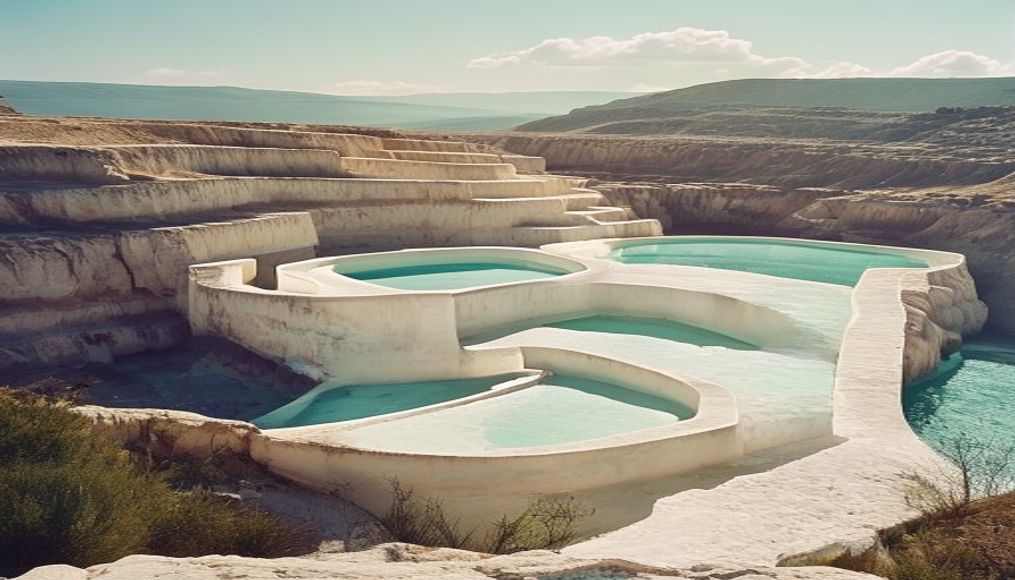
Pamukkale terraces turkey
1344×768 · AVIF · CC BY 4.0
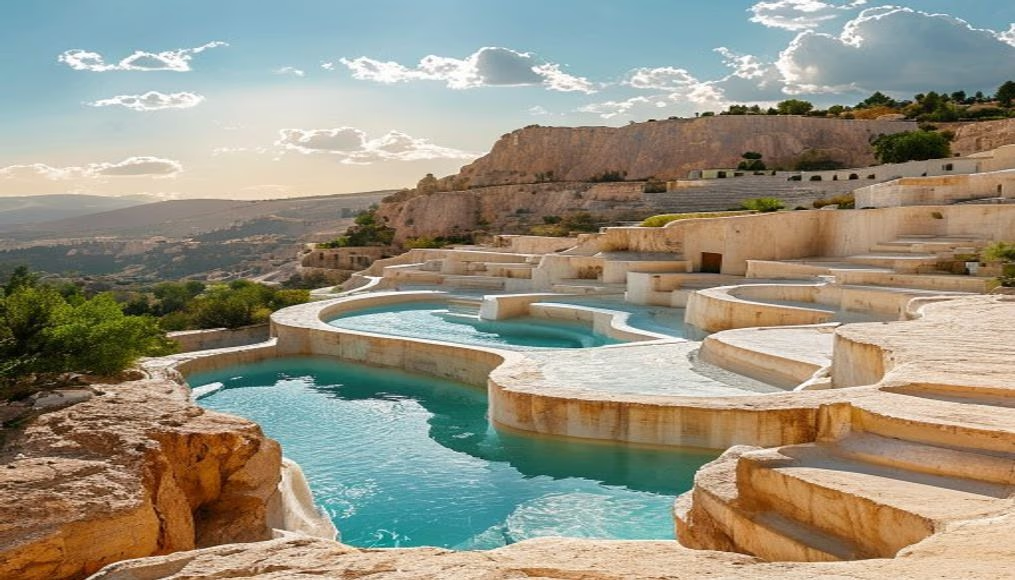
Pamukkale in Turkey features white travertine terraces formed by calcium carbonate-rich hot springs, known as the "cotton castle".
About this subject
Pamukkale, located in Denizli Province in southwestern Turkey, is one of the country's most iconic natural sites. The name means "cotton castle" in Turkish, a direct reference to its dazzling white formations. The travertine terraces were sculpted over millennia by the deposition of calcium carbonate from hot springs that emerge at around 35°C. The combination of minerals and gradual cooling creates these stepped natural pools, a rare geological phenomenon.
The site is also an archaeological treasure of immense value. Atop the formations lie the ruins of the ancient city of Hierapolis, founded around 190 BC by the Attalid dynasty of Pergamon. The city flourished under the Roman Empire, becoming a thermal and cultural center with a theater, temples, and a vast necropolis. In 1988, Pamukkale and Hierapolis were declared a UNESCO World Heritage Site, protecting both the natural formations and historical remnants.
To preserve the fragile ecosystem, access to the terraces has been restricted. Today, visitors can walk barefoot in designated areas or use water channels to mitigate impact. The hot springs continue to feed the pools, but evaporation and human intervention require constant monitoring. The contrast between the intense white of the travertines and the blue of the pools creates a unique visual spectacle, attracting millions of tourists annually.
Beyond geology, the region is rich in biodiversity. Nearby, the ancient city of Laodicea and the hot springs of Karahayıt complement the experience. The best time to visit is spring or autumn, when the weather is mild and crowds smaller. The combination of history, geology, and landscape makes Pamukkale a must-see destination in Turkey.
Frequently Asked Questions
Why is Pamukkale called the cotton castle?
The name comes from the white, soft travertine formations that resemble cotton. The hot springs deposit calcium carbonate, creating terraces that look like a cotton castle.
Can you swim in the pools of Pamukkale?
Swimming is not allowed on the travertine terraces to protect them. However, there is an ancient pool in Hierapolis, known as Cleopatra's Pool, where you can swim among submerged columns.
What is the best time to visit Pamukkale?
Spring (April to June) and autumn (September to November) offer pleasant temperatures and fewer crowds. Summer can be extremely hot, making the visit uncomfortable.
Direct URL
https://pub-c7d6a6ea828543ac903a74a341ccb2e1.r2.dev/imagens/pamukkale-terraces-turkey-travel-photography-p0.avifHow to credit
Include a visible link back to UtilizAí. Copy one of the snippets below:
<a href="https://xn--utiliza-eza.com/en/midia/imagens/pamukkale-terraces-turkey-travel-photography-p0">Pamukkale terraces turkey</a> by <a href="https://xn--utiliza-eza.com">UtilizAí</a>, licensed under <a href="https://creativecommons.org/licenses/by/4.0/">CC BY 4.0</a>.
[Pamukkale terraces turkey](https://xn--utiliza-eza.com/en/midia/imagens/pamukkale-terraces-turkey-travel-photography-p0) by [UtilizAí](https://xn--utiliza-eza.com), CC BY 4.0
License: CC-BY-4.0