Pamukkale terraces turkey
1344×768 · AVIF · CC BY 4.0
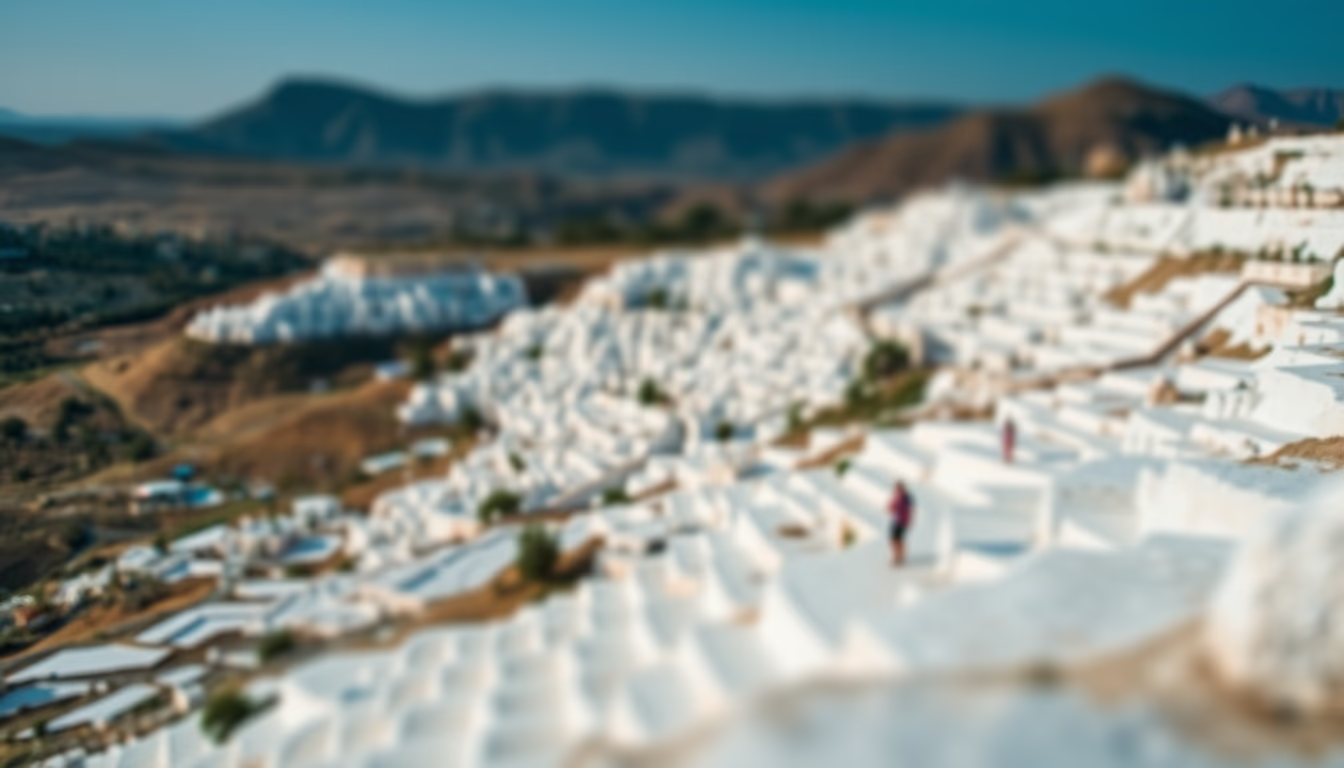
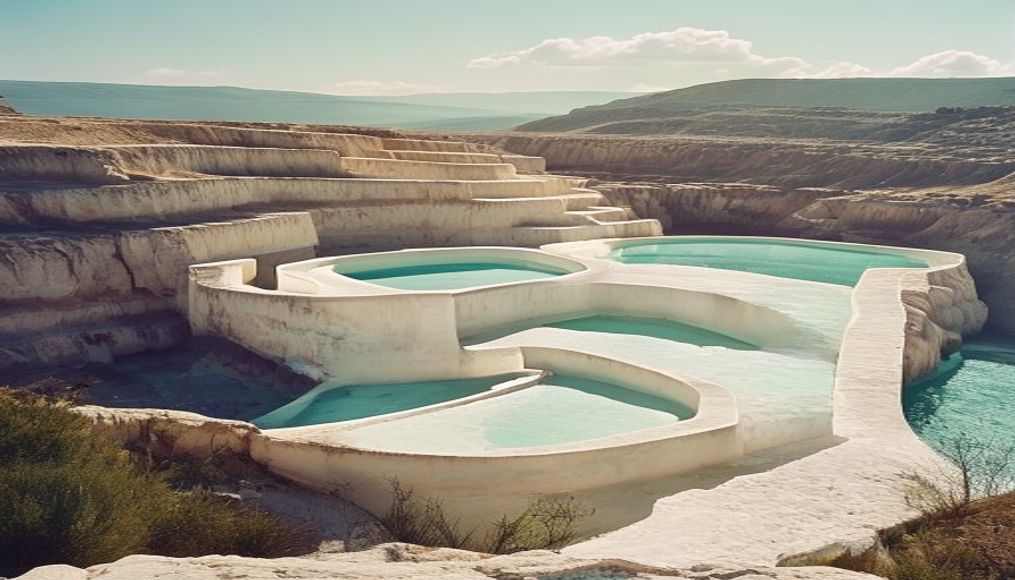
Pamukkale in Turkey is a stunning collection of white travertine terraces formed by mineral-rich thermal springs, a UNESCO World Heritage site.
About this subject
Pamukkale, meaning 'cotton castle' in Turkish, is a natural wonder in Denizli Province, southwestern Turkey. The travertine formations were created over millennia by precipitation of calcium carbonate from thermal waters emerging from a geological fault. The water, heated by underground volcanic activity, cools as it flows down the slopes, depositing the mineral and forming cascading pools. Water temperatures range from 35°C to 100°C at the springs, and the pools reach depths of up to 1 meter.
Besides the natural beauty, the site contains the ruins of the ancient city of Hierapolis, founded around 190 BC by the kings of Pergamon. Hierapolis became a thermal and religious center, with a large theater, temples, and a necropolis. The city was devastated by earthquakes but still preserves important artifacts. In 1988, Pamukkale and Hierapolis were declared a UNESCO World Heritage site, recognizing their geological and historical significance.
To protect the fragile formations, entry to the pools is now restricted to designated areas, and visitors must walk barefoot to avoid damage. Despite this, the site attracts millions of tourists annually. The intense white of the travertine contrasts with the blue water, creating a unique landscape. The region is also famous for cotton grown in the nearby plains, which gave the site its name. Interestingly, the pools' appearance changes with daylight, being especially vivid at sunrise and sunset.
Frequently Asked Questions
How were the Pamukkale terraces formed?
Thermal waters rich in calcium emerge from a geological fault and deposit calcium carbonate as they flow, gradually building the travertine terraces over thousands of years.
Can I swim in the Pamukkale pools?
Yes, but only in controlled areas. Most pools are protected, but there is a thermal pool open to the public near the ruins of Hierapolis where swimming is allowed.
What is the best time to visit Pamukkale?
Spring (April to June) and autumn (September to November) offer mild temperatures and fewer crowds. Summer can be very hot, winter cold and rainy.
Direct URL
https://pub-c7d6a6ea828543ac903a74a341ccb2e1.r2.dev/imagens/pamukkale-terraces-turkey-tilt-shift-miniature-p3.avifHow to credit
Include a visible link back to UtilizAí. Copy one of the snippets below:
<a href="https://xn--utiliza-eza.com/en/midia/imagens/pamukkale-terraces-turkey-tilt-shift-miniature-p3">Pamukkale terraces turkey</a> by <a href="https://xn--utiliza-eza.com">UtilizAí</a>, licensed under <a href="https://creativecommons.org/licenses/by/4.0/">CC BY 4.0</a>.
[Pamukkale terraces turkey](https://xn--utiliza-eza.com/en/midia/imagens/pamukkale-terraces-turkey-tilt-shift-miniature-p3) by [UtilizAí](https://xn--utiliza-eza.com), CC BY 4.0
License: CC-BY-4.0