Palm house botanical kew
1344×768 · AVIF · CC BY 4.0
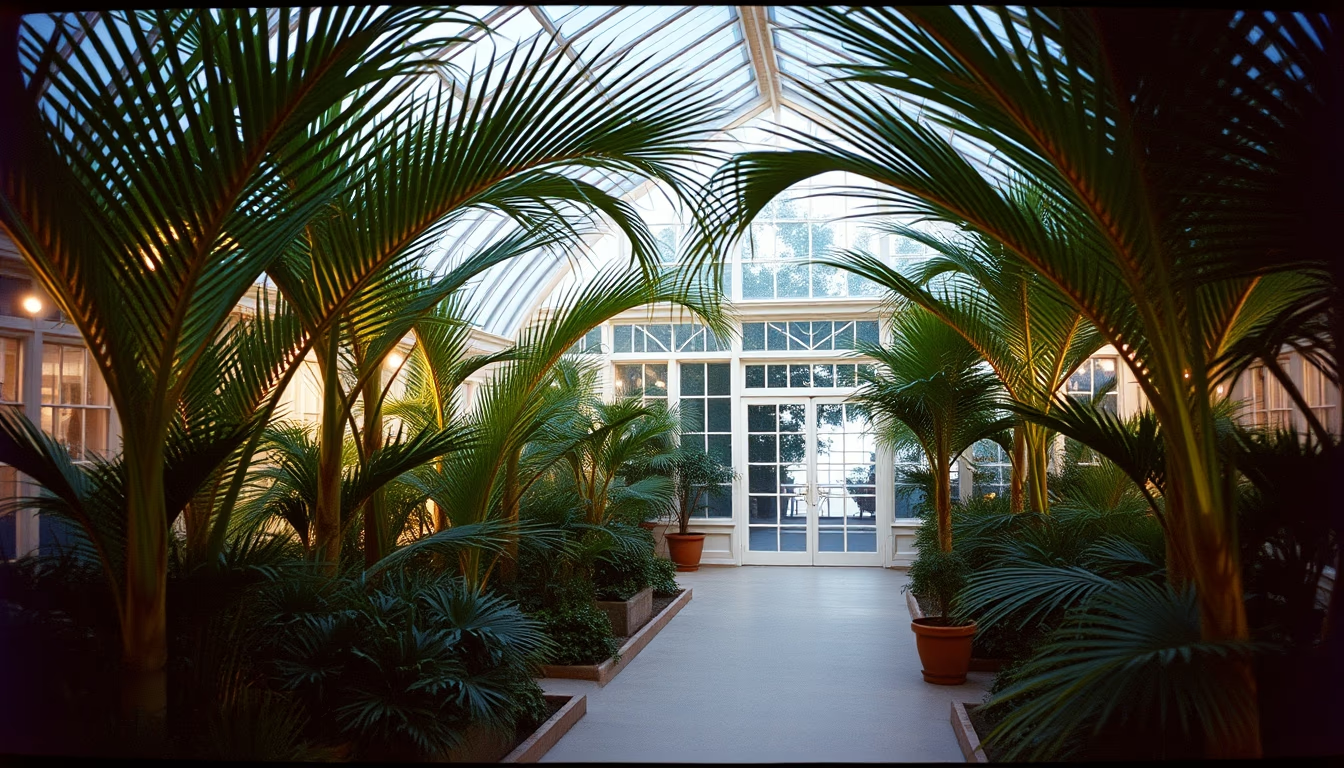
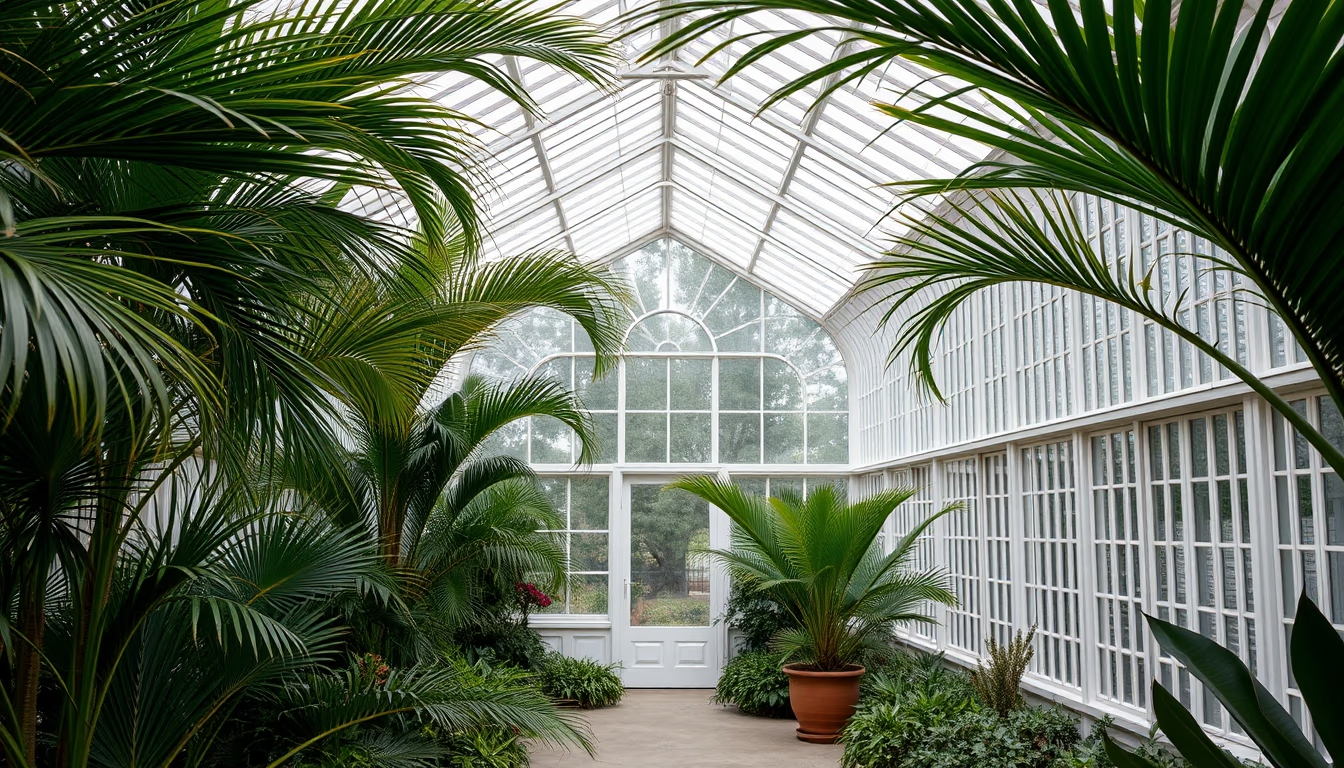
The Palm House at Kew Gardens is a Victorian glass and iron greenhouse, built between 1844 and 1848, housing a tropical collection of rare plants.
About this subject
The Palm House is one of the world's largest and most iconic Victorian greenhouses, located at the Royal Botanic Gardens, Kew, in London, United Kingdom. Designed by architect Decimus Burton and ironmaster Richard Turner, its construction took three years and resulted in a 110-meter-long structure with an innovative curved profile for its time. Cast iron was used in a pioneering manner to create lightness and transparency, allowing essential sunlight for tropical plants.
The interior houses a vast collection of palms and other species from tropical regions around the world. The greenhouse was designed to recreate the hot, humid climate needed for these plants to thrive, including economically important species such as the coconut palm and oil palm. In addition to palms, notable specimens include banana trees, orchids, and cycads, forming a dense and lush ecosystem.
Historically, the Palm House was one of the first large iron-and-glass structures, influencing later architects and engineers. It was opened by Prince Albert, who promoted science and horticulture. In 2018, it underwent a major restoration that replaced glass and paint, preserving its original character. Its image is globally recognized, appearing in films and documentaries.
Culturally, the Palm House symbolizes the peak of Victorian optimism and botanical exploration. During the 19th century, collectors brought exotic plants from across the British Empire for public display. Today, it continues as a research and education center, attracting over one million visitors annually.
Frequently Asked Questions
How long did it take to build the Palm House at Kew Gardens?
The construction of the Palm House took about three years, from 1844 to 1848. It was a collaboration between architect Decimus Burton and engineer Richard Turner.
What plants can be found inside the Palm House?
The greenhouse houses an extensive collection of tropical palms, as well as banana plants, orchids, cycads, and other species requiring warm, humid conditions. Many are rare or economically important.
Why is the Palm House considered an architectural landmark?
It is one of the earliest examples of large iron-and-glass structures, preceding similar designs in markets and railway stations. Its curved, lightweight design influenced Victorian and modern architecture.
Direct URL
https://pub-c7d6a6ea828543ac903a74a341ccb2e1.r2.dev/imagens/palm-house-botanical-kew-lo-fi-disposable-camera-fresh2.avifHow to credit
Include a visible link back to UtilizAí. Copy one of the snippets below:
<a href="https://xn--utiliza-eza.com/en/midia/imagens/palm-house-botanical-kew-lo-fi-disposable-camera-fresh2">Palm house botanical kew</a> by <a href="https://xn--utiliza-eza.com">UtilizAí</a>, licensed under <a href="https://creativecommons.org/licenses/by/4.0/">CC BY 4.0</a>.
[Palm house botanical kew](https://xn--utiliza-eza.com/en/midia/imagens/palm-house-botanical-kew-lo-fi-disposable-camera-fresh2) by [UtilizAí](https://xn--utiliza-eza.com), CC BY 4.0
License: CC-BY-4.0