Palm house botanical kew
1344×768 · AVIF · CC BY 4.0
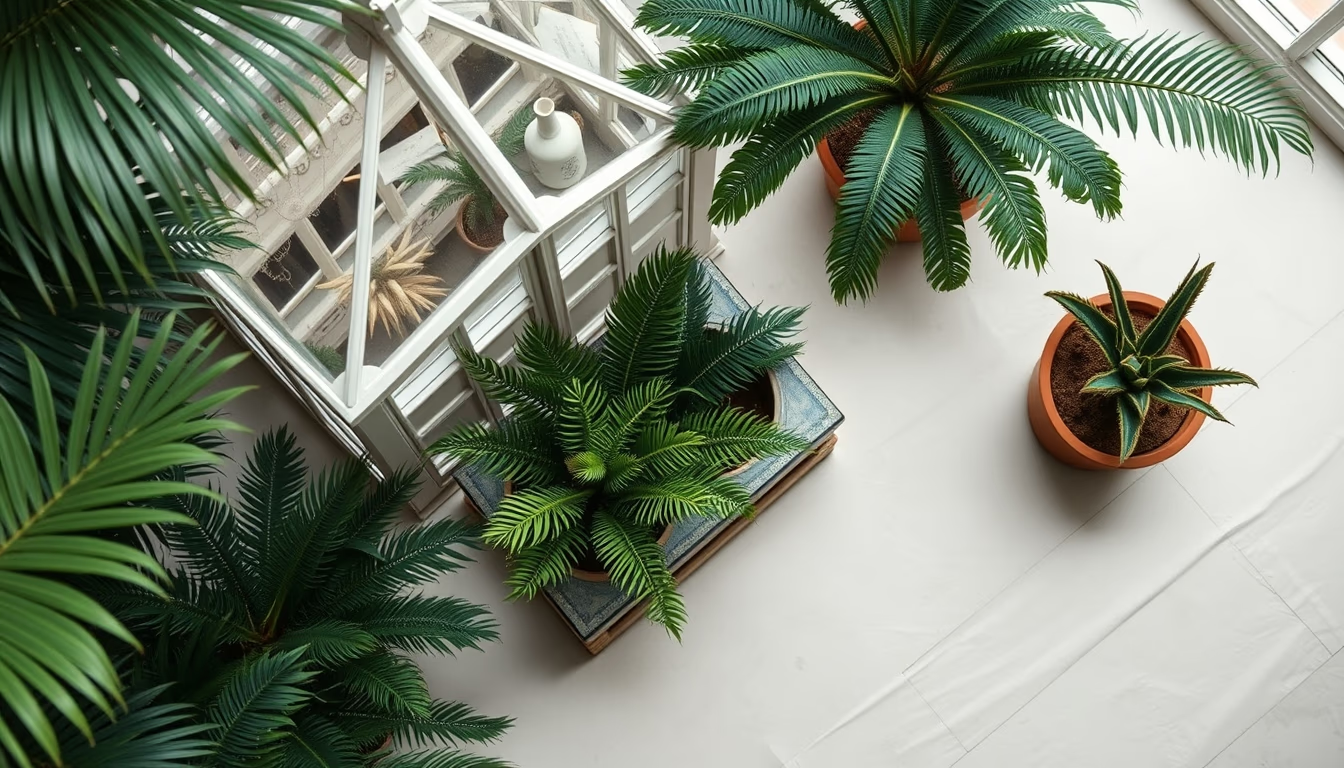
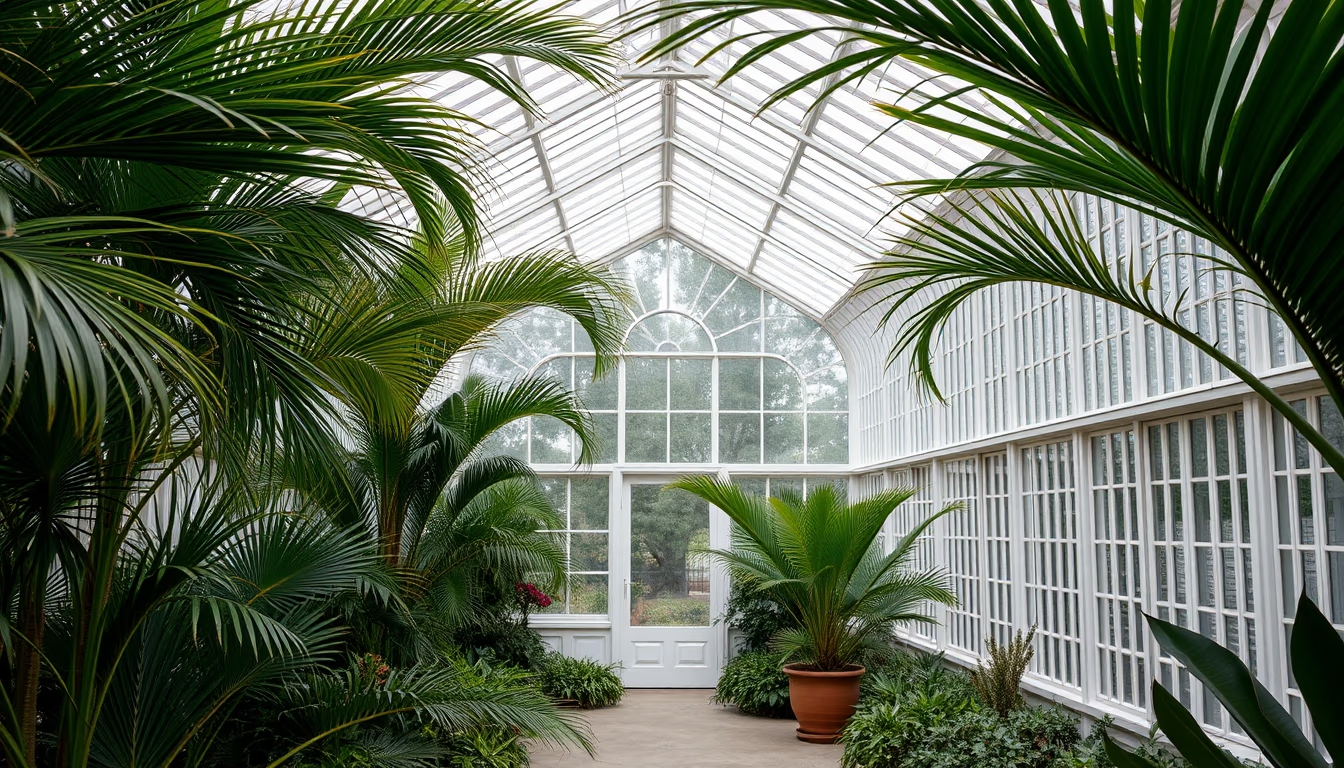
The Palm House at the Royal Botanic Gardens, Kew, is one of the most iconic examples of Victorian glass-and-iron architecture, housing a vast collection of tropical palms.
About this subject
The Palm House at the Royal Botanic Gardens, Kew, in London, is a monumental greenhouse built between 1844 and 1848. Designed by architect Decimus Burton and engineer Richard Turner, its innovative wrought-iron and glass structure created a controlled environment for growing tropical plants, especially palms. At the time, it was the largest greenhouse in the world, measuring 110 meters in length and 20 meters in height, an engineering feat that influenced greenhouses globally.
Today the building houses around 1,200 plant species, including rare palms, cycads, and other species from tropical and subtropical regions. Its curved design maximized sunlight penetration, essential for plant growth. The Palm House was also one of the first major architectural projects to use curved glass on a large scale, a technique later applied to train stations and other public buildings.
The Royal Botanic Gardens, Kew, has been a UNESCO World Heritage Site since 2003, and the Palm House is one of its main attractions. It represents not only a breakthrough in botany and horticulture but also a symbol of the Victorian era and the British interest in exploring and classifying exotic plants. Visitors can walk along internal walkways that offer views of both the palm canopies and the external gardens, providing an immersive experience in the tropical plant world.
Frequently Asked Questions
When was the Palm House at Kew built?
The Palm House was built between 1844 and 1848, opening in 1848. It was designed by Decimus Burton and Richard Turner.
What kind of plants are grown inside the Palm House?
The greenhouse mainly houses tropical palms, but also includes cycads, subtropical plants, and other exotic species, totaling about 1,200 species.
Why is the Palm House considered an architectural landmark?
It was one of the first major structures to use wrought iron and curved glass, an innovative technique at the time. Its design influenced later greenhouses and public buildings, and at the time of construction it was the largest greenhouse in the world.
Direct URL
https://pub-c7d6a6ea828543ac903a74a341ccb2e1.r2.dev/imagens/palm-house-botanical-kew-isometric-flat-lay-fresh5.avifHow to credit
Include a visible link back to UtilizAí. Copy one of the snippets below:
<a href="https://xn--utiliza-eza.com/en/midia/imagens/palm-house-botanical-kew-isometric-flat-lay-fresh5">Palm house botanical kew</a> by <a href="https://xn--utiliza-eza.com">UtilizAí</a>, licensed under <a href="https://creativecommons.org/licenses/by/4.0/">CC BY 4.0</a>.
[Palm house botanical kew](https://xn--utiliza-eza.com/en/midia/imagens/palm-house-botanical-kew-isometric-flat-lay-fresh5) by [UtilizAí](https://xn--utiliza-eza.com), CC BY 4.0
License: CC-BY-4.0