Palm house botanical kew
1344×768 · AVIF · CC BY 4.0
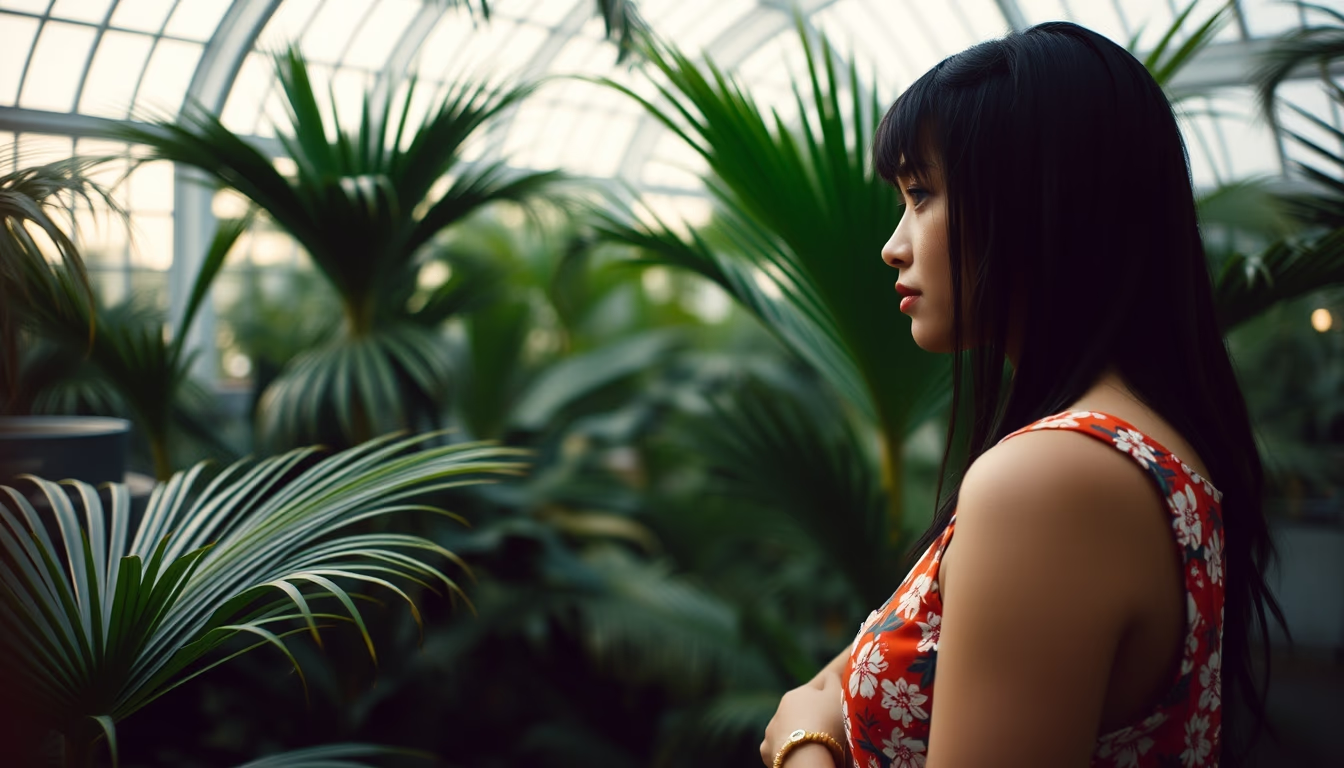
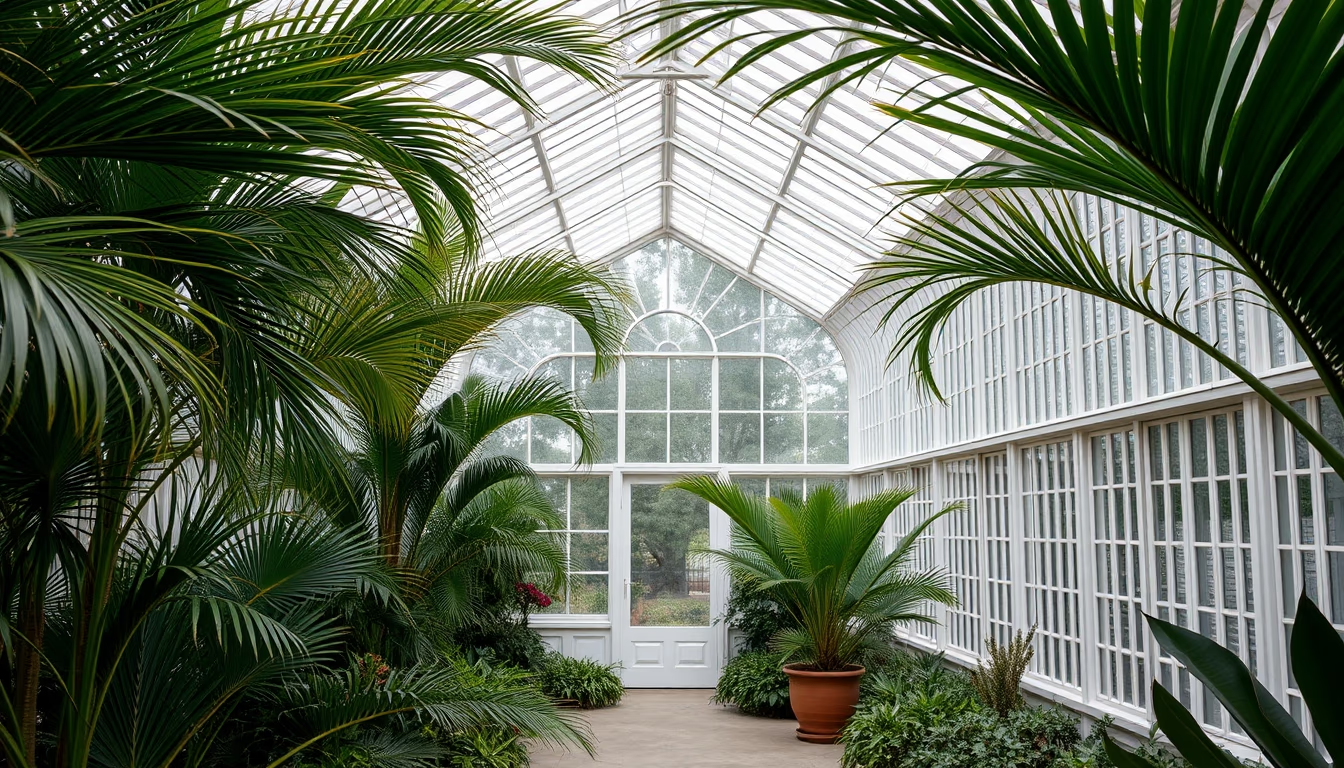
Discover the Palm House, an iconic Victorian glasshouse at the Royal Botanic Gardens, Kew, in London, housing one of the world's most important palm collections.
About this subject
The Palm House is a monumental glasshouse located at the Royal Botanic Gardens, Kew, in London. Designed by architect Decimus Burton and iron-founder Richard Turner, it was built between 1844 and 1848. Its wrought-iron and glass structure, inspired by the shape of an inverted ship's hull, represented a breakthrough in Victorian engineering. Measuring 110 meters long, 30 meters wide, and 20 meters high, it was the largest greenhouse of its kind at the time. Unlike other constructions, it has no internal columns, allowing plants to grow freely.
The interior houses a rich collection of palms and other tropical plants from regions such as Central America, Southeast Asia, and Africa. Notable species include the Cuban royal palm (Roystonea regia) and the oil palm (Elaeis guineensis). The climate is controlled to simulate tropical conditions, with an average temperature of 20°C and high humidity. The Palm House also plays a crucial role in conservation programs, protecting endangered species.
Beyond its botanical value, the glasshouse is an architectural landmark. It was one of the first structures to extensively use curved glass, influencing projects like the Crystal Palace. Today, it attracts about 1.5 million visitors annually. In 2018, it underwent a £41 million restoration that modernized heating and ventilation systems while preserving historical integrity. Interestingly, the original coal-fired boilers were replaced with biomass, reducing emissions.
The Palm House has inspired other famous glasshouses, such as the Temperate House at the New York Botanical Garden. Its silhouette has become a symbol of Kew and a global icon of botany. For visitors, it offers an immersive tropical experience, blending science, history, and aesthetics.
Frequently Asked Questions
When was the Palm House built?
The Palm House was built between 1844 and 1848, designed by architect Decimus Burton and iron-founder Richard Turner.
How many palm species are in the Palm House?
The collection includes about 200 species of palms and other tropical plants, representing ecosystems from various parts of the world.
How tall is the Palm House structure?
The Palm House is 20 meters high at its tallest point, with a length of 110 meters and a width of 30 meters.
Direct URL
https://pub-c7d6a6ea828543ac903a74a341ccb2e1.r2.dev/imagens/palm-house-botanical-kew-film-grain-authentic-fresh1.avifHow to credit
Include a visible link back to UtilizAí. Copy one of the snippets below:
<a href="https://xn--utiliza-eza.com/en/midia/imagens/palm-house-botanical-kew-film-grain-authentic-fresh1">Palm house botanical kew</a> by <a href="https://xn--utiliza-eza.com">UtilizAí</a>, licensed under <a href="https://creativecommons.org/licenses/by/4.0/">CC BY 4.0</a>.
[Palm house botanical kew](https://xn--utiliza-eza.com/en/midia/imagens/palm-house-botanical-kew-film-grain-authentic-fresh1) by [UtilizAí](https://xn--utiliza-eza.com), CC BY 4.0
License: CC-BY-4.0