Palm house botanical kew
1344×768 · AVIF · CC BY 4.0
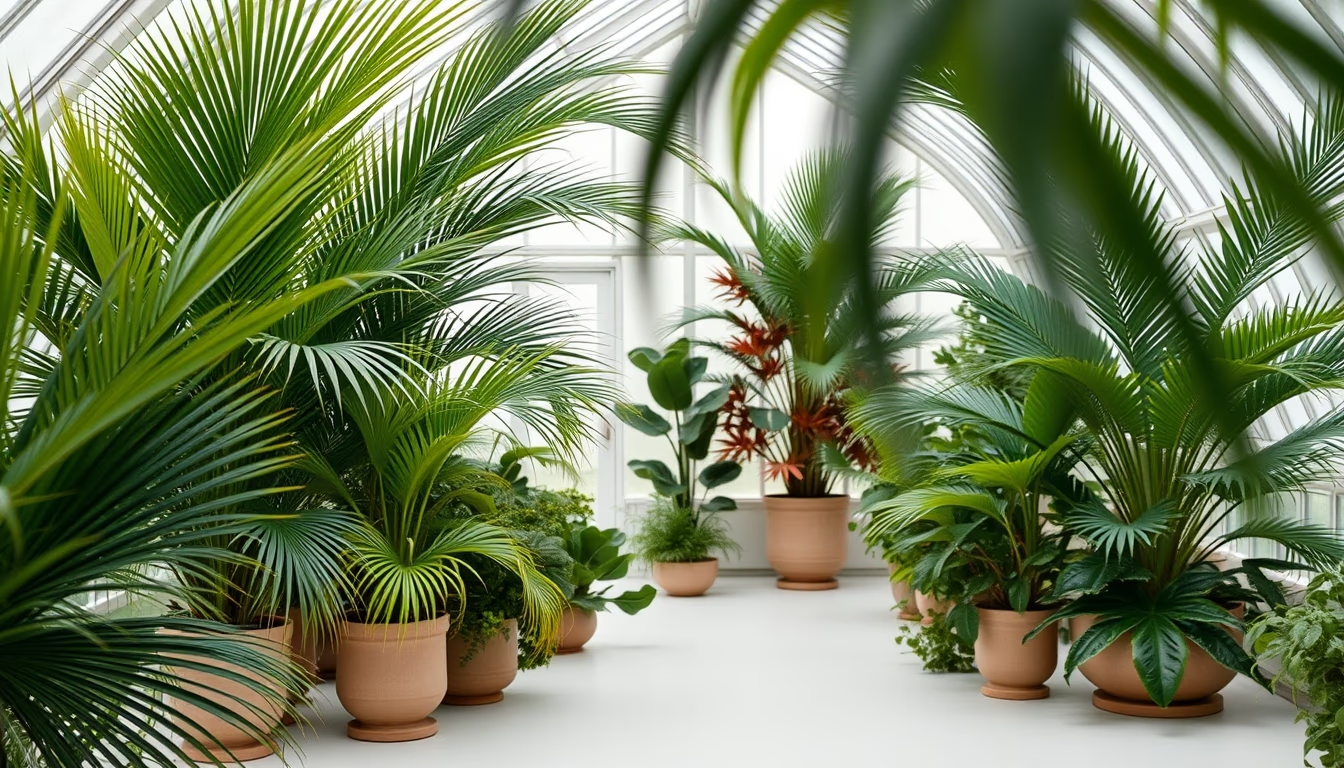
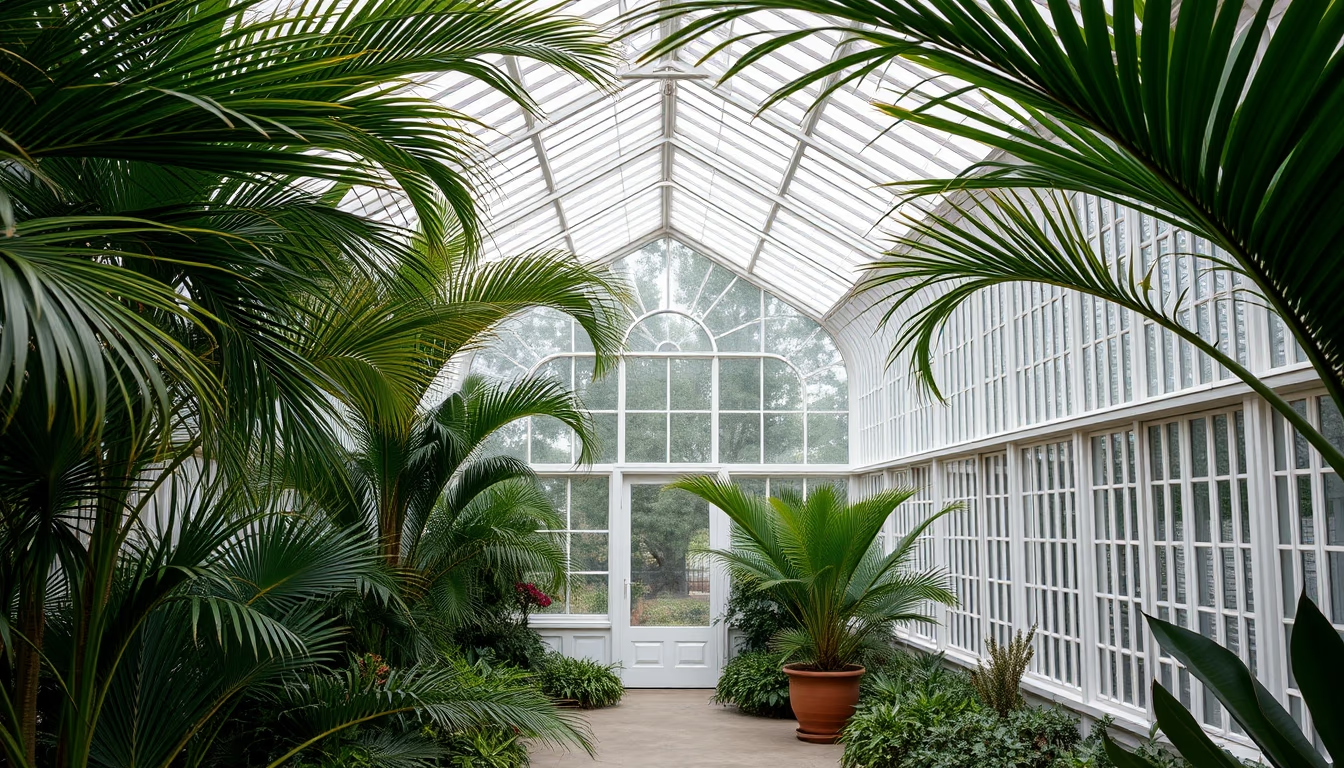
The Palm House at the Royal Botanic Gardens, Kew, in London is an iconic Victorian glasshouse, housing a vast collection of tropical palms and exotic plants.
About this subject
The Palm House is one of the most iconic glasshouses in the world, located at the Royal Botanic Gardens, Kew, in London. Designed by architect Decimus Burton and engineer Richard Turner, it was built between 1844 and 1848. Its wrought-iron and glass structure, inspired by 19th-century conservatories, created a controlled environment for growing tropical plants, especially palms, which previously could not survive the British climate.
The glasshouse measures 110 meters in length, 30 meters in width, and 19 meters in height at its tallest point. Its curved, ship-like design is not only aesthetically striking but also functional: it maximizes sunlight entry and air circulation. The Palm House was a feat of industrial engineering at the time, using modern prefabrication and assembly techniques.
Its collection includes hundreds of palm species, as well as cycads, ferns, and other tropical plants from regions such as South America, Africa, and Southeast Asia. Highlights include the African oil palm (Elaeis guineensis) and the royal palm (Roystonea regia). The glasshouse also plays a crucial role in conservation, with research and propagation programs for endangered species.
Interestingly, the Palm House has served as a setting for films and cultural events, and its silhouette is a recognizable symbol of Kew. Visitors can walk along suspended walkways to view the palm canopies and experience tropical humidity. Maintaining the structure requires constant care, including glass replacement and control of temperature and humidity, which can reach up to 30°C and 80%.
Frequently Asked Questions
When was the Palm House built and who designed it?
The Palm House was built between 1844 and 1848, designed by architect Decimus Burton and engineer Richard Turner.
How many palm species are in the Palm House?
The glasshouse houses hundreds of palm species, along with cycads and other tropical plants, making up a diverse collection.
What is the conservation role of the Palm House?
The Palm House is involved in research and propagation programs for endangered species, contributing to tropical plant conservation.
Direct URL
https://pub-c7d6a6ea828543ac903a74a341ccb2e1.r2.dev/imagens/palm-house-botanical-kew-commercial-product-photography-fresh17.avifHow to credit
Include a visible link back to UtilizAí. Copy one of the snippets below:
<a href="https://xn--utiliza-eza.com/en/midia/imagens/palm-house-botanical-kew-commercial-product-photography-fresh17">Palm house botanical kew</a> by <a href="https://xn--utiliza-eza.com">UtilizAí</a>, licensed under <a href="https://creativecommons.org/licenses/by/4.0/">CC BY 4.0</a>.
[Palm house botanical kew](https://xn--utiliza-eza.com/en/midia/imagens/palm-house-botanical-kew-commercial-product-photography-fresh17) by [UtilizAí](https://xn--utiliza-eza.com), CC BY 4.0
License: CC-BY-4.0