Orthodox church onion
1344×768 · JPG · CC BY 4.0
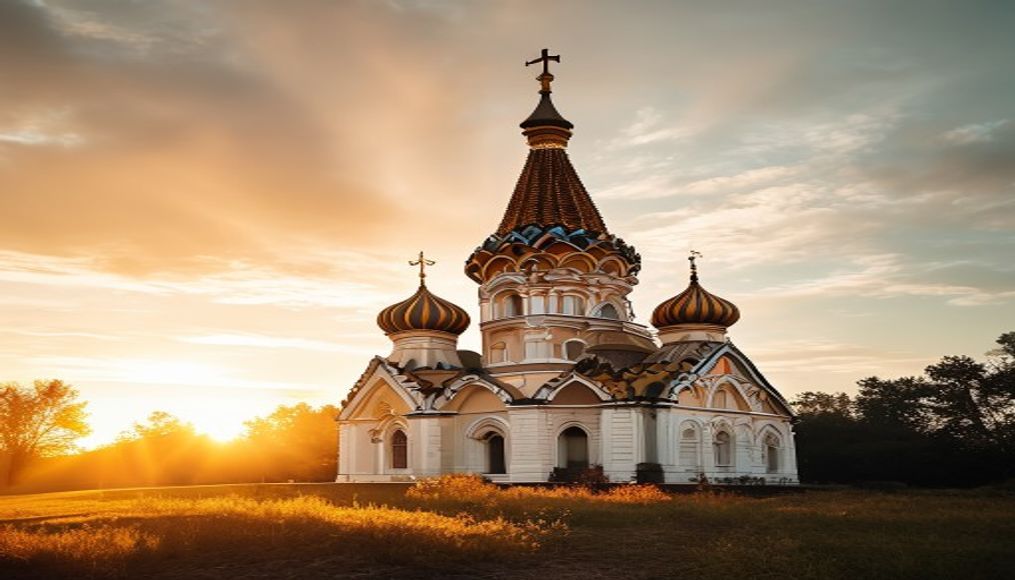
Onion-shaped domes, typical of Orthodox churches, are iconic architectural elements of Eastern Europe and Russia.
About this subject
Onion-shaped domes, also called bulbous domes or Russian onions, are among the most recognizable symbols of Eastern Orthodox church architecture. Their origins trace back to the Byzantine period, but they became prominent in Russia from the 12th century onward. Unlike Romanesque or Gothic domes, these structures have a rounded form that tapers to a point, often crowned with an Orthodox cross. The design is thought to have been influenced by nomadic tents or Persian architectural motifs, but the Russian adaptation gave them a unique identity.
In Russia, onion domes gained prominence especially after the construction of Saint Basil's Cathedral in Moscow (1561), which features multiple colorful and ornate domes. Each dome represents a candle flame rising toward heaven, symbolizing prayer. Colors also carry theological meanings: gold represents divine glory; blue, the Virgin Mary; green, the Holy Trinity; and black or gray, monastic asceticism. Beyond Russia, countries such as Ukraine, Bulgaria, Serbia, and Greece adopted this style, with regional variations.
Construction of these domes required advanced carpentry and metalworking techniques, as many were made of wood and clad with metals like gold, copper, or tin. Over time, the onion dome became a marker of cultural identity, especially in imperial Russia, where it resisted attempts at architectural Westernization. Even during the Soviet era, many churches were preserved or restored, and today the shape is used in contemporary architecture, such as some public buildings and Orthodox churches in diaspora.
A technical curiosity: the bulbous shape allows better distribution of snow weight in winter, preventing collapse, demonstrating practical adaptation to harsh climates. Additionally, the interior acoustics of these domes are unique, favoring the resonance of liturgical chants. Thus, more than ornamentation, the onion dome combines structural function, religious symbolism, and cultural heritage.
Frequently Asked Questions
What is the origin of onion domes in Orthodox architecture?
They originated in the Byzantine period but became prominent in Russia from the 12th century, possibly influenced by nomadic tents or Persian architecture.
What do the colors of Orthodox domes symbolize?
Gold represents divine glory; blue, the Virgin Mary; green, the Holy Trinity; black or gray, monastic asceticism.
Why do Orthodox domes have this shape?
Beyond religious symbolism, the bulbous shape helps distribute snow weight in winter, preventing collapse, and improves interior acoustics for liturgical chants.
Direct URL
https://pub-c7d6a6ea828543ac903a74a341ccb2e1.r2.dev/imagens/orthodox-church-onion-cinematic-wide-shot-p4.jpgHow to credit
Include a visible link back to UtilizAí. Copy one of the snippets below:
<a href="https://xn--utiliza-eza.com/en/midia/imagens/orthodox-church-onion-cinematic-wide-shot-p4">Orthodox church onion</a> by <a href="https://xn--utiliza-eza.com">UtilizAí</a>, licensed under <a href="https://creativecommons.org/licenses/by/4.0/">CC BY 4.0</a>.
[Orthodox church onion](https://xn--utiliza-eza.com/en/midia/imagens/orthodox-church-onion-cinematic-wide-shot-p4) by [UtilizAí](https://xn--utiliza-eza.com), CC BY 4.0
License: CC-BY-4.0