Orthodox cathedral russian
1344×768 · JPG · CC BY 4.0
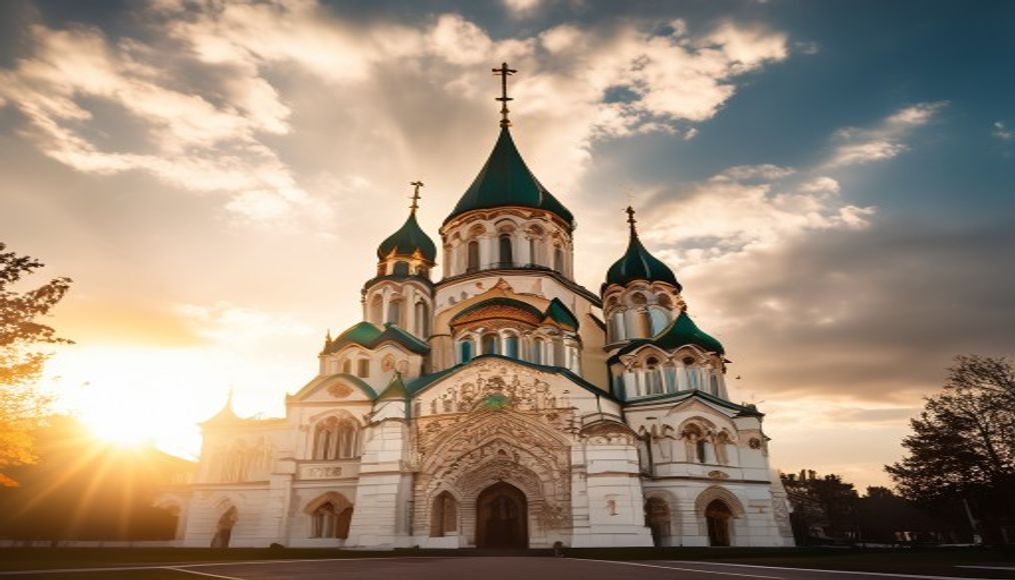
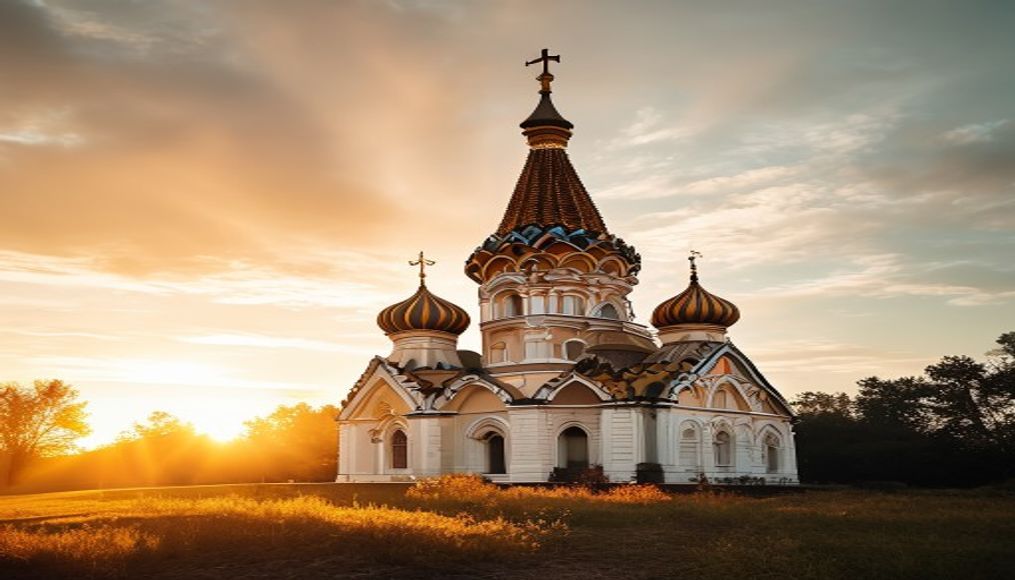
Russian Orthodox cathedrals blend Byzantine architecture and Slavic traditions in temples of golden domes and rich iconostases.
About this subject
Russian Orthodox cathedrals are direct heirs to Byzantine architecture, adapted to the Slavic climate and culture over centuries. Iconic examples include Saint Basil's Cathedral on Moscow's Red Square (built 1555, 1561), with its colorful onion domes, and the Cathedral of Christ the Saviour in Moscow, rebuilt in the 1990s after being demolished by the Soviet regime. These structures serve not only as places of worship but as national symbols and historical landmarks.
The most striking feature is the bulbous dome, which may be gilded, blue, or multicolored. This shape is thought to imitate a candle flame, representing spiritual ascent. Inside, churches are divided by an iconostasis, a screen covered with icons separating the sanctuary from the nave. Icons, painted with egg tempera on wood, follow a rich theological and artistic tradition, considered windows to the divine. Mosaics and frescoes also adorn walls and ceilings, narrating biblical scenes.
Culturally, Russian Orthodox cathedrals were centers of religious resistance during the Soviet era, when many were closed, destroyed, or turned into museums. After the fall of the USSR, a major movement of restoration and new construction began. The largest Orthodox cathedral in the world is the Cathedral of Christ the Saviour in Moscow, which can hold 10,000 worshippers. Another important one is Saint Sophia's Cathedral in Kyiv, built in the 11th century, blending Byzantine and Russian influences, though currently in Ukrainian territory.
Russian Orthodox architecture also influenced other Orthodox countries, such as Serbia and Georgia, and inspired neo-Byzantine styles in the 19th century. Many cathedrals are pilgrimage destinations, like the Trinity Cathedral of Saint Sergius in Sergiev Posad, part of a monastery attracting thousands of pilgrims annually. Preserving these buildings is considered essential to Russian cultural identity.
Frequently Asked Questions
What is the difference between a Russian Orthodox cathedral and a Catholic church?
Russian Orthodox cathedrals follow the Byzantine rite, with an iconostasis separating the altar, extensive use of icons, and onion-shaped domes. Catholic churches usually have a visible altar, statuary, and Gothic or Baroque architecture.
Why do Russian Orthodox cathedral domes have an onion shape?
The bulbous domes symbolize a candle flame, representing prayer rising to heaven. This shape also helps shed snow in the harsh Russian winter.
What is an iconostasis?
An iconostasis is a wall of icons separating the sanctuary (altar) from the main nave. It has central (Royal Doors) and side doors, and the icons are arranged in hierarchical rows following a theological order.
Direct URL
https://pub-c7d6a6ea828543ac903a74a341ccb2e1.r2.dev/imagens/orthodox-cathedral-russian-cinematic-wide-shot-p3.jpgHow to credit
Include a visible link back to UtilizAí. Copy one of the snippets below:
<a href="https://xn--utiliza-eza.com/en/midia/imagens/orthodox-cathedral-russian-cinematic-wide-shot-p3">Orthodox cathedral russian</a> by <a href="https://xn--utiliza-eza.com">UtilizAí</a>, licensed under <a href="https://creativecommons.org/licenses/by/4.0/">CC BY 4.0</a>.
[Orthodox cathedral russian](https://xn--utiliza-eza.com/en/midia/imagens/orthodox-cathedral-russian-cinematic-wide-shot-p3) by [UtilizAí](https://xn--utiliza-eza.com), CC BY 4.0
License: CC-BY-4.0