Origami crane delicate
1344×768 · AVIF · CC BY 4.0
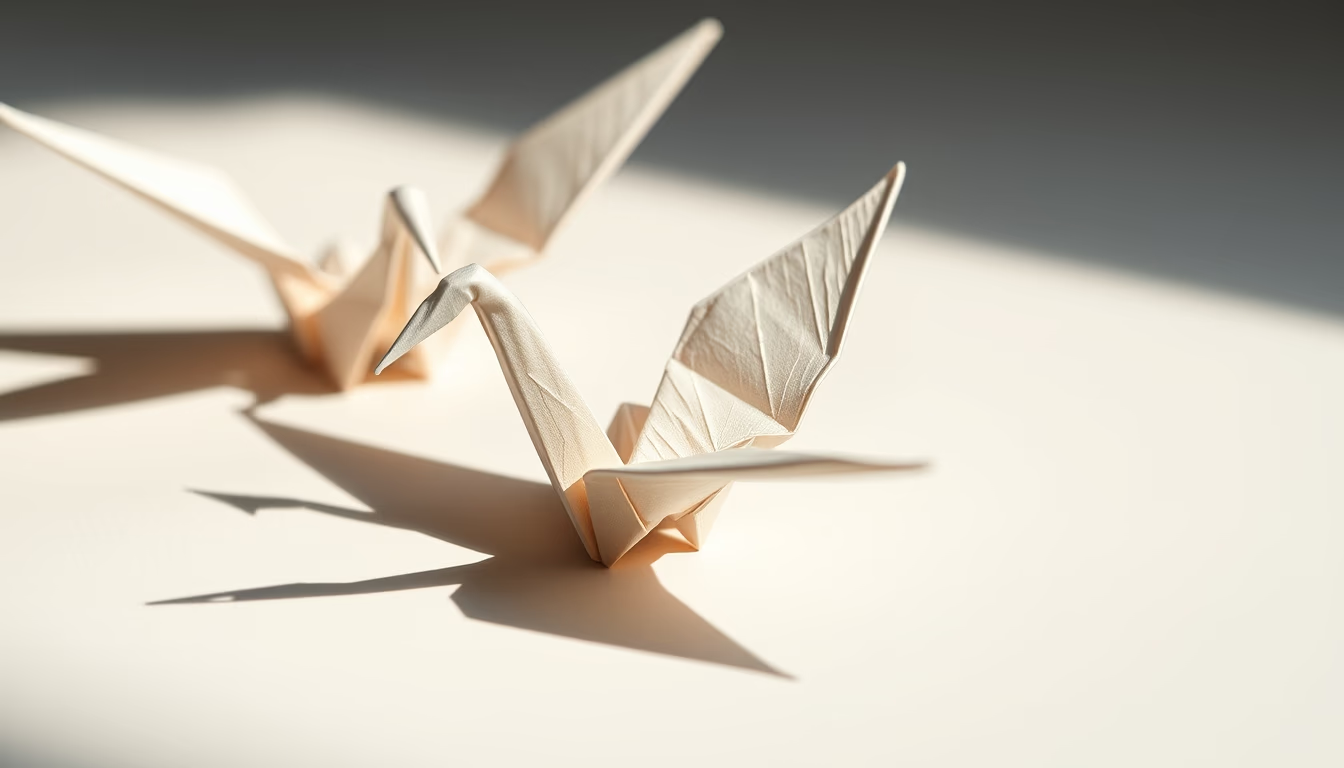
Explore the history and cultural meaning of the delicate origami crane, a symbol of peace and longevity in Japanese tradition.
About this subject
The origami crane, or kōdō, is one of the most iconic models in Japanese paper‑folding art. Dating back to the fifteenth century, the technique evolved to incorporate precise geometric patterns and the use of thin rice paper, known as washi. The crane is regarded as a good‑luck charm, and the belief that folding a thousand and one cranes can grant a wish has deep roots in Japanese culture.
Historically, the origami crane gained worldwide recognition thanks to projects such as Sadako Sasaki’s, who folded cranes while battling cancer. Her international gesture symbolized hope and resilience, influencing peace campaigns around the globe. In spring festivals, cranes appear on flags, lanterns, and amulets, reminding people of seasonal transitions.
From a technical standpoint, the model requires 23 creases and 52 folds, making it one of the most complex in the practice. The choice of paper size, typically 15 cm by 15 cm, affects the proportion of the wings and head, while folding pressure influences symmetry. Many contemporary artists experiment with unconventional materials, such as silk paper or fine textiles, to create three‑dimensional or colorful versions.
Beyond its artistic value, the origami crane is used in occupational therapy, where repetitive motion improves hand coordination and reduces stress. In schools, the crane‑folding exercise teaches geometry and proportion, illustrating the intersection of culture, science, and well‑being.
Frequently Asked Questions
How many folds are required to create an origami crane?
The traditional model requires 52 folds, including 23 paper cuts and the remaining crease movements.
What is the ideal paper for folding a crane?
The washi paper measuring 15 cm by 15 cm is most common, offering the necessary strength and flexibility.
Why is the crane considered a symbol of peace?
Japanese tradition links the crane to longevity and harmony; Sadako Sasaki’s gesture amplified its meaning as an international peace symbol.
Direct URL
https://pub-c7d6a6ea828543ac903a74a341ccb2e1.r2.dev/imagens/origami-crane-delicate-magazine-editorial-v8.avifHow to credit
Include a visible link back to UtilizAí. Copy one of the snippets below:
<a href="https://xn--utiliza-eza.com/en/midia/imagens/origami-crane-delicate-magazine-editorial-v8">Origami crane delicate</a> by <a href="https://xn--utiliza-eza.com">UtilizAí</a>, licensed under <a href="https://creativecommons.org/licenses/by/4.0/">CC BY 4.0</a>.
[Origami crane delicate](https://xn--utiliza-eza.com/en/midia/imagens/origami-crane-delicate-magazine-editorial-v8) by [UtilizAí](https://xn--utiliza-eza.com), CC BY 4.0
License: CC-BY-4.0