Omega speedmaster moon
1344×768 · AVIF · CC BY 4.0
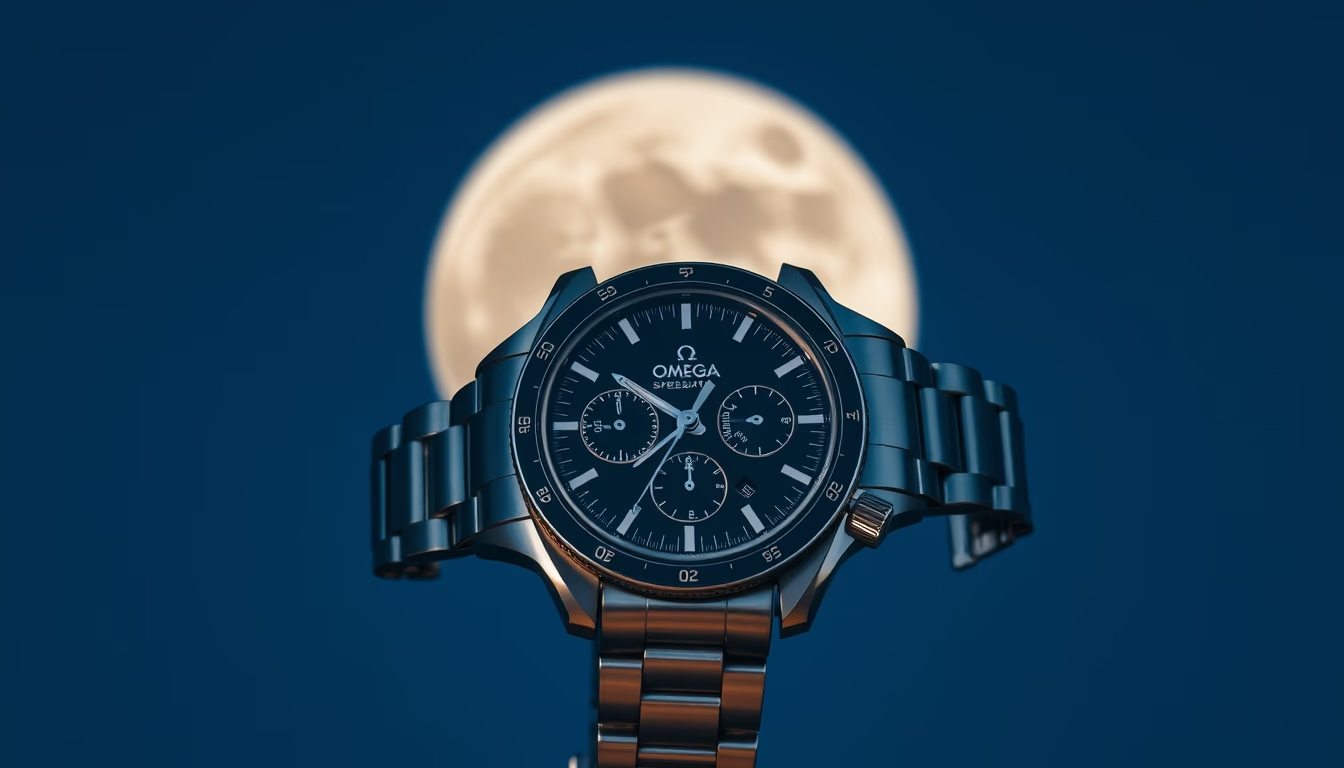
The Omega Speedmaster Moonwatch is the iconic chronograph that accompanied the Apollo missions to the Moon, including the first lunar landing in 1969.
About this subject
The Omega Speedmaster Moonwatch is one of the most emblematic watches in history, known for its participation in NASA space missions. In 1965, after rigorous testing, it was certified as the only chronograph suitable for use in manned space flights. Since then, it has been present on all six Apollo lunar landings, including Apollo 11, which took Neil Armstrong and Buzz Aldrin to the lunar surface. The original version, with manual movement Caliber 1861, Hesalite crystal, and black dial, remains virtually unchanged in current production, a hallmark of reliability and design.
The name "Moonwatch" is not official from Omega but became a popular nickname due to its lunar history. The Speedmaster Professional, reference 145.022, was worn by astronauts on later missions like Skylab and Apollo-Soyuz. Beyond its space relevance, the watch has won enthusiasts worldwide for its classic aesthetics and robustness. Omega offers variations with a sapphire caseback and Co-Axial movement, but the manual Hesalite model is the most faithful to the original historical piece.
A curious fact: during Apollo 13, the Speedmaster was used to time the 14-second manual burn needed to correct the trajectory after an onboard explosion. This episode cemented its reputation as a survival instrument. Today, the Moonwatch is a collector's item, with limited editions and a global fan community. Its design has influenced generations of chronographs and remains a benchmark in sports watchmaking.
The precision and durability of the Speedmaster were tested under extreme conditions from the vacuum of space to thermal variations. The stainless steel case and antimagnetic movement ensure reliable operation. For those seeking a piece of space history on the wrist, the Moonwatch is an unparalleled choice, combining Swiss engineering and a legacy of exploration.
Frequently Asked Questions
Why is the Omega Speedmaster called the Moonwatch?
The nickname Moonwatch comes from the Speedmaster being the watch worn by NASA astronauts on Apollo missions that landed on the Moon. It was certified for space flight in 1965 and was present on all lunar landings, including Apollo 11 in 1969.
What is the difference between the Hesalite and Sapphire Speedmaster models?
The Hesalite model uses an acrylic crystal (Hesalite) truer to the original, with slight distortion and ease of polishing. The Sapphire model has a scratch-resistant sapphire crystal and a transparent caseback. The movements also differ: the Hesalite uses the manual Caliber 1861, while the Sapphire uses the Caliber 3861 with Co-Axial and Master Chronometer certification.
Was the Speedmaster actually used on all Apollo missions?
Yes, the Omega Speedmaster was used on all manned Apollo missions, including those that did not land on the Moon, such as Apollo 13. It was also used on Gemini and Skylab programs. NASA still uses it on current space missions, including the International Space Station.
Direct URL
https://pub-c7d6a6ea828543ac903a74a341ccb2e1.r2.dev/imagens/omega-speedmaster-moon-aerial-drone-shot-fresh6.avifHow to credit
Include a visible link back to UtilizAí. Copy one of the snippets below:
<a href="https://xn--utiliza-eza.com/en/midia/imagens/omega-speedmaster-moon-aerial-drone-shot-fresh6">Omega speedmaster moon</a> by <a href="https://xn--utiliza-eza.com">UtilizAí</a>, licensed under <a href="https://creativecommons.org/licenses/by/4.0/">CC BY 4.0</a>.
[Omega speedmaster moon](https://xn--utiliza-eza.com/en/midia/imagens/omega-speedmaster-moon-aerial-drone-shot-fresh6) by [UtilizAí](https://xn--utiliza-eza.com), CC BY 4.0
License: CC-BY-4.0