Olympic stadium empty
1344×768 · AVIF · CC BY 4.0
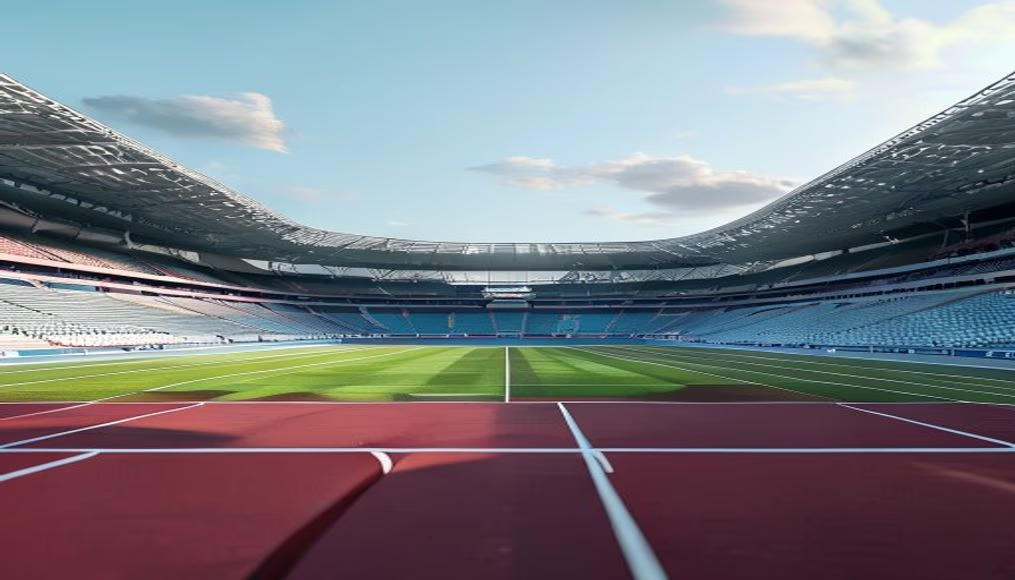
An empty Olympic stadium, symbol of the Games' grandeur and the post-event maintenance challenge.
About this subject
Olympic stadiums are built to host opening and closing ceremonies and athletics competitions, often with capacities exceeding 100,000 spectators. After the Games, these monuments face the challenge of reinvention: some are adapted for continuous use, such as London's Olympic Stadium (2012), which now hosts sports events and concerts; others, like Athens' Olympic Stadium (2004), fell into partial decay due to high maintenance costs and low demand.
The phenomenon of abandonment is not rare. Beijing's National Stadium (2008), the Bird's Nest, was maintained as a tourist attraction but its use for large events dropped sharply. In Brazil, Rio's Nilton Santos Olympic Stadium (2016) is now managed by Botafogo football club, although parts of the facilities remain underutilized. Maintaining an Olympic stadium can cost millions of dollars annually, leading many countries to opt for partial demolition or conversion into public parks.
The image of an empty stadium carries powerful symbolism: it represents not only the fleeting glory of elite sports but also the complex issues of legacy and financial sustainability. Photographs of deserted stands and silent tracks are often used in essays about the post-event period, highlighting the contrast between the peak of celebration and the ensuing quiet. Moreover, empty stadiums are recurring backdrops for reports on the cost of mega-sports events, sparking debates on urban planning and the use of public funds.
Frequently Asked Questions
What happens to Olympic stadiums after the Games?
After the Games, stadiums can be converted for multi-sport use, turned into concert venues, parks, or even abandoned. Successful examples include London's Olympic Stadium (repurposed for West Ham United) and Beijing's Bird's Nest (tourist attraction). Athens 2004 stadium suffered from neglect and high maintenance costs.
Why do some Olympic stadiums become abandoned?
The main reason is high maintenance costs that may exceed event revenue. Additionally, locations in peripheral areas and lack of post-Games planning contribute to abandonment, as seen with some venues from Athens 2004 and Rio 2016.
How can empty stadiums be repurposed?
They can be adapted into football stadiums, multi-purpose arenas, convention centers, or public parks. Capacity reductions, such as removing temporary seating, help lower operating costs. Examples: Munich Olympic Stadium (1972) and Seoul Olympic Stadium (1988) remain in active use.
Direct URL
https://pub-c7d6a6ea828543ac903a74a341ccb2e1.r2.dev/imagens/olympic-stadium-empty-commercial-product-photography-v9.avifHow to credit
Include a visible link back to UtilizAí. Copy one of the snippets below:
<a href="https://xn--utiliza-eza.com/en/midia/imagens/olympic-stadium-empty-commercial-product-photography-v9">Olympic stadium empty</a> by <a href="https://xn--utiliza-eza.com">UtilizAí</a>, licensed under <a href="https://creativecommons.org/licenses/by/4.0/">CC BY 4.0</a>.
[Olympic stadium empty](https://xn--utiliza-eza.com/en/midia/imagens/olympic-stadium-empty-commercial-product-photography-v9) by [UtilizAí](https://xn--utiliza-eza.com), CC BY 4.0
License: CC-BY-4.0