Old western union sign
1344×768 · AVIF · CC BY 4.0
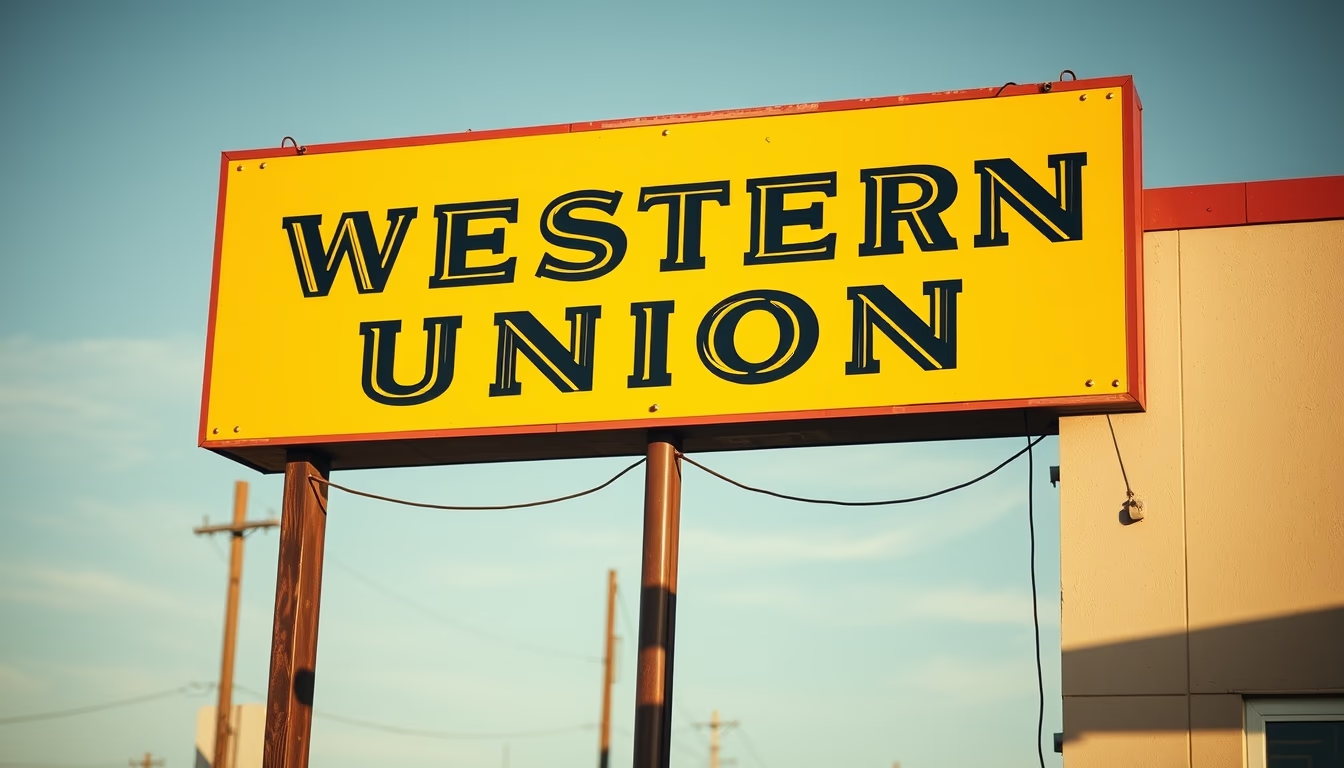
The Western Union sign is an icon of the telegraph era, symbolizing instant communication that connected the world before telephones and the internet.
About this subject
Founded in 1851 as the New York and Mississippi Valley Printing Telegraph Company, Western Union became the largest telegraph company in the United States. During the 19th and much of the 20th century, its messages sent via Morse code traveled across continents through landlines and submarine cables. In Brazil, the telegraph arrived in 1852, connecting Rio de Janeiro to Petrópolis, and companies such as the Western Telegraph Company (a British subsidiary) operated cables linking the country to Europe and North America. Although focused on the North American market, Western Union participated in this global communications network.
The green and white signs bearing the Western Union logo became familiar on storefronts, telegraph offices, and agencies. With the decline of telegraphy from the 1970s onward, due to the rise of telephones and later the internet, thousands of these signs were removed. Today, the few that remain are considered collector's items and historical landmarks of communication history. Brazil, for example, still preserves some signs in historic towns like Ouro Preto and Paraty, where the telegraph was vital for trade and administration.
Interestingly, Western Union did not disappear; it reinvented itself as a money transfer company, keeping the name but abandoning telegraphy. However, the old sign continues to evoke nostalgia and interest as a symbol of a technological revolution that shrank the world. Morse code, used in telegraph messages, remains a reference language in emergency situations and in amateur radio activities to this day.
Frequently Asked Questions
What was Western Union?
It was an American telegraph company founded in 1851, which became the largest in the world, revolutionizing communications by allowing messages to be sent in seconds.
What was the importance of the telegraph in Brazil?
The telegraph was essential for national integration and connection with the outside world, with submarine cables linking Brazil to Europe and North America, speeding up news and business.
Do Western Union signs still exist?
Many were removed after the telegraph era ended, but some are preserved in museums or as historical collectibles, especially in Brazilian historic towns.
Direct URL
https://pub-c7d6a6ea828543ac903a74a341ccb2e1.r2.dev/imagens/old-western-union-sign-documentary-photography-fresh7.avifHow to credit
Include a visible link back to UtilizAí. Copy one of the snippets below:
<a href="https://xn--utiliza-eza.com/en/midia/imagens/old-western-union-sign-documentary-photography-fresh7">Old western union sign</a> by <a href="https://xn--utiliza-eza.com">UtilizAí</a>, licensed under <a href="https://creativecommons.org/licenses/by/4.0/">CC BY 4.0</a>.
[Old western union sign](https://xn--utiliza-eza.com/en/midia/imagens/old-western-union-sign-documentary-photography-fresh7) by [UtilizAí](https://xn--utiliza-eza.com), CC BY 4.0
License: CC-BY-4.0