Oboe wooden detail
1344×768 · AVIF · CC BY 4.0
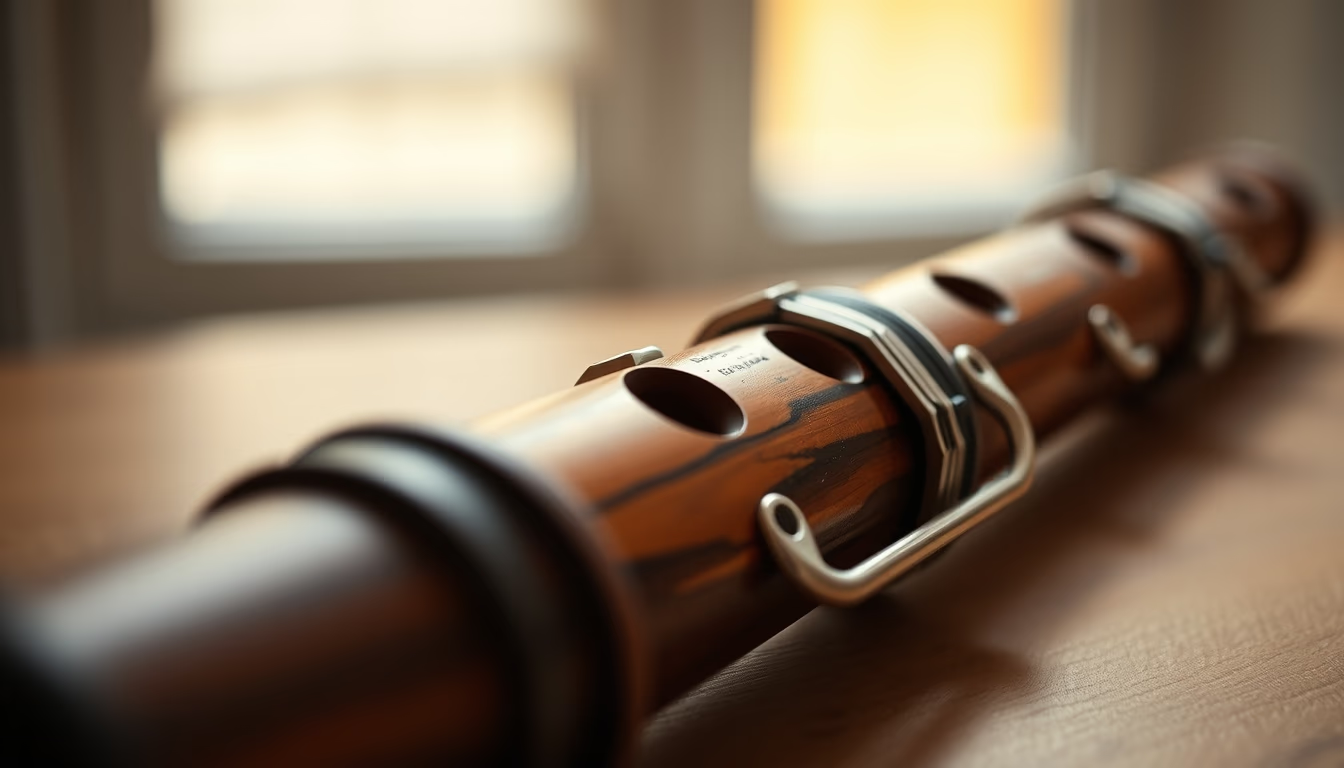
The oboe is a double-reed woodwind instrument known for its expressive sound and the use of fine woods in its construction.
About this subject
The oboe is a double-reed woodwind instrument valued for its penetrating, expressive tone. It is typically constructed from dense, fine woods such as grenadilla (a type of African ebony), rosewood, or boxwood, which provide resonance and durability. The upper section, called the staple, holds the double reed, while the body features a complex system of keys and tone holes that allow the player to control pitch and dynamics.
Historically, the modern oboe evolved from Renaissance shawms and the Baroque oboe, which emerged in 17th-century France. Composers like Bach, Handel, and Vivaldi wrote extensively for it, showcasing its melodic agility. During the 19th century, keywork innovations led to the contemporary oboe, which became a staple of the symphony orchestra.
In the orchestra, the oboe has a special role: it provides the tuning A (440 Hz) for all other instruments. Beyond orchestral music, the oboe is prominent in chamber ensembles and solo works, with repertoire spanning from Baroque to modern pieces. Renowned oboists such as Heinz Holliger and Albrecht Mayer have pushed the instrument's technical and expressive boundaries.
The wooden parts require careful maintenance, including periodic oiling and proper humidity control to prevent cracking. The reed, made from cane (Arundo donax), is a critical component often handmade by the player to match their individual embouchure and musical demands.
Frequently Asked Questions
What wood is the oboe made of?
Professional oboes are typically made of grenadilla, a dense, dark wood also known as African blackwood. Student models may use rosewood, boxwood, or synthetic resins.
Why is the oboe used to tune the orchestra?
The oboe produces a stable, penetrating A note (440 Hz) that all musicians can hear. Traditionally, the oboist plays this note before a concert so other instruments can adjust their tuning.
What is the difference between an oboe and a clarinet?
The oboe uses a double reed (two cane blades), while the clarinet has a single reed. The oboe's tone is more nasal and penetrating, with a conical bore; the clarinet has a mellower sound and a cylindrical bore.
Direct URL
https://pub-c7d6a6ea828543ac903a74a341ccb2e1.r2.dev/imagens/oboe-wooden-detail-minimalist-composition-p12.avifHow to credit
Include a visible link back to UtilizAí. Copy one of the snippets below:
<a href="https://xn--utiliza-eza.com/en/midia/imagens/oboe-wooden-detail-minimalist-composition-p12">Oboe wooden detail</a> by <a href="https://xn--utiliza-eza.com">UtilizAí</a>, licensed under <a href="https://creativecommons.org/licenses/by/4.0/">CC BY 4.0</a>.
[Oboe wooden detail](https://xn--utiliza-eza.com/en/midia/imagens/oboe-wooden-detail-minimalist-composition-p12) by [UtilizAí](https://xn--utiliza-eza.com), CC BY 4.0
License: CC-BY-4.0