Oboe wooden detail
1344×768 · AVIF · CC BY 4.0
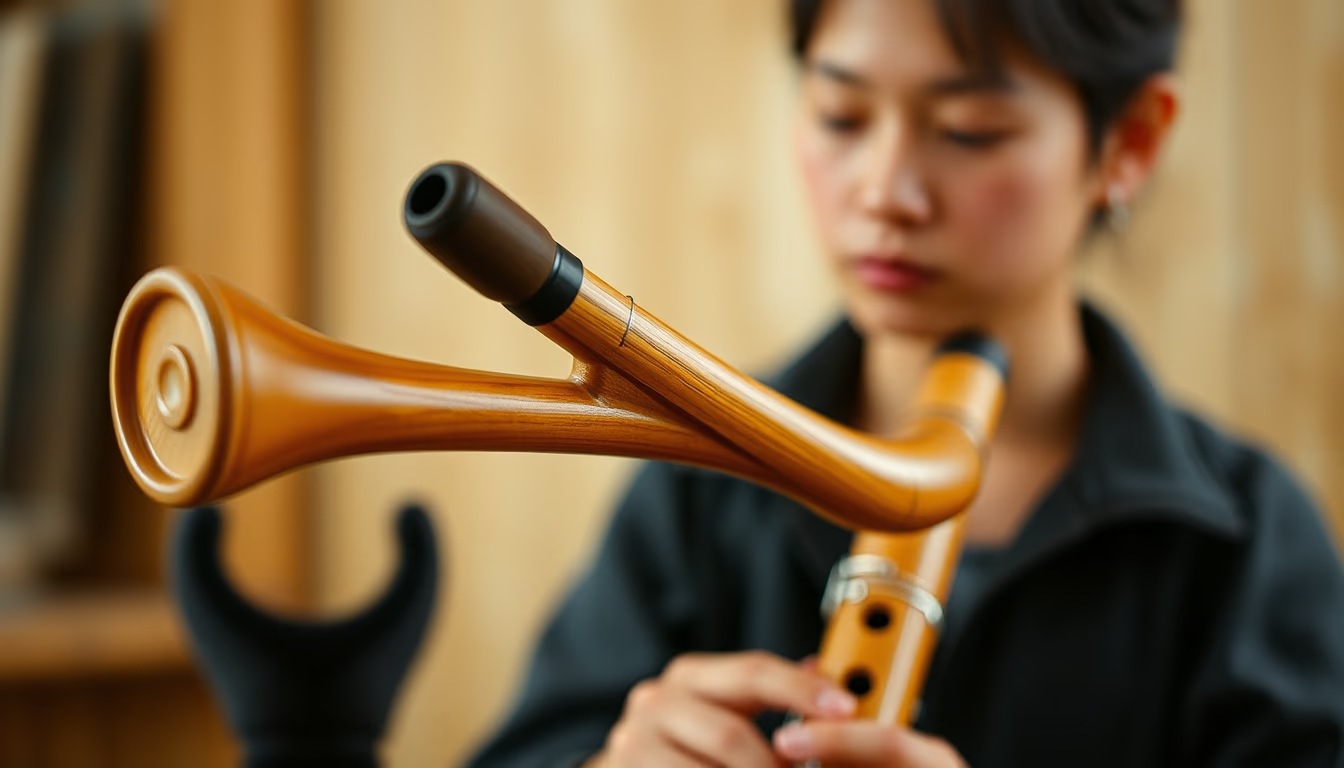
The wooden oboe, a double-reed woodwind instrument, is essential in symphony orchestras and chamber music.
About this subject
The oboe is traditionally crafted from fine hardwoods such as grenadilla (African blackwood), known for its density and durability, allowing a polished finish and intricate carving. Construction involves boring a conical bore through the body, assembling metal keys (usually silver or nickel), and inserting a double reed made of cane (Arundo donax). The craftsmanship requires millimeter precision to ensure intonation and responsiveness.
Historically, the oboe emerged in 17th-century France, evolving from the ancient shawm. It became a staple of the Baroque orchestra, used by composers like Bach and Handel. In the Classical period, Mozart and Haydn wrote important oboe passages. During Romanticism, the instrument gained prominence in works by Schumann and Tchaikovsky. Today, the oboe is indispensable in symphony orchestras, wind bands, and contemporary music.
The oboe has a penetrating, nasal timbre capable of expressing melancholy or joy. Its tuning is notoriously unstable, requiring great skill from the player. The entire orchestra tunes to the oboe's A440 standard. Famous works like Marcello's Oboe Concerto and Richard Strauss's concerto explore its lyrical capabilities.
Interesting fact: the oboe is one of the hardest instruments to learn due to the complexity of the reed and breath control. Great oboists like Heinz Holliger and Alex Klein have elevated technique to new heights. The use of fine wood not only adds aesthetic beauty but also influences the sound, making each oboe unique.
Frequently Asked Questions
How is the wooden oboe constructed?
The oboe is made from dense woods like grenadilla, which are turned, bored with a conical bore, and fitted with metal keys. The double reed is crafted separately from cane. The process requires fine adjustments to ensure intonation and responsiveness.
What are the characteristics of the oboe's sound?
The oboe's sound is penetrating, nasal, and expressive, capable of conveying both melancholy and joy. Its tuning is sensitive to temperature and humidity, making the instrument challenging for the player.
What is the importance of the oboe in the orchestra?
The oboe provides the A440 tuning note for the entire orchestra. It also plays melodic solos and is part of the woodwind section, essential in classical and contemporary works.
Direct URL
https://pub-c7d6a6ea828543ac903a74a341ccb2e1.r2.dev/imagens/oboe-wooden-detail-film-grain-authentic-p0.avifHow to credit
Include a visible link back to UtilizAí. Copy one of the snippets below:
<a href="https://xn--utiliza-eza.com/en/midia/imagens/oboe-wooden-detail-film-grain-authentic-p0">Oboe wooden detail</a> by <a href="https://xn--utiliza-eza.com">UtilizAí</a>, licensed under <a href="https://creativecommons.org/licenses/by/4.0/">CC BY 4.0</a>.
[Oboe wooden detail](https://xn--utiliza-eza.com/en/midia/imagens/oboe-wooden-detail-film-grain-authentic-p0) by [UtilizAí](https://xn--utiliza-eza.com), CC BY 4.0
License: CC-BY-4.0