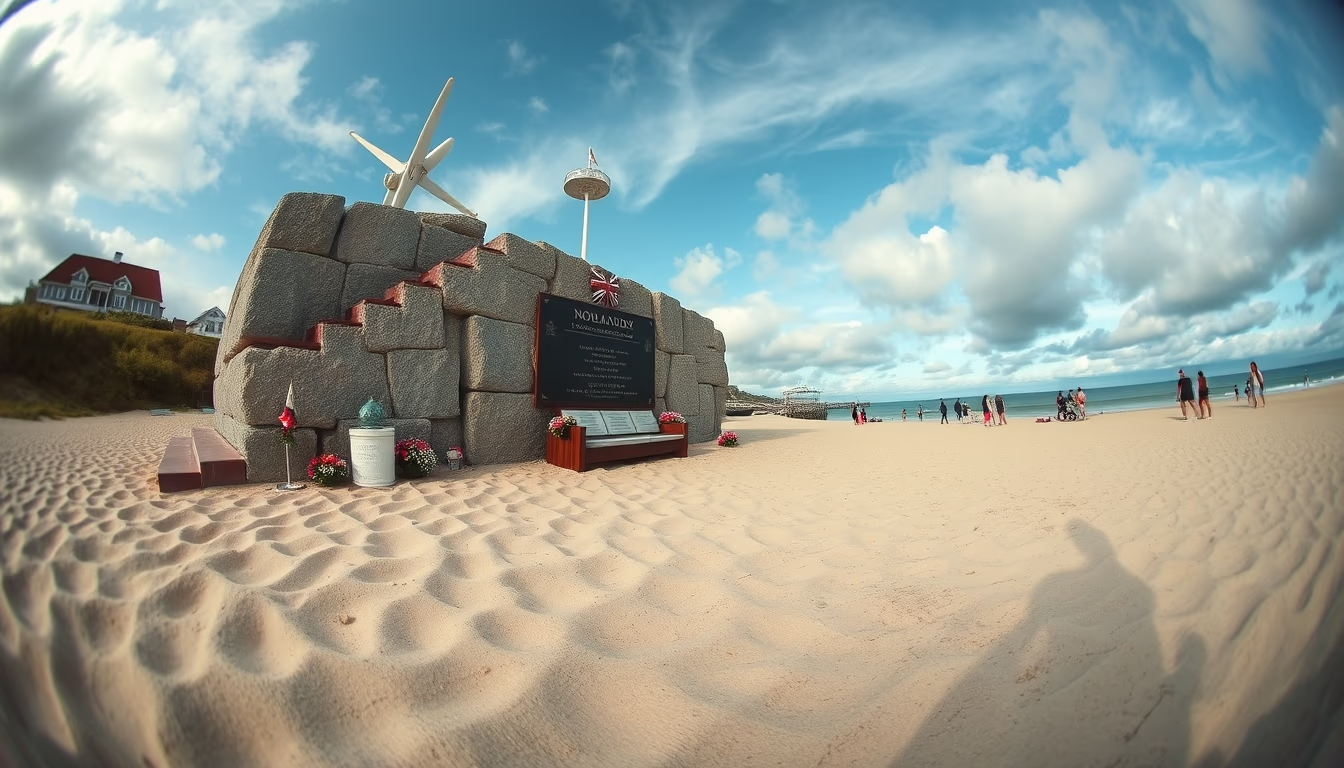
Normandy beach memorial
1344×768 · AVIF · CC BY 4.0
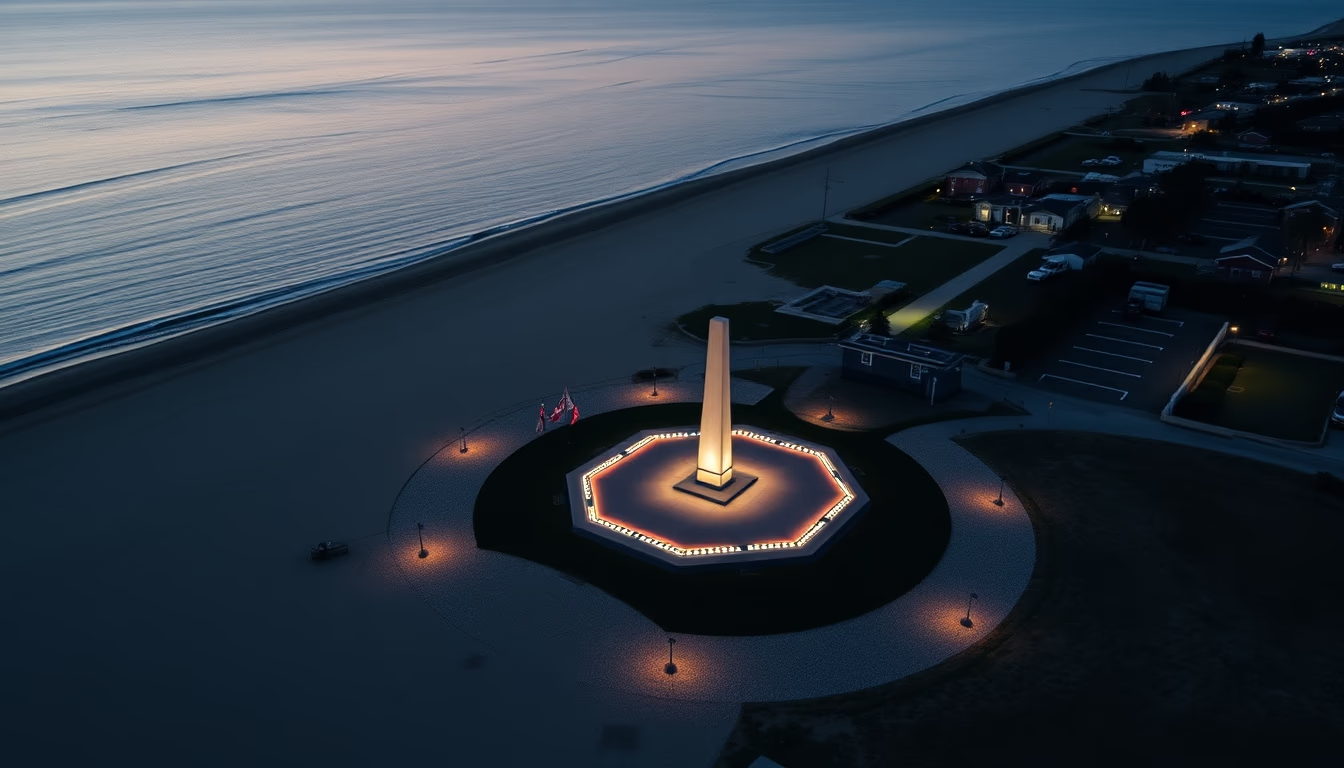
Normandy beach memorial, historic site of the D-Day landings in World War II, seen from above.
About this subject
The Normandy beach memorial honors the Allied soldiers who landed on June 6, 1944, known as D-Day. This operation, codenamed Overlord, was the largest amphibious invasion in history, involving over 150,000 troops from the United States, United Kingdom, Canada, and other nations. The beaches were given code names: Utah, Omaha, Gold, Juno, and Sword. The memorial shown, possibly the Ranger Memorial at Pointe du Hoc or the D-Day Museum at Arromanches, provides an aerial view that reveals the extent of the coastline and the German defensive obstacles.
Lower Normandy preserves numerous monuments, cemeteries, and museums that chronicle the story of sacrifice and victory. The American Cemetery at Colleville-sur-Mer, for instance, holds nearly 10,000 soldier graves, many of whom fell on Omaha and Utah beaches. Pointe du Hoc, a rocky promontory, was the site of a heroic climb by U.S. Army Rangers who destroyed German gun batteries. From above, bomb craters remain visible in the landscape, a constant reminder of the conflict's violence.
Visiting these memorials is both educational and emotional. About 4 million people annually tour the Normandy historic sites. The memorial architecture ranges from military minimalism to contemplative design, always aiming to honor memory. Aerial photography reveals geometric patterns of the monuments and the terrain's relationship with the sea, offering a unique perspective on the military strategy employed.
Interestingly, many German fortifications, such as the Atlantic Wall bunkers, still stand, integrated into the memorial. The contrast between the natural beauty of the beaches and the tragic history makes the site a symbol of peace and reconciliation.
Frequently Asked Questions
What does D-Day mean in Normandy?
D-Day, June 6, 1944, was the start of the Allied invasion of Nazi-occupied Europe, known as Operation Overlord. It was the largest amphibious landing in history and a turning point in World War II.
Which beaches were used in the Normandy landings?
There were five beaches with code names: Utah and Omaha (American sectors), Gold and Sword (British), and Juno (Canadian). Each had specific challenges and varying casualty rates.
What can I visit at the Normandy memorials?
You can visit the American Cemetery at Colleville-sur-Mer, Pointe du Hoc, the D-Day Museum at Arromanches, the Caen Memorial, and various preserved bunkers and fortifications. Most offer both aerial and ground views.
Direct URL
https://pub-c7d6a6ea828543ac903a74a341ccb2e1.r2.dev/imagens/normandy-beach-memorial-aerial-drone-shot-fresh3.avifHow to credit
Include a visible link back to UtilizAí. Copy one of the snippets below:
<a href="https://xn--utiliza-eza.com/en/midia/imagens/normandy-beach-memorial-aerial-drone-shot-fresh3">Normandy beach memorial</a> by <a href="https://xn--utiliza-eza.com">UtilizAí</a>, licensed under <a href="https://creativecommons.org/licenses/by/4.0/">CC BY 4.0</a>.
[Normandy beach memorial](https://xn--utiliza-eza.com/en/midia/imagens/normandy-beach-memorial-aerial-drone-shot-fresh3) by [UtilizAí](https://xn--utiliza-eza.com), CC BY 4.0
License: CC-BY-4.0