Niagara falls horseshoe
1344×768 · AVIF · CC BY 4.0
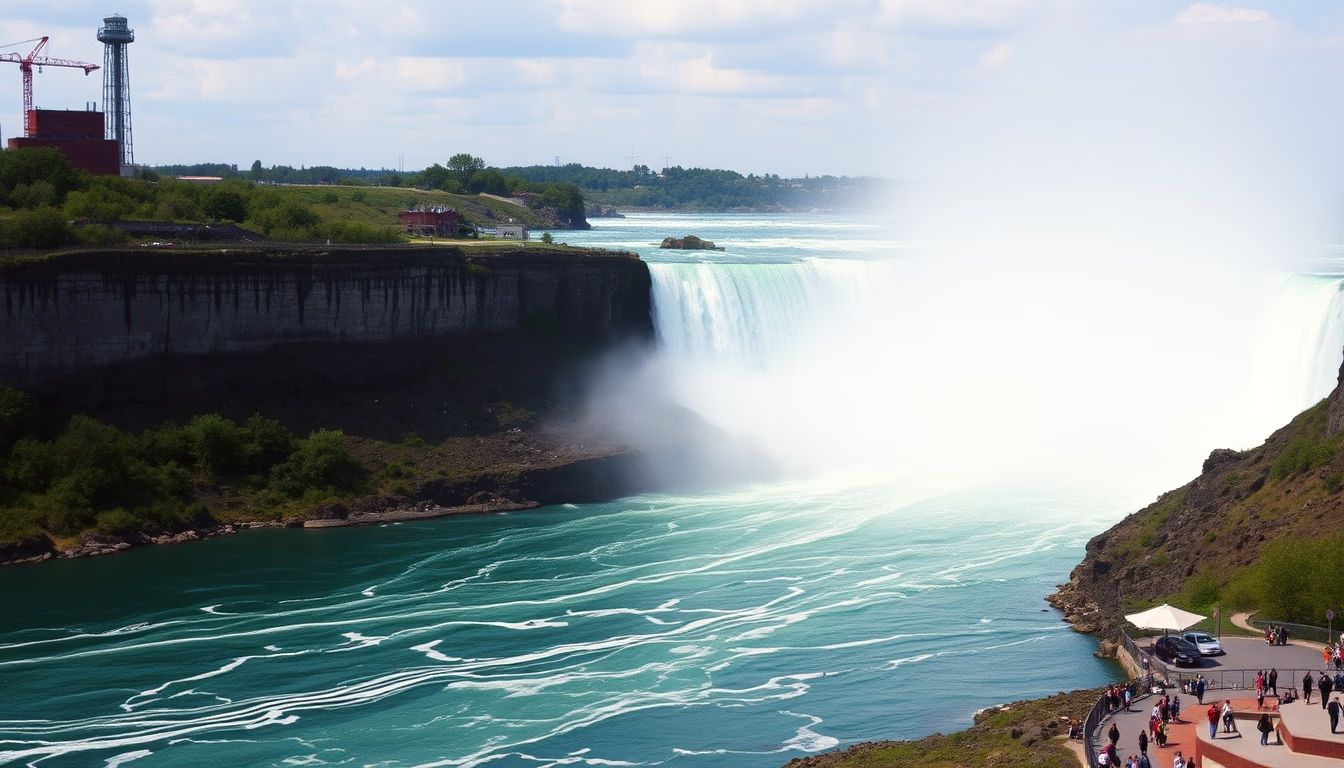
The Horseshoe Falls, also known as the Canadian Falls, is the largest and most iconic of the three Niagara Falls, straddling the border between Canada and the United States.
About this subject
The Horseshoe Falls, also called the Canadian Falls, is the largest of the three Niagara Falls, located on the Niagara River bordering New York State, USA, and Ontario, Canada. It measures about 792 meters wide and 51 meters high, with a distinctive curved shape like a horseshoe, hence its name. Approximately 90% of the Niagara River's water flows over this fall, making it the most powerful in North America.
The geological formation began around 12,000 years ago at the end of the last ice age. Erosion causes the falls to slowly retreat upstream at an average of 1 meter per century. Human intervention, such as water diversion for hydroelectric power plants, has slowed this process. Most water is diverted at night for electricity generation, with reduced flow during the day to preserve the scenic beauty.
Culturally, the Horseshoe Falls is a world-famous tourist destination, attracting millions of visitors each year. The 'Maid of the Mist' boat tour has operated since 1846, taking tourists close to the base of the falls. At night, the area is illuminated by colored spotlights, and special events often feature fireworks over the Niagara Gorge. The region is also known for daring tightrope crossings, such as the one performed by Frenchman Charles Blondin in 1859.
Frequently Asked Questions
What is the difference between Horseshoe Falls and the American Falls?
Horseshoe Falls is larger, shaped like a horseshoe, and lies mostly on the Canadian side. American Falls are smaller, straight, and on the American side. Horseshoe Falls also carries a much greater water volume.
Can you visit the Horseshoe Falls at night?
Yes, the falls are illuminated by colored spotlights every night until late. Specific timings vary by season. Fireworks are common in summer and on holidays.
What causes the greenish color of Niagara Falls?
The green color comes from high levels of dissolved minerals, especially calcium carbonate, and the presence of algae. About 60 tons of sediment are transported per minute, contributing to the hue.
Direct URL
https://pub-c7d6a6ea828543ac903a74a341ccb2e1.r2.dev/imagens/niagara-falls-horseshoe-film-grain-authentic-p7.avifHow to credit
Include a visible link back to UtilizAí. Copy one of the snippets below:
<a href="https://xn--utiliza-eza.com/en/midia/imagens/niagara-falls-horseshoe-film-grain-authentic-p7">Niagara falls horseshoe</a> by <a href="https://xn--utiliza-eza.com">UtilizAí</a>, licensed under <a href="https://creativecommons.org/licenses/by/4.0/">CC BY 4.0</a>.
[Niagara falls horseshoe](https://xn--utiliza-eza.com/en/midia/imagens/niagara-falls-horseshoe-film-grain-authentic-p7) by [UtilizAí](https://xn--utiliza-eza.com), CC BY 4.0
License: CC-BY-4.0