Neumann u87 mic
1344×768 · AVIF · CC BY 4.0

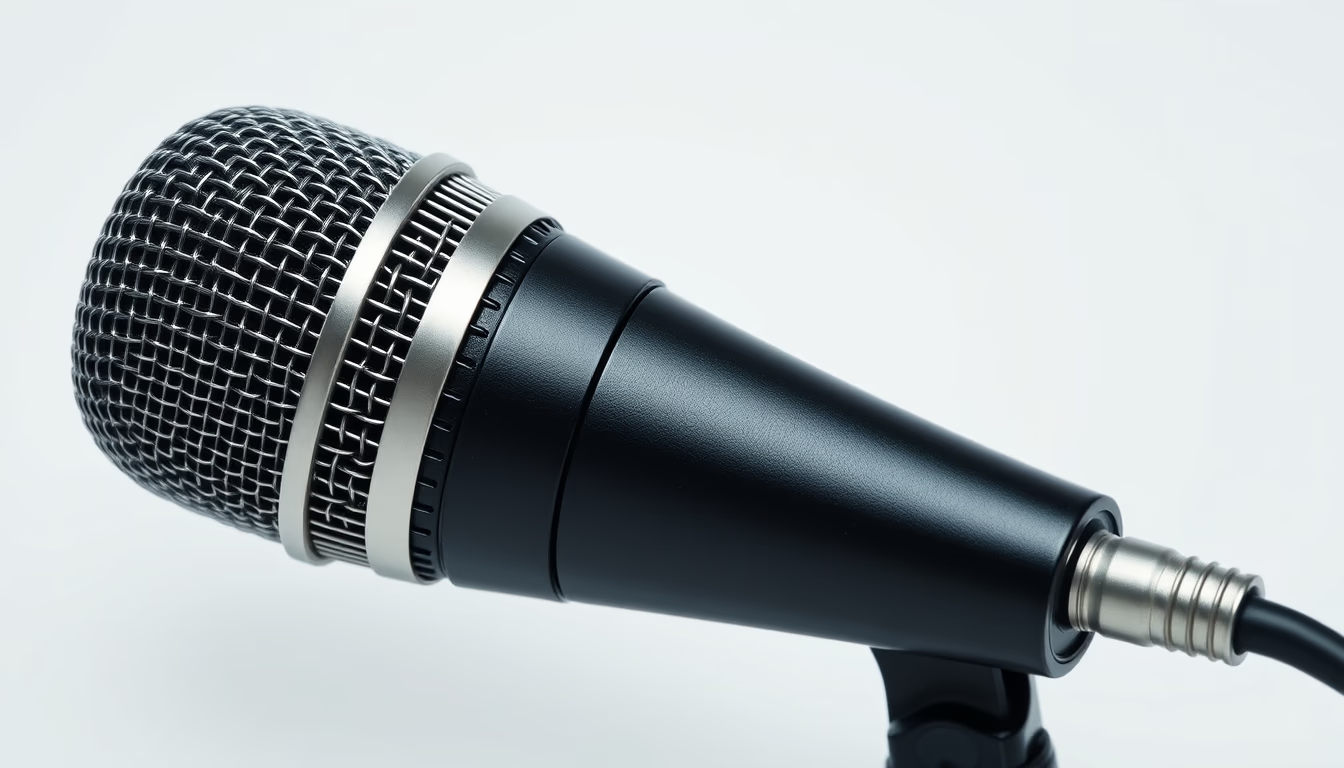
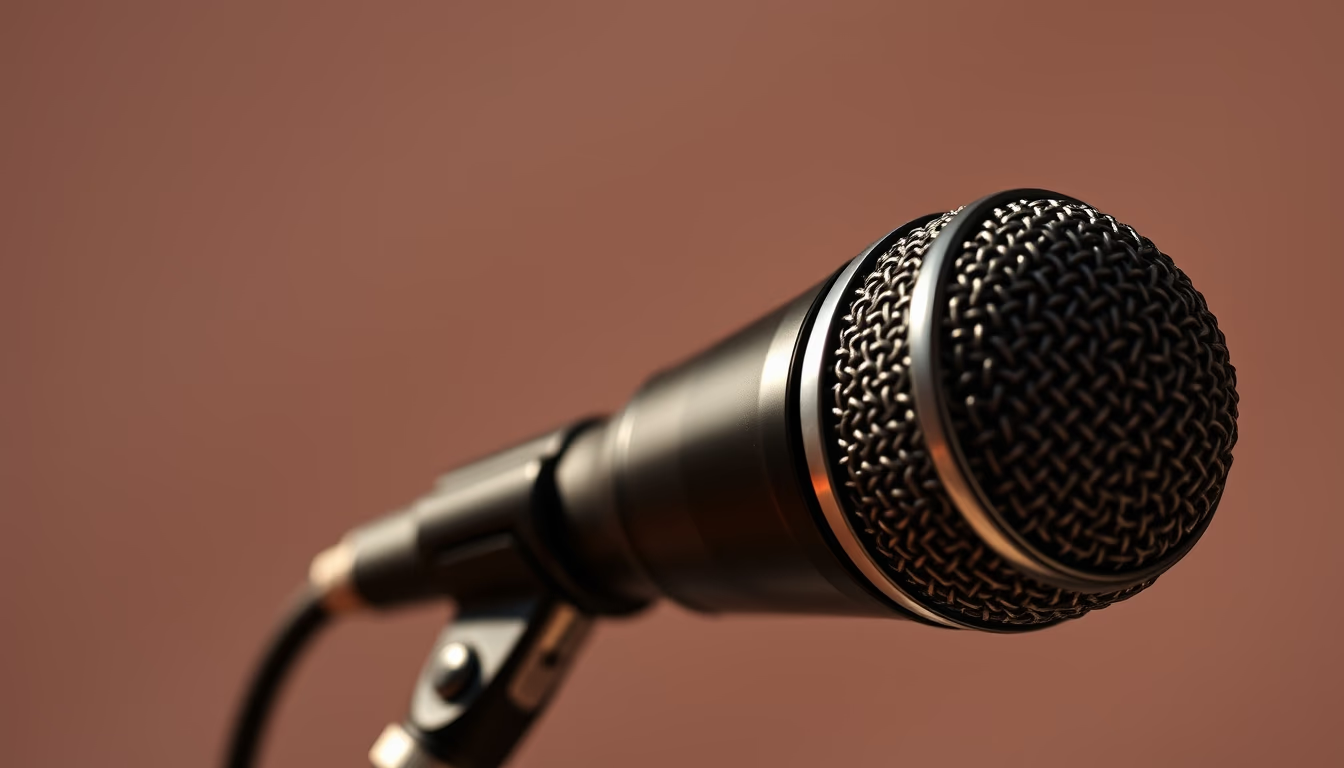
The Neumann U87 microphone is one of the most respected classics in professional recording, found in studios worldwide since the 1960s.
About this subject
The Neumann U87 is a large diaphragm condenser microphone that has become a benchmark in the recording industry. First launched in 1967, it was designed as an evolution of the famous U47, offering greater flexibility thanks to its three selectable polar patterns: cardioid, omnidirectional, and figure-8. This adaptability made it indispensable for recording vocals, acoustic instruments, and even ambient capture.
Built with discrete components and a K67 capsule, the U87 has a frequency response ranging from 20 Hz to 20 kHz, with a slight presence boost in the high frequencies that provides clarity and definition. Its 200 ohm impedance and ability to handle high sound pressure levels (up to 127 dB SPL) make it suitable for intense sound sources such as amplified guitars or kick drums. Despite its weight (about 500 grams) and the need for 48V phantom power, the robust German design ensures decades of reliable use.
Culturally, the U87 spans generations and musical styles. It was used by Frank Sinatra in the 1970s, by rock vocalists like Freddie Mercury, and by jazz producers like Rudy Van Gelder. In Brazilian music, artists such as Caetano Veloso and Milton Nascimento recorded iconic songs with it. Today, it remains one of the most sought-after microphones in both analog and digital studios, often the first choice for vocal recordings seeking a natural and refined sound.
In the market, there are versions like the U87 Ai (introduced in the 1970s) and the U87 A, with slight electronic differences. The company Neumann, founded in 1928 by Georg Neumann, continues production in Germany, and each unit undergoes individual calibration. In 2017, a 50th anniversary edition was released, highlighting the longevity of this legendary design. The combination of transparency and subtle coloration makes the U87 a tool that continues to set standards in professional audio capture.
Frequently Asked Questions
What is the difference between the Neumann U87 and the U47?
The U47 was a tube microphone (VF14 tube) with a fixed cardioid pattern and a very warm sound. The U87, launched in 1967, was transistorized, lighter, and offered three selectable polar patterns (cardioid, omnidirectional, and figure-8), along with more flexible frequency response. The U47 has been discontinued and is now a collector's item, while the U87 remains in production.
Is the Neumann U87 still relevant for modern digital recordings?
Yes, the U87 is widely used in professional studios today. Its classic construction and natural sound adapt perfectly to digital recordings, often being preferred for its musicality and low noise. Many engineers consider it adds a timeless quality that complements modern digital tools.
What are the best uses for the Neumann U87?
Traditionally, the U87 is excellent for vocals, especially male and female voices needing clarity and presence. It is also great for acoustic instruments like guitar, piano, and strings, and is used as an ambient microphone in orchestral recordings. Due to its high SPL tolerance, it can be used on guitar amplifiers and drums.
Direct URL
https://pub-c7d6a6ea828543ac903a74a341ccb2e1.r2.dev/imagens/neumann-u87-mic-architectural-photography-fresh2.avifHow to credit
Include a visible link back to UtilizAí. Copy one of the snippets below:
<a href="https://xn--utiliza-eza.com/en/midia/imagens/neumann-u87-mic-architectural-photography-fresh2">Neumann u87 mic</a> by <a href="https://xn--utiliza-eza.com">UtilizAí</a>, licensed under <a href="https://creativecommons.org/licenses/by/4.0/">CC BY 4.0</a>.
[Neumann u87 mic](https://xn--utiliza-eza.com/en/midia/imagens/neumann-u87-mic-architectural-photography-fresh2) by [UtilizAí](https://xn--utiliza-eza.com), CC BY 4.0
License: CC-BY-4.0