Music sheet handwritten antique
1344×768 · AVIF · CC BY 4.0
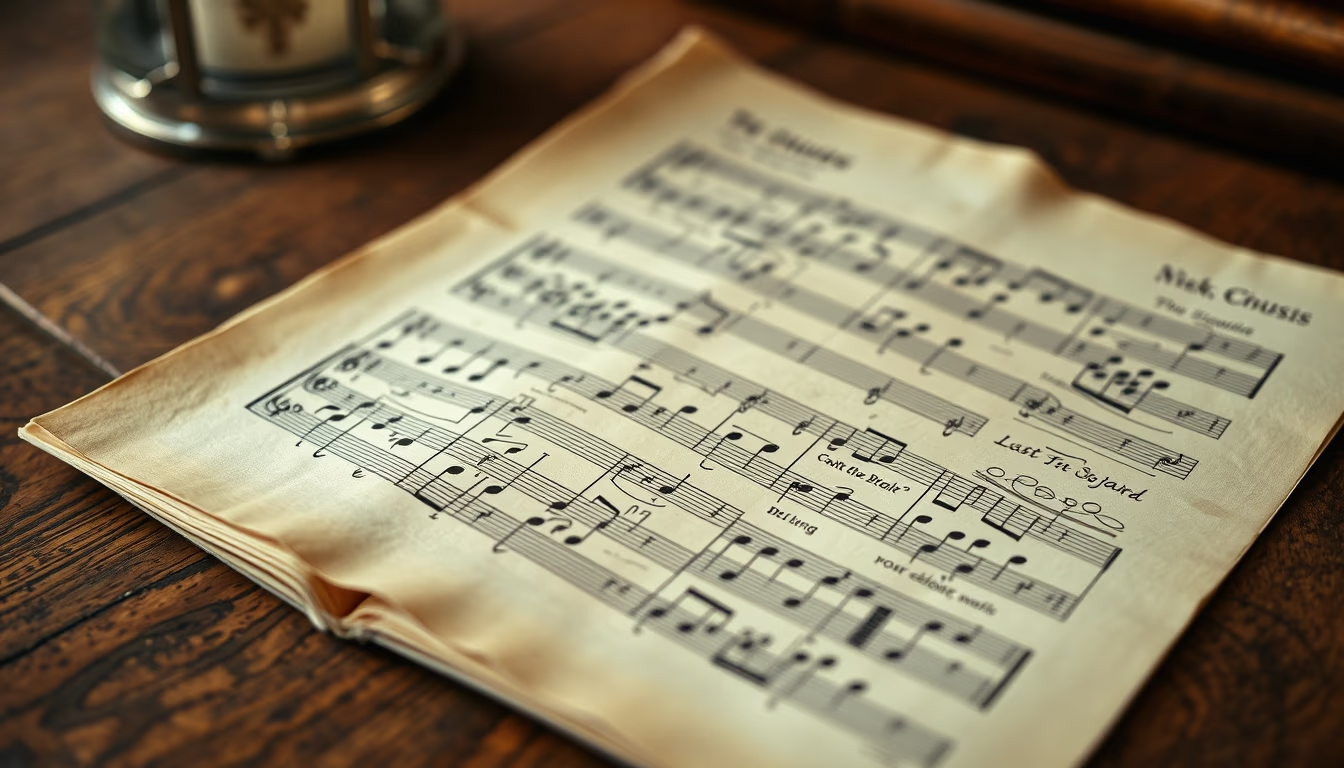
Ancient handwritten music sheets reveal the evolution of musical notation, from medieval neumes to compositions by masters like Bach and Mozart.
About this subject
Ancient handwritten music sheets are historical documents that capture the essence of music before mass printing. They date back to the Middle Ages, when monk scribes in European monasteries created illuminated manuscripts with neumes, the earliest musical notation symbols, written on vellum. During the Renaissance, notation evolved into the modern staff system, with composers like Palestrina and Monteverdi producing handwritten scores on linen paper.
The Baroque period brought monumental works by Johann Sebastian Bach, whose autograph manuscripts are national treasures, many preserved in the Berlin State Library. In the Classical era, Mozart wrote his scores with precise calligraphy, while Beethoven, in the 19th century, used chaotic drafts full of revisions, revealing his creative process. These documents not only record music but also the state of the art, with watermarks and paper types that date the period.
The invention of music printing in the late 15th century by Ottaviano Petrucci made music accessible, but manuscripts remained valuable as originals from composers and exclusive arrangements. Today, libraries such as the US Library of Congress and the British Library hold digital collections of these scores, allowing scholars to analyze ink, handwriting, and corrections. The financial value of a handwritten score by a major composer can reach millions at auctions, such as a Mozart manuscript sold for over 2 million euros.
Interestingly, the practice of writing music by hand persisted into the 20th century, with composers like Heitor Villa-Lobos producing Brazilian manuscripts now considered cultural heritage. Studying these documents offers a window into music history, revealing not only notes but also the lives and times of composers.
Frequently Asked Questions
How were music sheets created before the invention of music printing?
Before printing, monk scribes and copyists created scores manually on vellum or paper, using quills and vegetable dyes. Each copy was unique and often decorated with illuminations.
What is the oldest known musical manuscript?
The Seikilos Epitaph, dated to the 1st century AD, is the oldest complete musical composition found, written in ancient Greek on a marble tombstone.
Why are handwritten music sheets valuable for historians and collectors?
They provide insights into the composer's creative process, with corrections and annotations, and serve as primary sources for studying historical performance practices and handwriting techniques.
Direct URL
https://pub-c7d6a6ea828543ac903a74a341ccb2e1.r2.dev/imagens/music-sheet-handwritten-antique-national-geographic-style-p1.avifHow to credit
Include a visible link back to UtilizAí. Copy one of the snippets below:
<a href="https://xn--utiliza-eza.com/en/midia/imagens/music-sheet-handwritten-antique-national-geographic-style-p1">Music sheet handwritten antique</a> by <a href="https://xn--utiliza-eza.com">UtilizAí</a>, licensed under <a href="https://creativecommons.org/licenses/by/4.0/">CC BY 4.0</a>.
[Music sheet handwritten antique](https://xn--utiliza-eza.com/en/midia/imagens/music-sheet-handwritten-antique-national-geographic-style-p1) by [UtilizAí](https://xn--utiliza-eza.com), CC BY 4.0
License: CC-BY-4.0