Music festival empty grounds
1344×768 · AVIF · CC BY 4.0
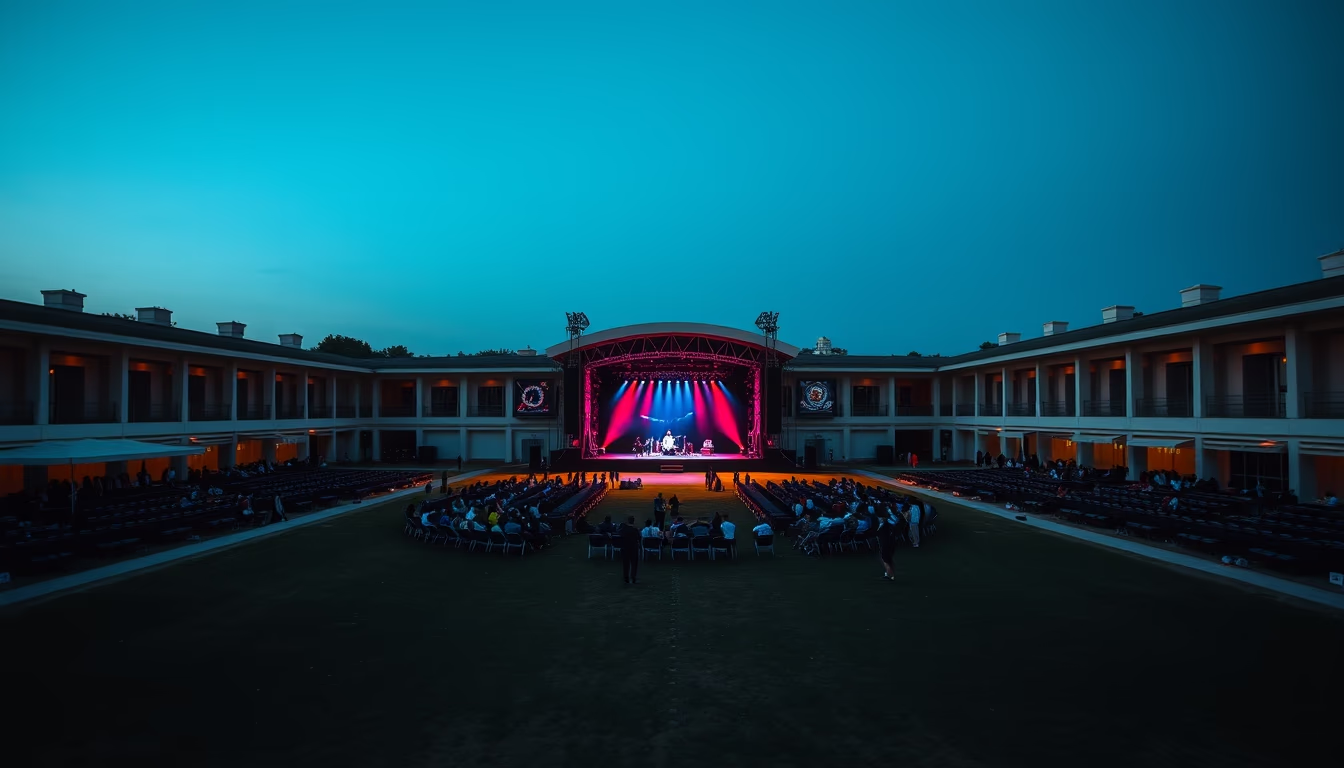
Empty music festival grounds reveal monumental infrastructure and cultural remnants left by crowds.
About this subject
Music festivals are temporary events that transform large rural or urban areas into ephemeral cities. When the gates close and the crowd leaves, what remains is an emptiness charged with meaning. The empty grounds display the metal framework of main stages, collapsible bleachers, protective fences, rows of portable toilets, and power cables snaking across the ground. This post-event landscape is a record of the logistics required to host tens of thousands of people over consecutive days.
The absence of the audience allows appreciation of the site's architectural scale. Festivals like Glastonbury (England), Rock in Rio (Brazil), and Coachella (United States) occupy areas ranging from 200 to 800 hectares. The layout of stages, food areas, and campsites is designed to optimize crowd flow, but when empty, it reveals an almost minimalist geometry. Architectural photography of these spaces highlights the repetition of shapes, the textures of trampled grass, and the natural light falling on temporary structures.
Culturally, empty festival grounds are symbols of transition. They represent the end of an intense collective experience and a return to routine. In Brazil, for example, the Sambódromo in Rio de Janeiro, used during Carnival, remains empty most of the year but retains the memory of the crowds. In electronic music festivals like Tomorrowland, elaborate setups are dismantled in weeks, leaving only ground marks. This cycle of occupation and emptying is a contemporary urban phenomenon that interests sociologists, architects, and photographers.
Interestingly, cleaning up festival grounds after a large event can take months. An event with 100,000 people is estimated to generate around 500 tons of waste. Many festivals adopt sustainable practices, such as recycling materials and donating structures to local communities. Thus, the image of empty ground is not merely aesthetic: it carries environmental and logistical issues that challenge the organization of large-scale events.
Frequently Asked Questions
Why do music festival grounds remain empty most of the year?
Most festivals occur once a year or in seasonal intervals. Temporary infrastructure is set up and dismantled for each edition, so the grounds stay empty between events.
What happens to waste left after a festival?
Cleanup crews remove tons of trash, and many festivals recycle materials. Structures like stages and tents may be reused by other events or donated.
How does architectural photography capture the essence of an empty festival?
By removing the human element, photography highlights the geometry, scale, and details of temporary structures, revealing the engineering behind the event.
Direct URL
https://pub-c7d6a6ea828543ac903a74a341ccb2e1.r2.dev/imagens/music-festival-empty-grounds-architectural-photography-p6.avifHow to credit
Include a visible link back to UtilizAí. Copy one of the snippets below:
<a href="https://xn--utiliza-eza.com/en/midia/imagens/music-festival-empty-grounds-architectural-photography-p6">Music festival empty grounds</a> by <a href="https://xn--utiliza-eza.com">UtilizAí</a>, licensed under <a href="https://creativecommons.org/licenses/by/4.0/">CC BY 4.0</a>.
[Music festival empty grounds](https://xn--utiliza-eza.com/en/midia/imagens/music-festival-empty-grounds-architectural-photography-p6) by [UtilizAí](https://xn--utiliza-eza.com), CC BY 4.0
License: CC-BY-4.0