Mushroom macro forest floor
1344×768 · AVIF · CC BY 4.0
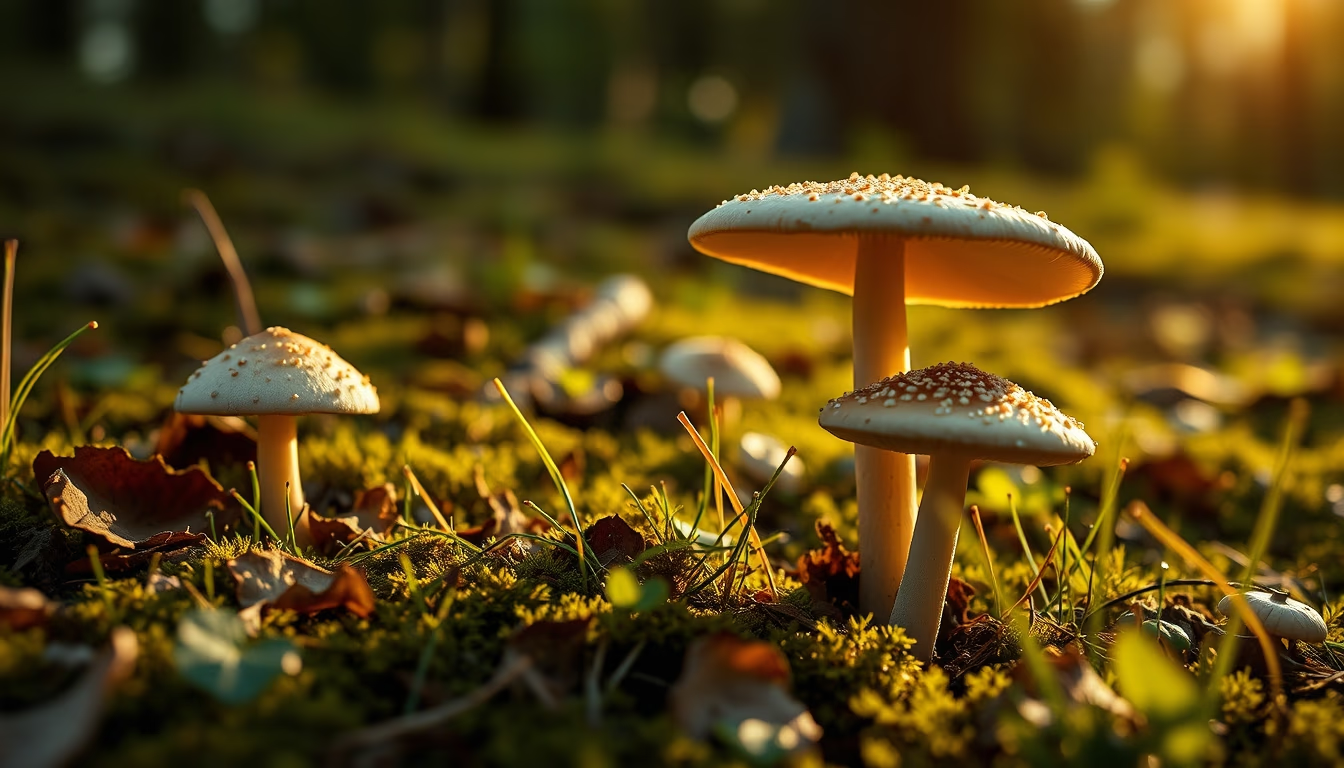
Mushrooms are the visible fruiting bodies of fungi that play a vital role in decomposing organic matter and cycling nutrients in forests.
About this subject
Mushrooms are the reproductive structures of fungi belonging to the phyla Basidiomycota or Ascomycota. On the forest floor, they emerge from a vast underground network of hyphae called mycelium, which can stretch for hectares. This mycelium forms symbiotic relationships with tree roots (mycorrhizae), exchanging nutrients like phosphorus and nitrogen for sugars produced by photosynthesis. Approximately 90% of terrestrial plants depend on these mycorrhizal associations.
The diversity of mushrooms is immense: it is estimated that there are between 2.2 and 3.8 million species of fungi worldwide, of which only about 120,000 have been described. In Brazil, the Amazon Rainforest and the Atlantic Forest harbor a particular richness of species, many still unknown. Mushrooms like Amanita muscaria (traditionally associated with shamanic rituals) and Pleurotus ostreatus (oyster mushroom, widely cultivated) illustrate the diversity of shapes and colors.
Beyond their ecological role, mushrooms have economic and cultural importance. They are a source of food, medicines (such as penicillin, derived from the fungus Penicillium), and even sustainable materials like mycelium-based packaging and textiles. Wild mushroom foraging is a traditional practice in many regions but requires knowledge to avoid toxic species. The life cycle of a mushroom is short, lasting from a few days to weeks, and its appearance is linked to specific humidity and temperature conditions.
Interestingly, the largest living organism on Earth is a fungus: a mycelium of Armillaria ostoyae in Oregon, USA, covering about 9.6 km² and estimated to be 2,400 years old. This example highlights the hidden magnitude of fungal life beneath our feet.
Frequently Asked Questions
What is the difference between a mushroom and a fungus?
A fungus is the entire organism, including the mycelium (vegetative part) and the mushroom (reproductive structure). The mushroom is just the visible part that produces spores.
Are mushrooms plants?
No. Mushrooms belong to the kingdom Fungi, separate from the kingdom Plantae. They differ from plants in that they do not photosynthesize and obtain nutrients by absorption.
Are all mushrooms edible?
No. Many species are toxic or poisonous. Proper identification is essential; some edible species have toxic look-alikes.
Direct URL
https://pub-c7d6a6ea828543ac903a74a341ccb2e1.r2.dev/imagens/mushroom-macro-forest-floor-cinematic-wide-shot-v2.avifHow to credit
Include a visible link back to UtilizAí. Copy one of the snippets below:
<a href="https://xn--utiliza-eza.com/en/midia/imagens/mushroom-macro-forest-floor-cinematic-wide-shot-v2">Mushroom macro forest floor</a> by <a href="https://xn--utiliza-eza.com">UtilizAí</a>, licensed under <a href="https://creativecommons.org/licenses/by/4.0/">CC BY 4.0</a>.
[Mushroom macro forest floor](https://xn--utiliza-eza.com/en/midia/imagens/mushroom-macro-forest-floor-cinematic-wide-shot-v2) by [UtilizAí](https://xn--utiliza-eza.com), CC BY 4.0
License: CC-BY-4.0