Mrna vaccine vial closeup
1344×768 · AVIF · CC BY 4.0
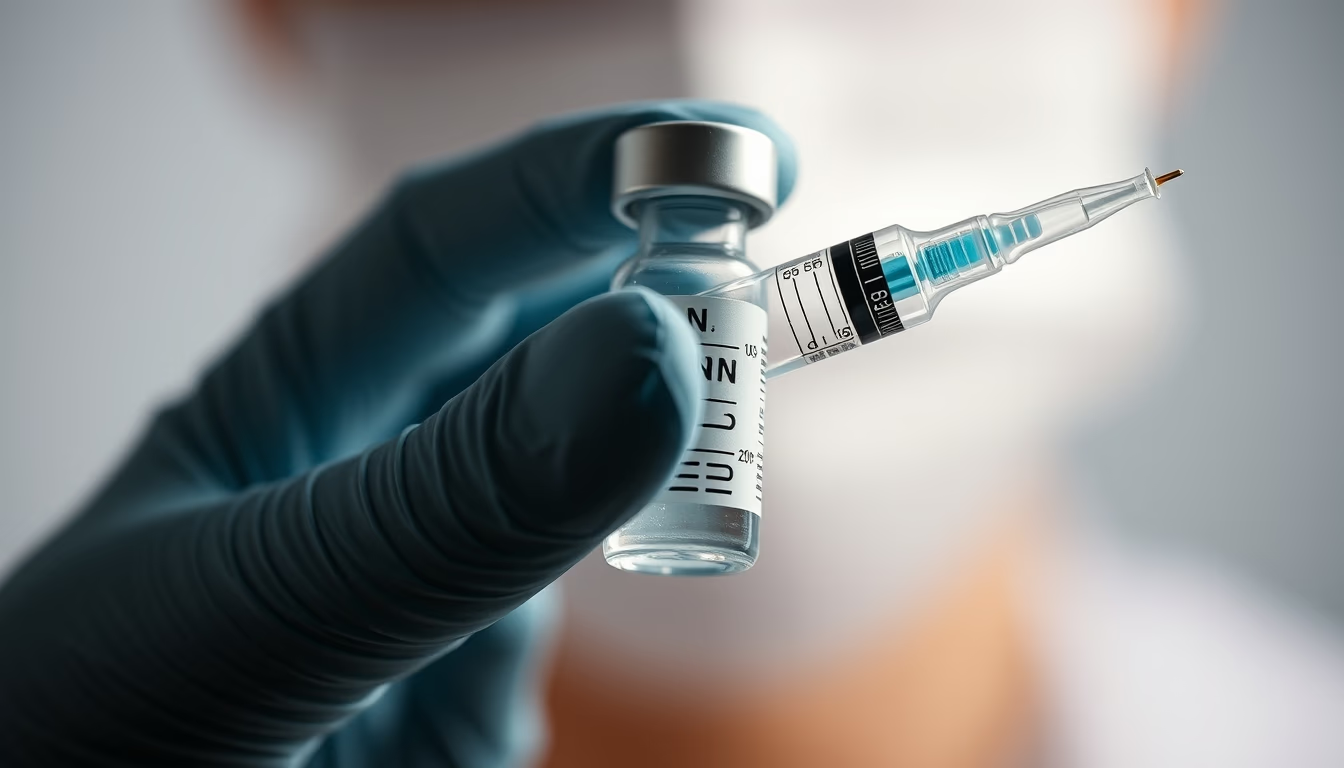
mRNA vaccine technology revolutionized immunization by using messenger RNA to instruct cells to produce viral proteins, generating immune response.
About this subject
mRNA vaccines represent a new class of immunizations that deliver synthetic messenger RNA molecules into cells, instructing them to produce a specific viral protein (e.g., the SARS-CoV-2 spike protein) and triggering an immune response without causing disease. This technology was developed over decades, with key breakthroughs in the 1990s when researchers found ways to stabilize mRNA and deliver it efficiently using lipid nanoparticles.
During the COVID-19 pandemic, the mRNA vaccines from Pfizer/BioNTech and Moderna were developed in record time, less than a year, thanks to prior research. They showed over 90% efficacy in preventing symptomatic cases and significantly reduced hospitalizations and deaths. The platform's flexibility allows rapid updates for new variants, as seen with bivalent vaccines targeting Omicron.
A distinctive feature is the requirement for ultra-cold storage (around -70°C for Pfizer/BioNTech), posing logistical challenges in areas with limited infrastructure. However, more stable formulations are being developed to ease global distribution. Beyond COVID-19, the technology is being tested for other diseases, including influenza, Zika, rabies, and even cancer, where mRNA can train the immune system to attack tumors.
The impact of mRNA vaccines extends beyond the pandemic: they have proven that effective vaccines can be developed rapidly against emerging pathogens. This rapid adaptability is crucial for future pandemics. Success has also spurred massive investment in research, with hundreds of ongoing clinical trials exploring new applications. While rare adverse reactions (myocarditis, pericarditis) require continuous monitoring, the technology has established itself as a powerful tool in preventive medicine.
Frequently Asked Questions
How does an mRNA vaccine work?
The vaccine contains synthetic messenger RNA that codes for a viral protein, such as the spike protein. When injected, cells produce this protein, which is recognized by the immune system, generating antibodies and memory cells without causing the disease.
What are the advantages of mRNA vaccines compared to traditional ones?
Main advantages include rapid development (months instead of years), easy adaptation to new variants, and the absence of infectious components, eliminating risks of contamination with live pathogens. Production can also be scaled quickly.
Can mRNA vaccines cause severe side effects?
Most side effects are mild and temporary, such as injection site pain, fever, and fatigue. Rare events like myocarditis and pericarditis have been observed, especially in young males, but they are treatable, and the risk-benefit ratio remains favorable.
Direct URL
https://pub-c7d6a6ea828543ac903a74a341ccb2e1.r2.dev/imagens/mrna-vaccine-vial-closeup-lo-fi-disposable-camera-p0.avifHow to credit
Include a visible link back to UtilizAí. Copy one of the snippets below:
<a href="https://xn--utiliza-eza.com/en/midia/imagens/mrna-vaccine-vial-closeup-lo-fi-disposable-camera-p0">Mrna vaccine vial closeup</a> by <a href="https://xn--utiliza-eza.com">UtilizAí</a>, licensed under <a href="https://creativecommons.org/licenses/by/4.0/">CC BY 4.0</a>.
[Mrna vaccine vial closeup](https://xn--utiliza-eza.com/en/midia/imagens/mrna-vaccine-vial-closeup-lo-fi-disposable-camera-p0) by [UtilizAí](https://xn--utiliza-eza.com), CC BY 4.0
License: CC-BY-4.0